
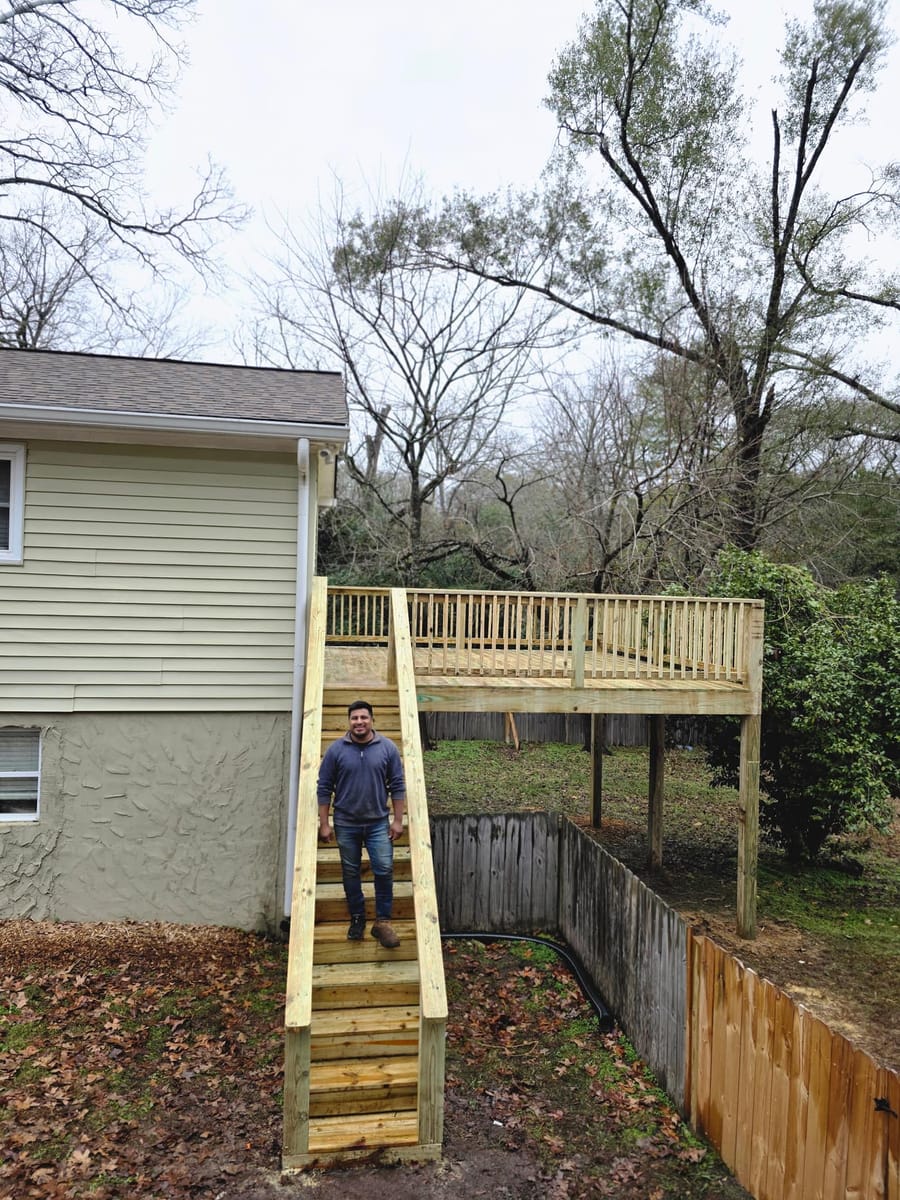
New elevated deck with railings and a long stair run to grade, Dacula, Georgia
What the surface does after year one
Every decking material is a trade. You're choosing which chore you keep and which one you hand over.
Northwest Georgia and the north Atlanta metro
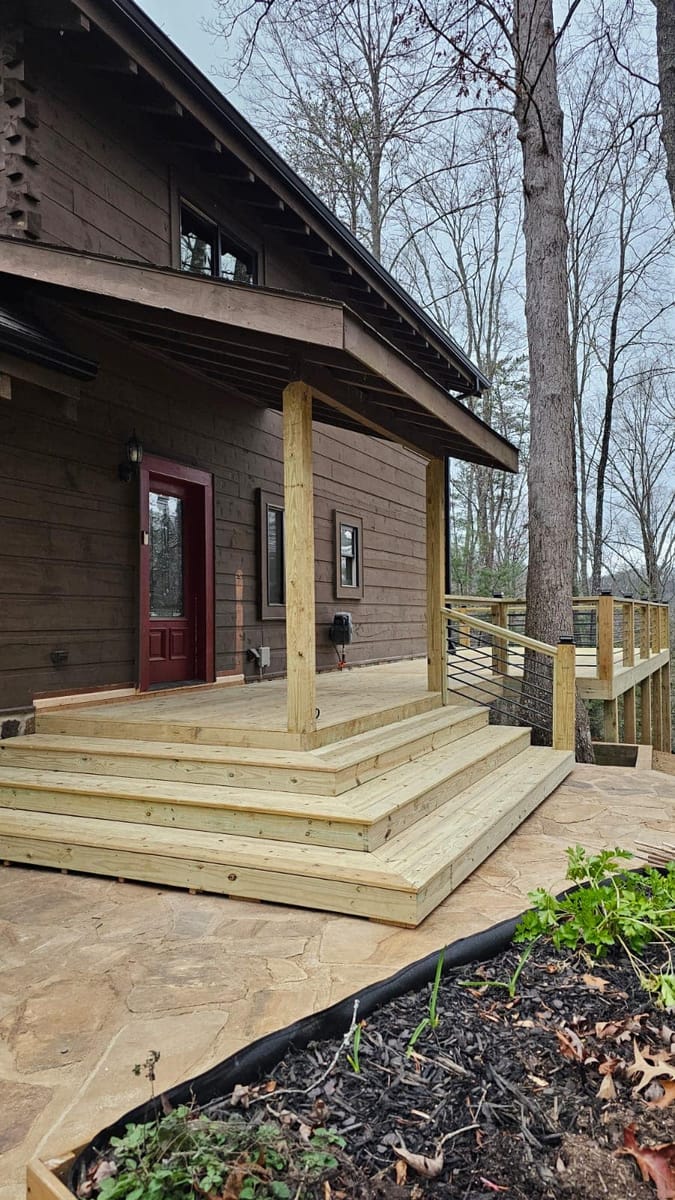
Pressure-treated pine is what most decks around here are wearing. It's cheap, it takes fasteners well, and it arrives wet. Left alone it goes gray, checks along the grain and lifts splinters.
Cedar is calmer. It moves less, it smells better and it costs more. It's still wood, so it still wants a coat on a schedule.
Capped composite is a wood-flour and plastic core with a hard shell around it. The shell resists stains and fading. The core is what makes it heavy and what makes it move with temperature.
PVC has no wood in it at all. It's the lightest, the most stain-resistant and the most obviously plastic underfoot.
Georgia does two things to a deck that a brochure from Colorado won't show you. The first is moisture that never really leaves. Shaded boards over damp ground stay damp, and anything organic on a damp surface eventually grows.
On wood that becomes surface mold you scrub off. On composite it sits as a film on top of the cap, which is easier, but it's not nothing. The second is pollen.
For a few weeks every spring, every horizontal surface in the state turns yellow. Nothing you buy prevents it.
A washable surface is the only defense, and every material on this page washes.
Wood swells across its width when it gets wet and shrinks when it dries. Composite does the opposite trick. It changes mostly along its length, with heat.
That difference shows up at the ends of boards. A composite deck fitted on a hot afternoon is at its longest. Fit it tight that day and the boards have nowhere to go when the cold arrives.
So gapping is a calculation about the temperature on the day of the job, not a habit.
This is the part that surprises people mid-project. A composite board is stiffer than pine across a short span and softer over a long one. Most lines want the joists closer together than a wood deck needs.
Run the boards diagonally and that spacing tightens again, because the effective distance from joist to joist grows with the angle. None of that is a problem on a new build, where the frame gets laid out for the chosen board. It's only a problem when a surface is picked after the framing is finished.
A clip system leaves a deck with no visible screws. It also captures every board on both edges, so replacing a damaged board later means working in from one end.
Face screwing is faster, repairs easily and leaves a visible pattern. On pressure-treated wood that pattern is normal. On a capped composite it's what people notice.
The frame under any of this is on the deck building page, and if the existing frame is the question, start at deck repair.
Wood needs a finish and composite doesn't, which is the whole of deck staining and sealing. For a side-by-side view written for the person paying, not the person installing, read choosing materials, and the deck size and board calculator sizes the deck and counts the boards for each option.
Our work
New elevated deck with railings and a long stair run to grade, Dacula, Georgia
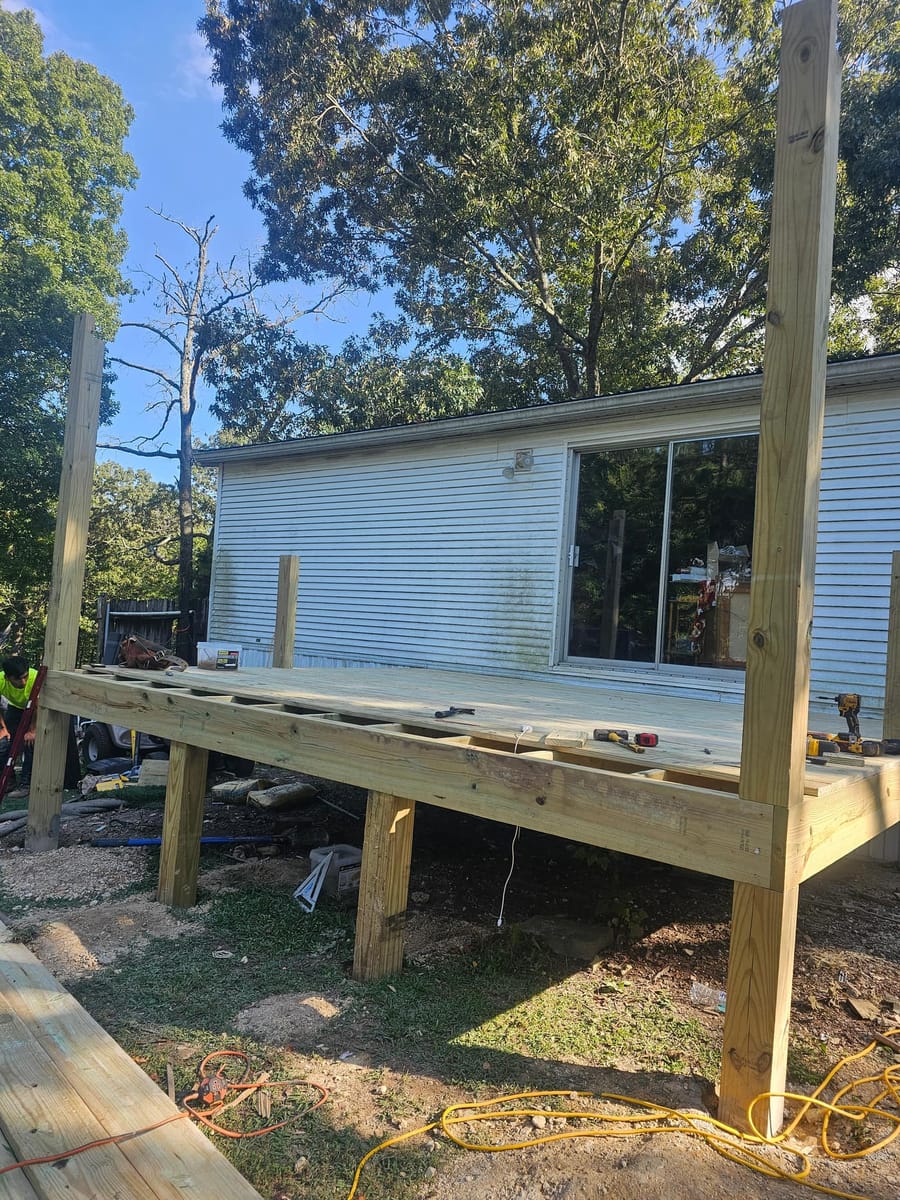
New deck with roof structure and stair access built onto a manufactured home, Dalton, Georgia
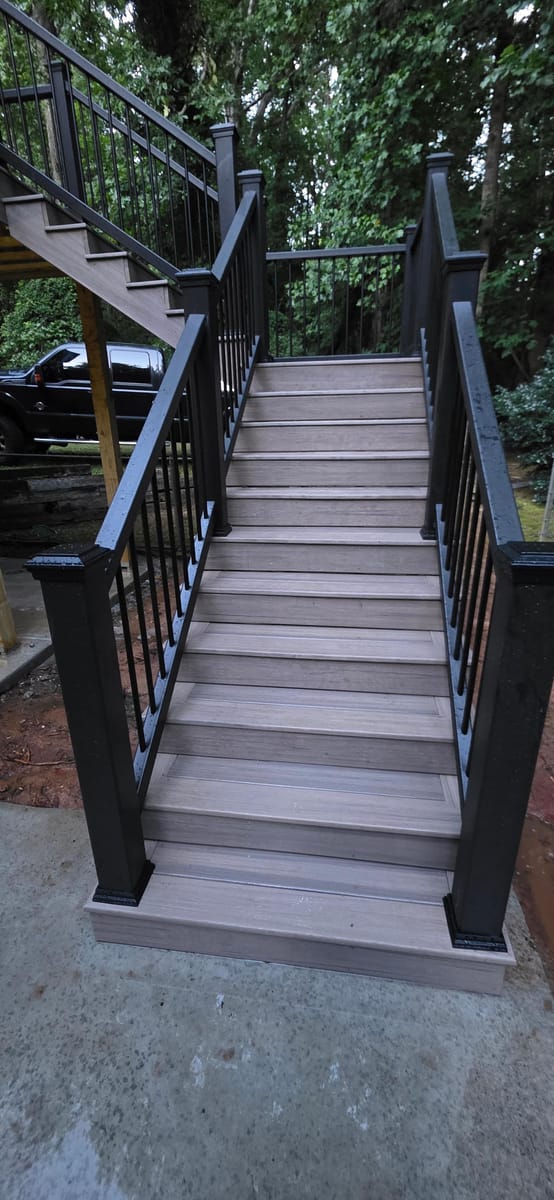
Stair treads landing on the poured concrete pad, Stockbridge, Georgia
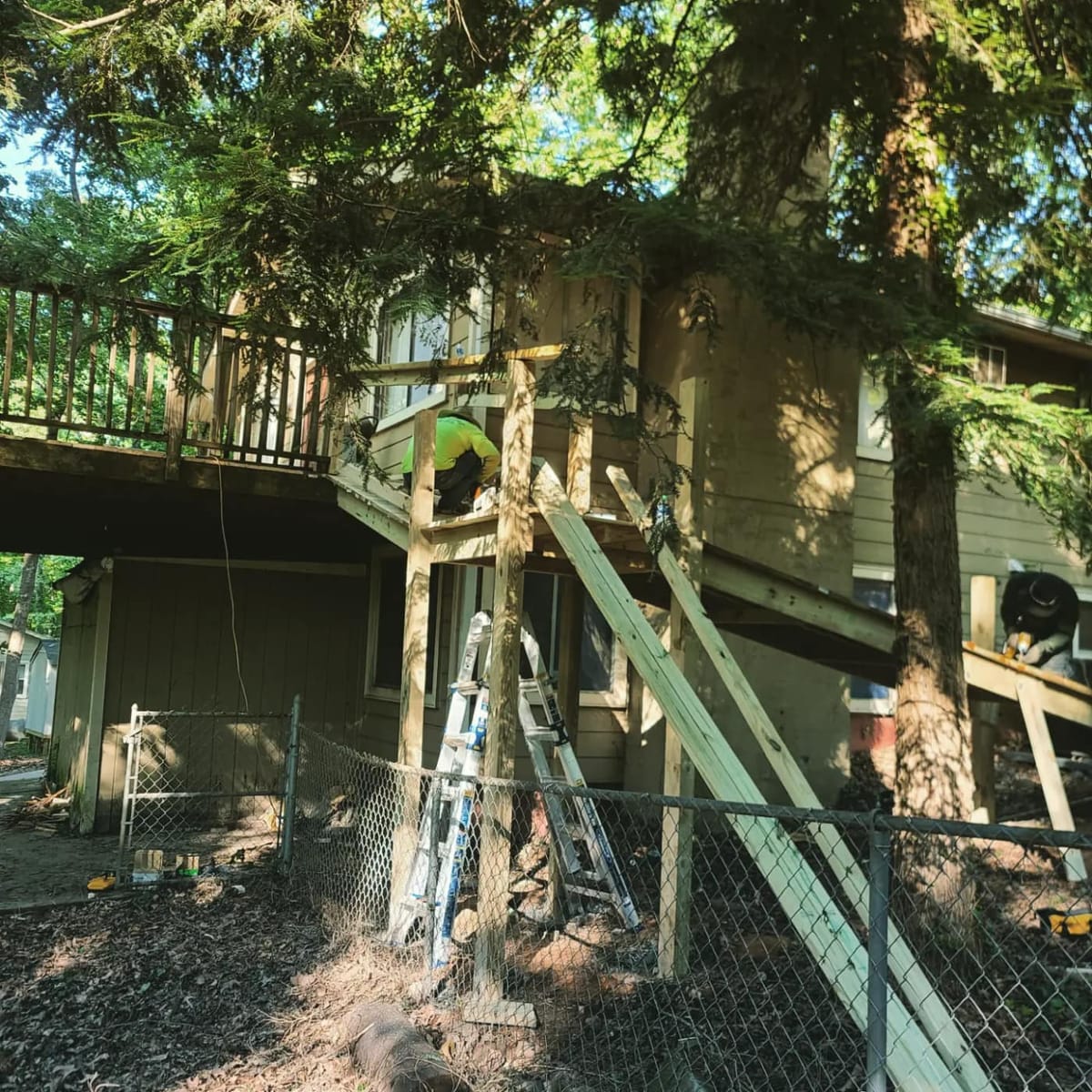
Long switchback accessibility ramp in pressure-treated lumber with full-height railings, rising through wooded ground to an elevated rear entry, Woodstock, Georgia
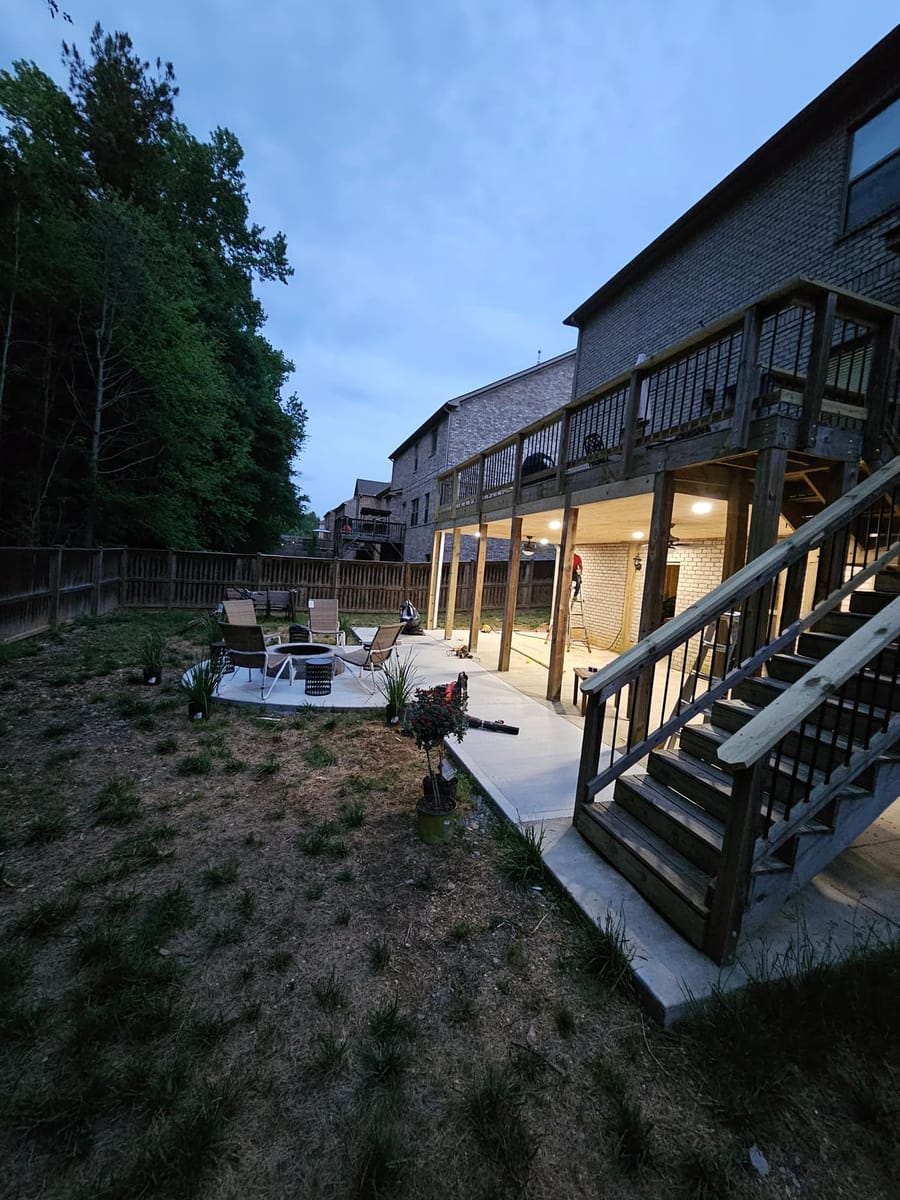
Evening view of the extended deck above the new covered space, Cumming, Georgia
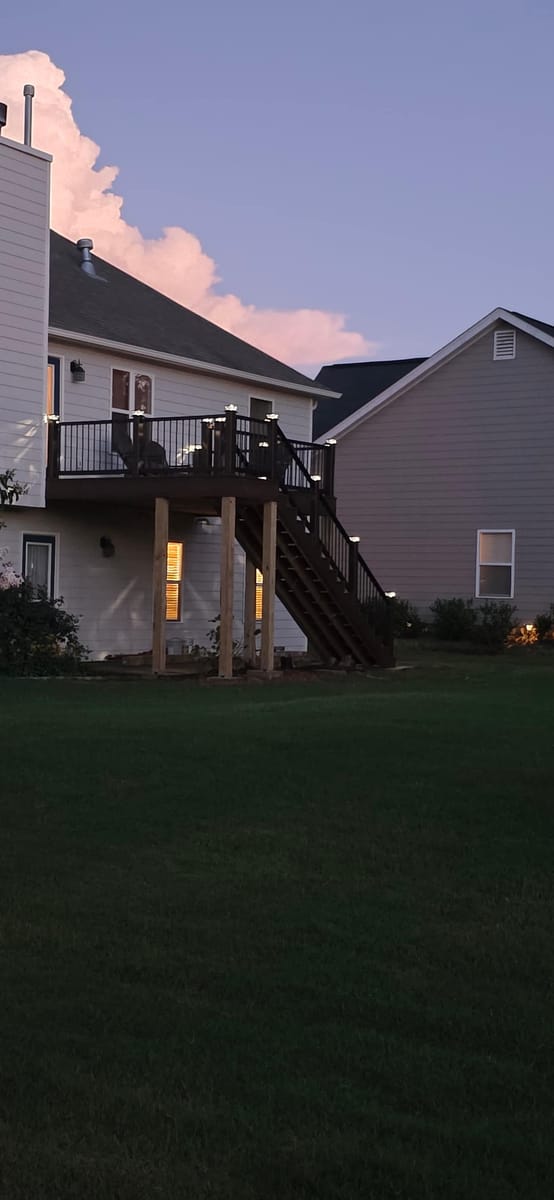
Finished deck at dusk, Adairsville, Georgia
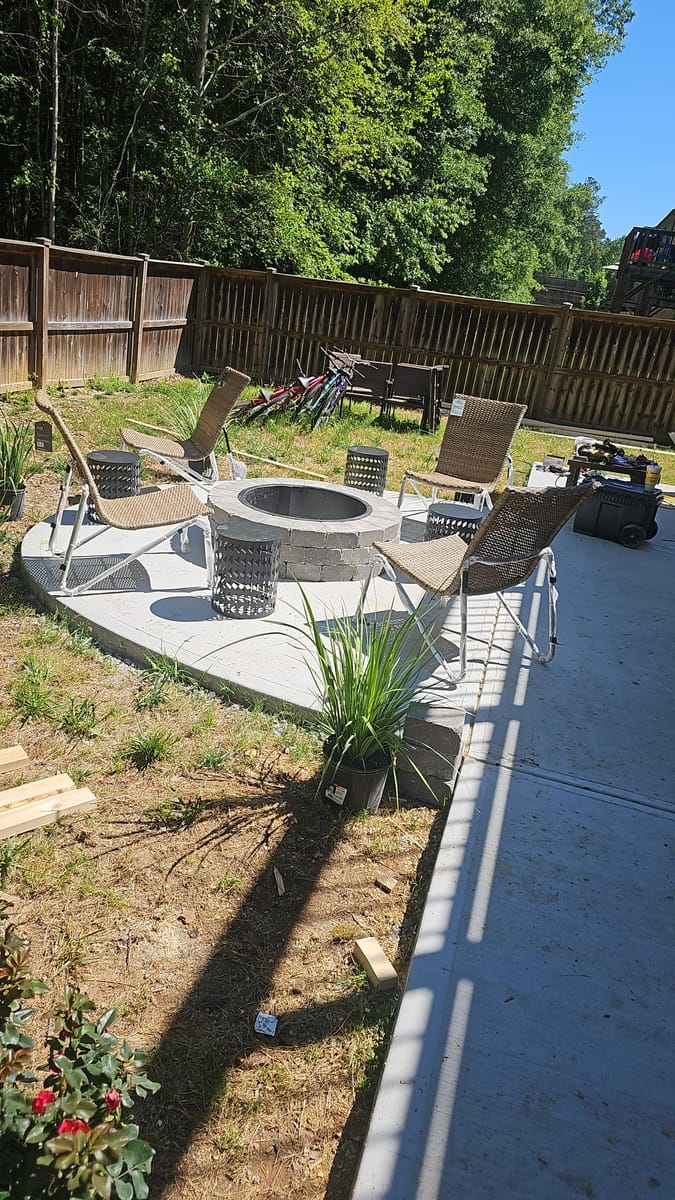
Fire pit and seating on the patio below, Cumming, Georgia
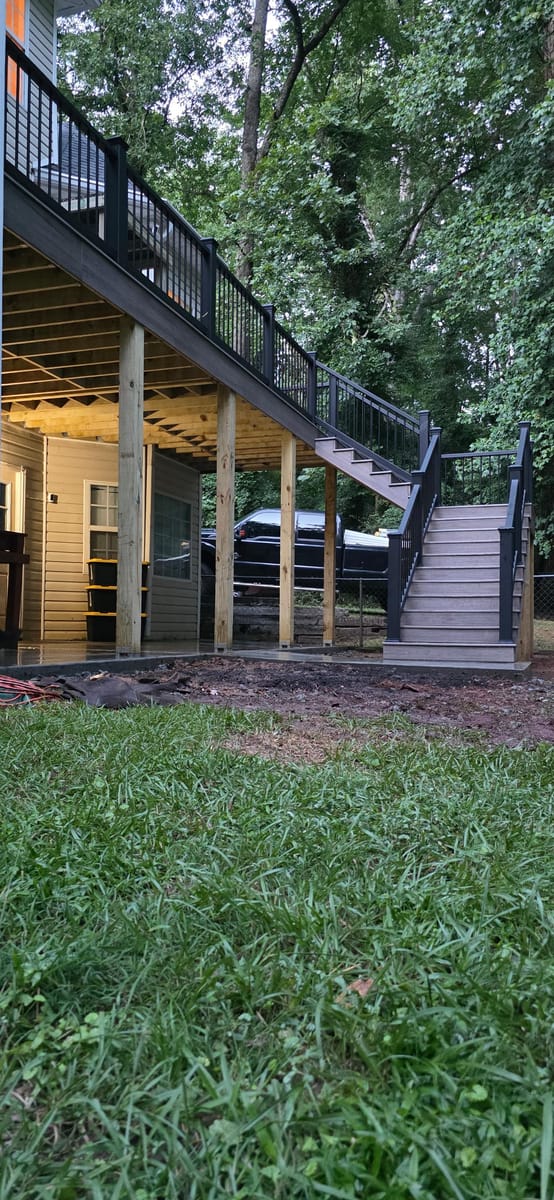
Deck rebuilt in Trex with black metal railings, over a poured concrete landing at the foot of the stairs, Stockbridge, Georgia
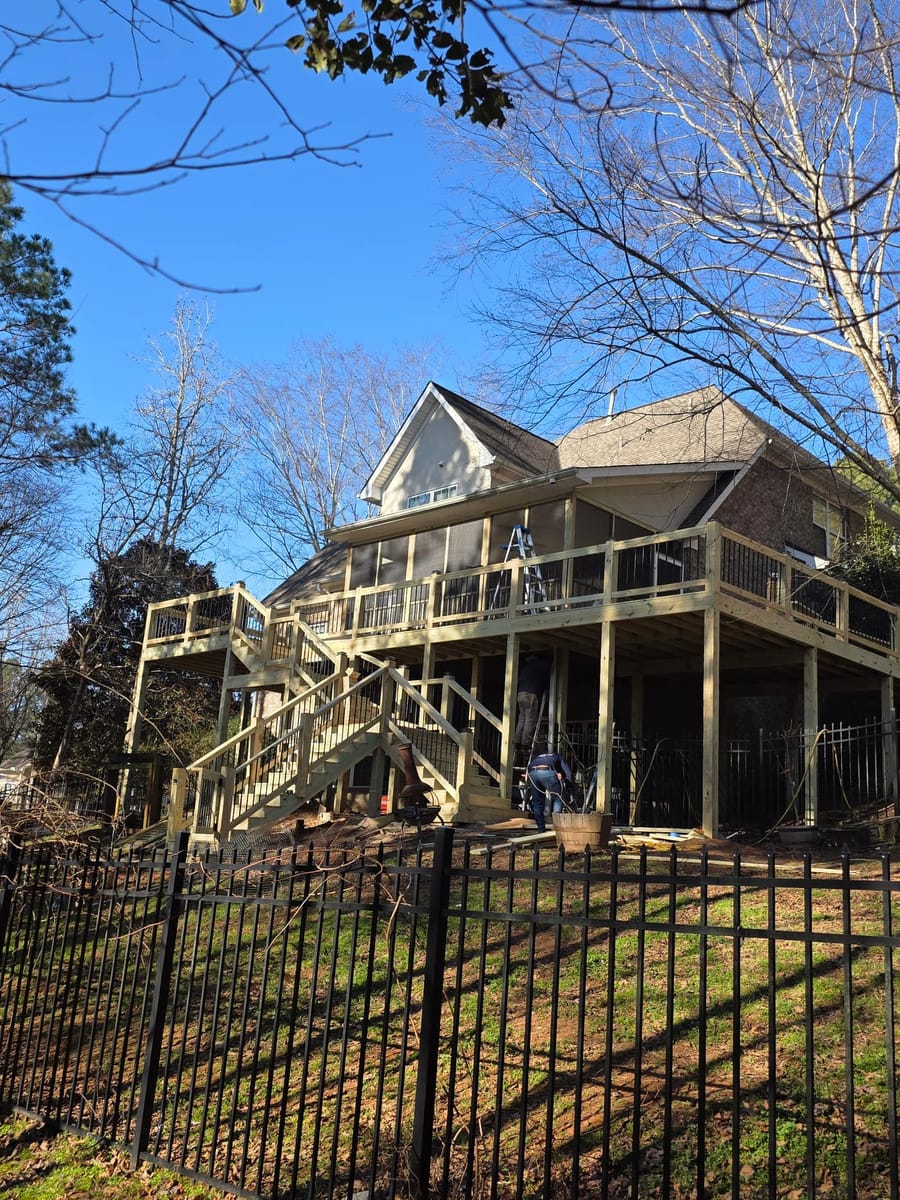
New elevated deck and screened porch on a brick home, with a pergola structure at grade below, McDonough, Georgia
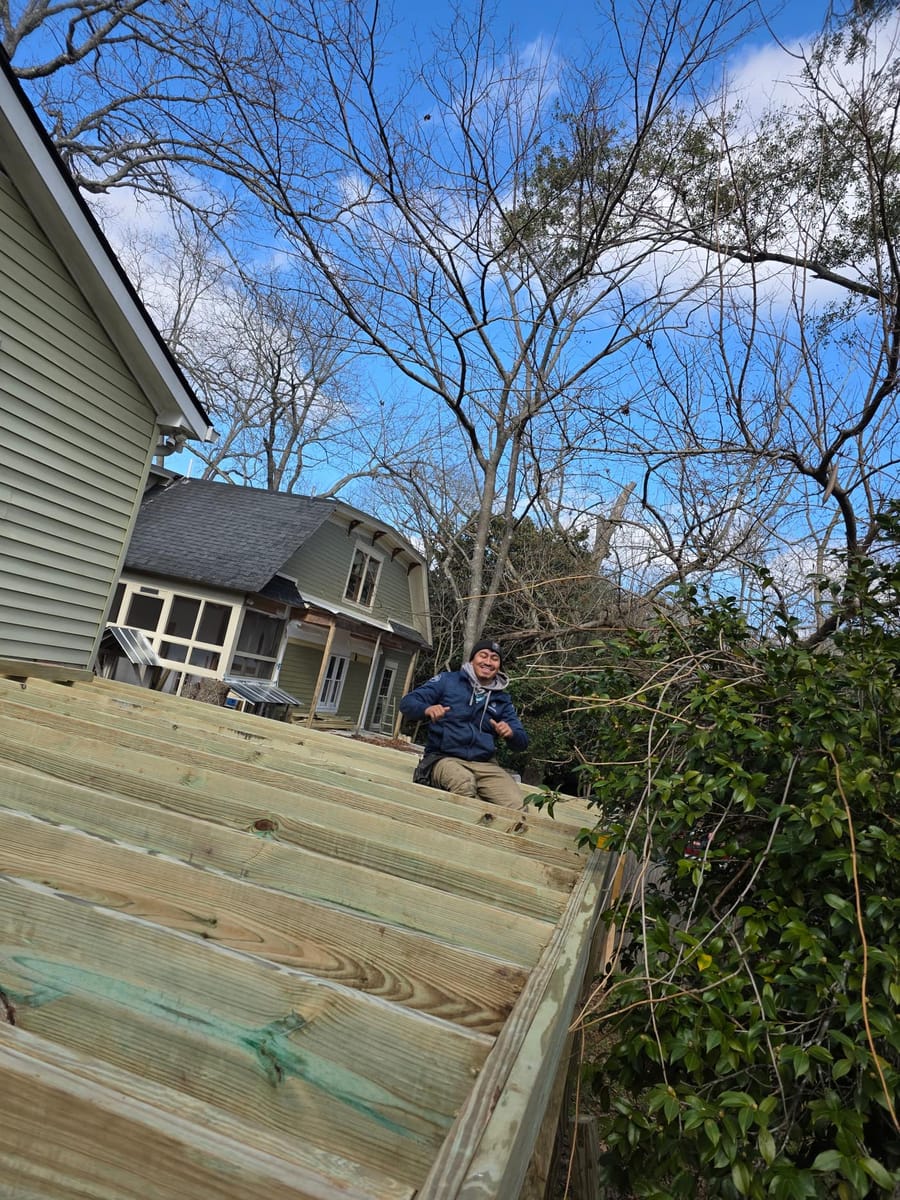
New elevated deck with railings and a long stair run to grade, Dacula, Georgia
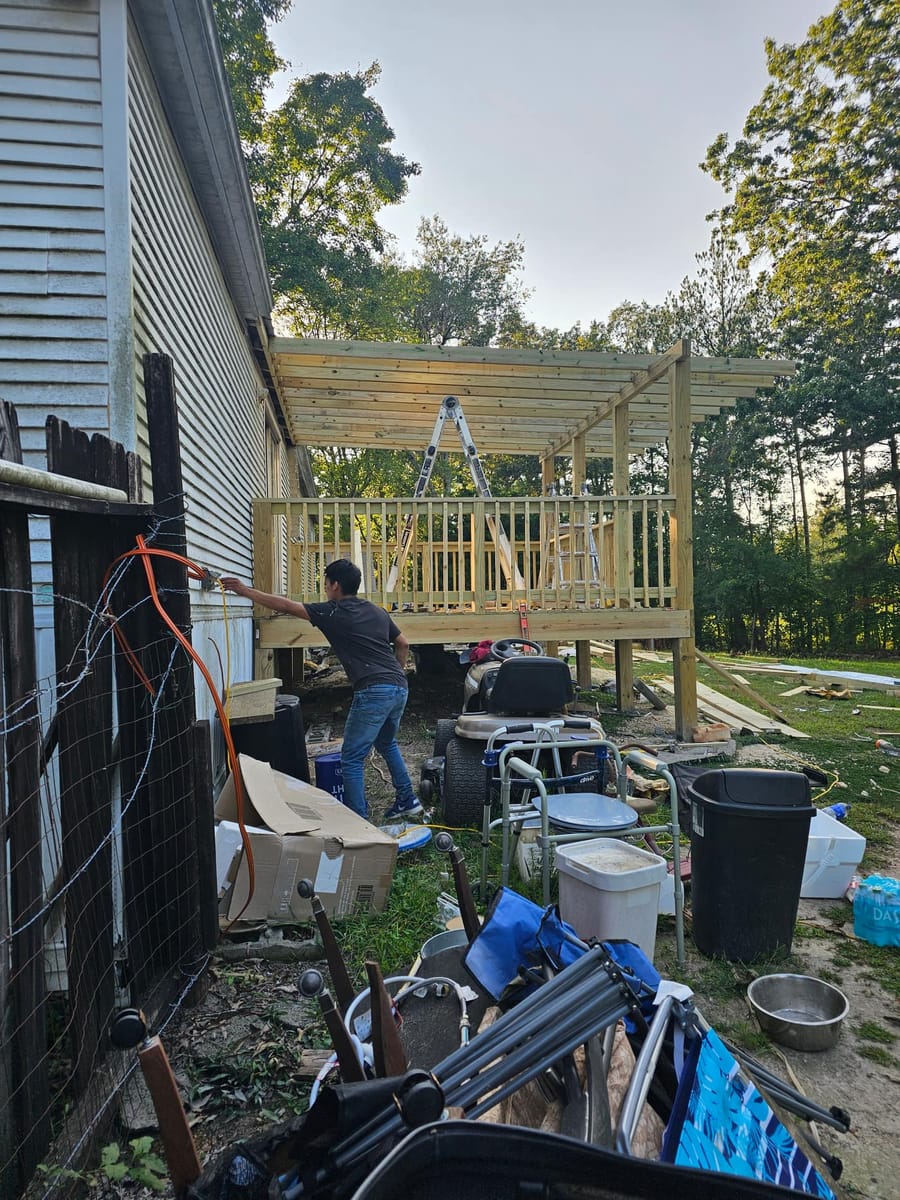
New deck with roof structure and stair access built onto a manufactured home, Dalton, Georgia
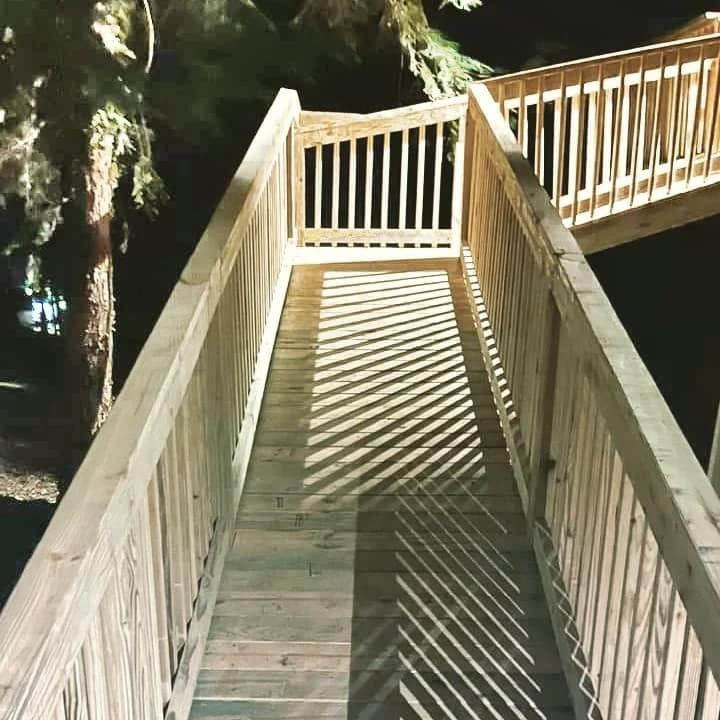
Long switchback accessibility ramp in pressure-treated lumber with full-height railings, rising through wooded ground to an elevated rear entry, Woodstock, Georgia
Three quick steps. We call you back ourselves, and nothing here commits you to anything.
We call back ourselves, so the number that rings you will be (706) 879-8873. If you would rather not wait, call us now at (706) 879-8873.
Got a photo of the spot? Text it to (706) 879-8873. It answers more than a paragraph does, and it reaches the same phone as your request.
What actually happens
Most composite wants closer joist spacing than solid wood, and diagonal layouts want closer still. Choosing a board after the frame is up is how people end up adding joists.
Hidden clips ride in a groove in the board edge. Face screws go through the top. Clips look cleaner and take longer, and they're not available on every profile.
Composite grows and shrinks along its length with temperature. End gaps and butt joints are set for the day it's installed, which is why a July deck and a January deck aren't spaced the same.
Cut ends of capped composite expose an uncapped core. Fascia, picture framing or a cut-end sealer is how that gets covered, and it's the detail that separates a finished deck from a fast one.
Questions we get asked
Yes, noticeably more than wood in the same sun, and darker boards more than lighter ones. If the deck faces west and gets used barefoot, that's a real argument for a lighter color even when you prefer the dark one.
No. It's refinishing free, which is a different claim. You still wash it. Pollen season here leaves a yellow film on everything and it sits on composite exactly as happily as it sits on wood.
Both, along with PVC boards and pressure-treated pine. Each brand has several lines that behave differently from each other, so the useful question is which line, not which brand.
Sometimes. The frame has to be sound and the joists have to be close enough together for the board you want. We measure the existing spacing before quoting, because adding joists to an old frame is real work and it belongs in the number you're given.
Capped boards resist it better than early uncapped ones did, but a dragged grill or a dog that plants its claws to corner will still mark a surface. Wood hides that better because wood already looks worn.
Where we work
Tell us how the deck gets used and which way it faces. That answers the material question faster than a brochure does.