
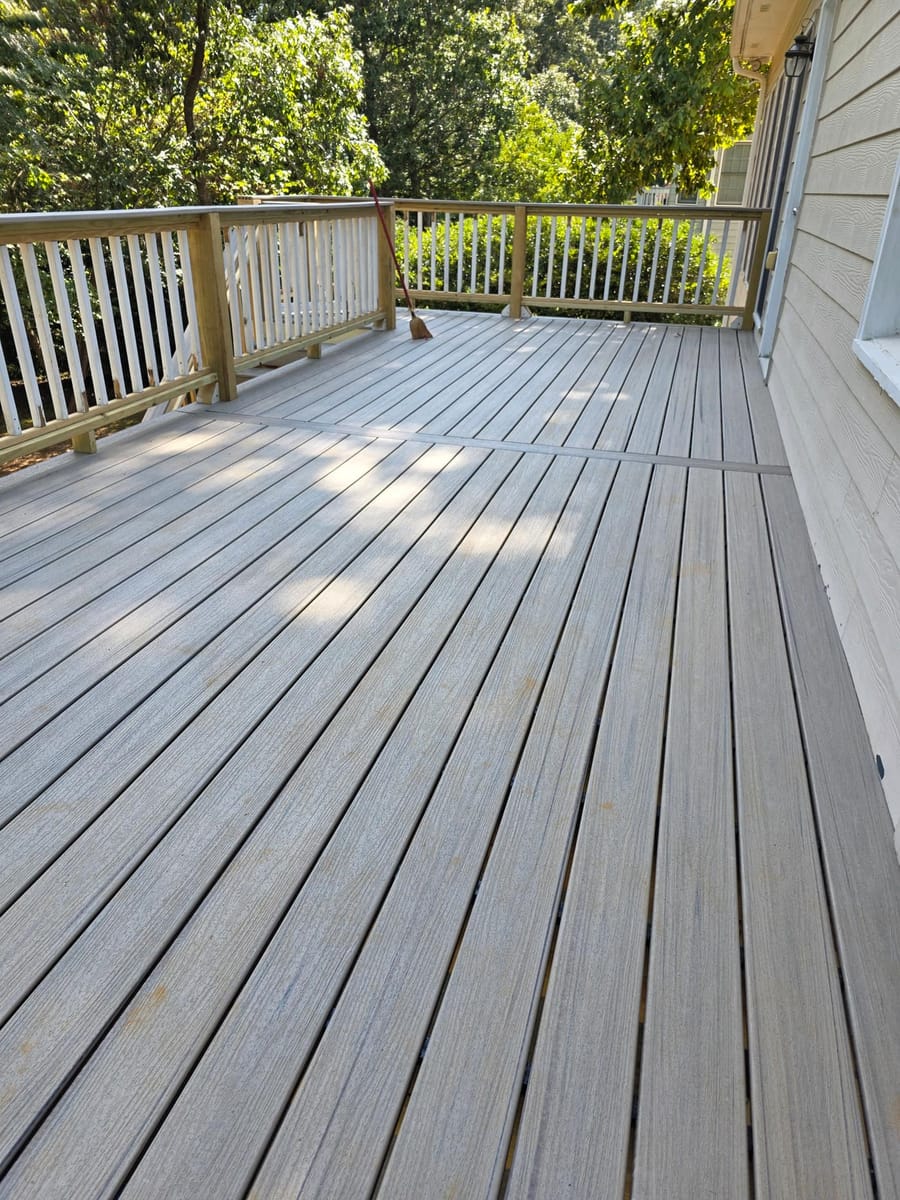
Weathered boards replaced with gray Trex composite decking on the existing frame beneath a covered deck, Kingston, Georgia
Diagnosis before demolition
Most deck problems announce themselves in the surface and live in the frame. Knowing which one you have is the whole job.
Northwest Georgia and the north Atlanta metro
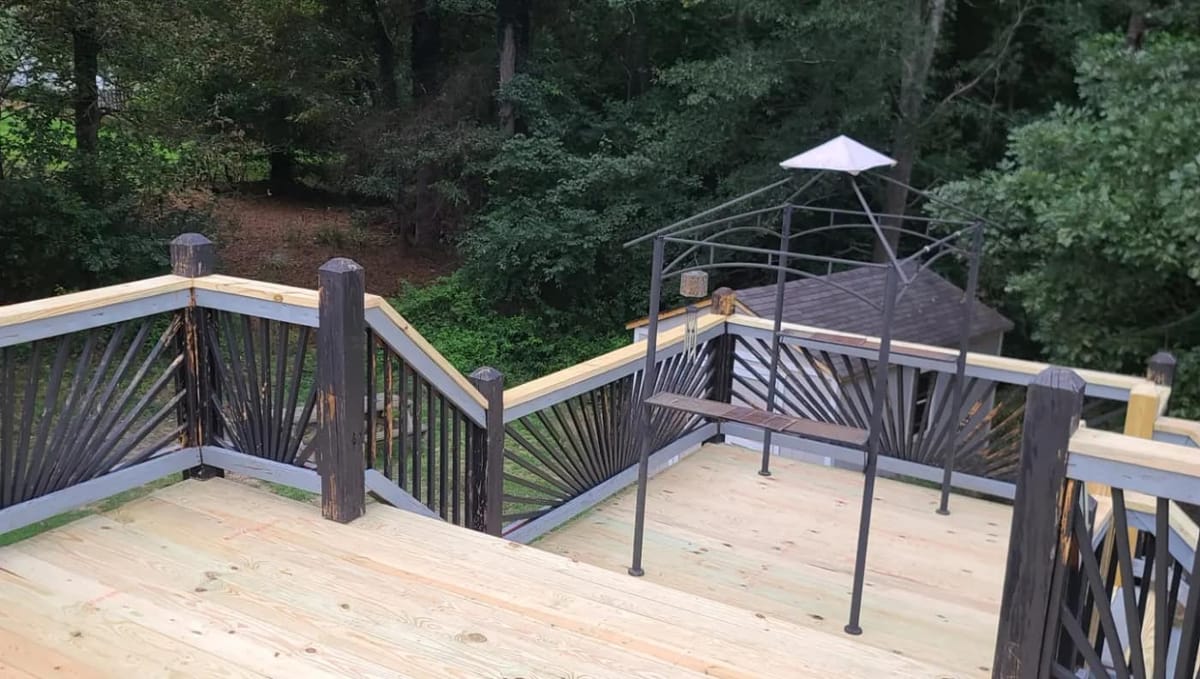
Almost every deck complaint sorts into one of two piles. Gray wood, splinters, cupped boards, a stain that has given up. That pile is cosmetic.
It looks bad, it's cheap to put right, and none of it is dangerous. Softness, movement, a rail that gives, a stair tread that has dropped. That pile is structural.
It rarely looks as bad as the first pile. It's the one that matters. The trouble is that homeowners meet the cosmetic pile every day and the structural pile once. So the deck gets sanded and stained, and the joist carries on rotting under a fresh coat.
A deck board is short. It spans from one joist to the next and very little else is asked of it.
So when a board dips underfoot, the board is usually fine. What has moved is the joist holding it, or the hanger holding the joist. Water gets into the top of a joist through the gap between two deck boards. It sits there in the shade of the decking and never fully dries.
Which is why joists rot from the top down while the boards over them still look reasonable.
A post rarely rots in the middle. It rots in a band a few inches either side of grade, where wood is wet often and dry often.
Push the base of each post sideways. A post that rocks has either lost its footing or lost its ankle. Two different repairs, two different prices.
Rails come loose because the posts holding them are fastened to a rim joist that has softened. The rail itself is rarely the problem, and refastening into bad wood buys a few months.
Stairs drop because the stringer is sitting on dirt. Once the bottom of a stringer wicks water it goes quickly, and the tread nearest the ground is the one that gives.
Repair is right when the structure is sound and the damage is in one area. Resurfacing is right when the frame is good and only the walking surface is finished. Rebuilding is right when the failures are in the frame itself.
Once posts, beams or the ledger are coming out, you're already most of the way to a new deck. Paying twice for the same work is the outcome nobody wants.
If the answer turns out to be a new deck, deck building covers how the structure gets put back. If the answer is a fresh surface, staining and sealing is the finish and composite decking is the swap. Loose rails and dropped stair runs live on the railings and stairs page. To think it through before calling anyone, choosing between decking, fencing and patio materials lays out the trade-offs, and cleaning and sealing a deck covers what regular care actually prevents.
Twenty eight people have reviewed our work on Google and every one of them gave five stars. Read them, or send us the details.
Our work
Weathered boards replaced with gray Trex composite decking on the existing frame beneath a covered deck, Kingston, Georgia
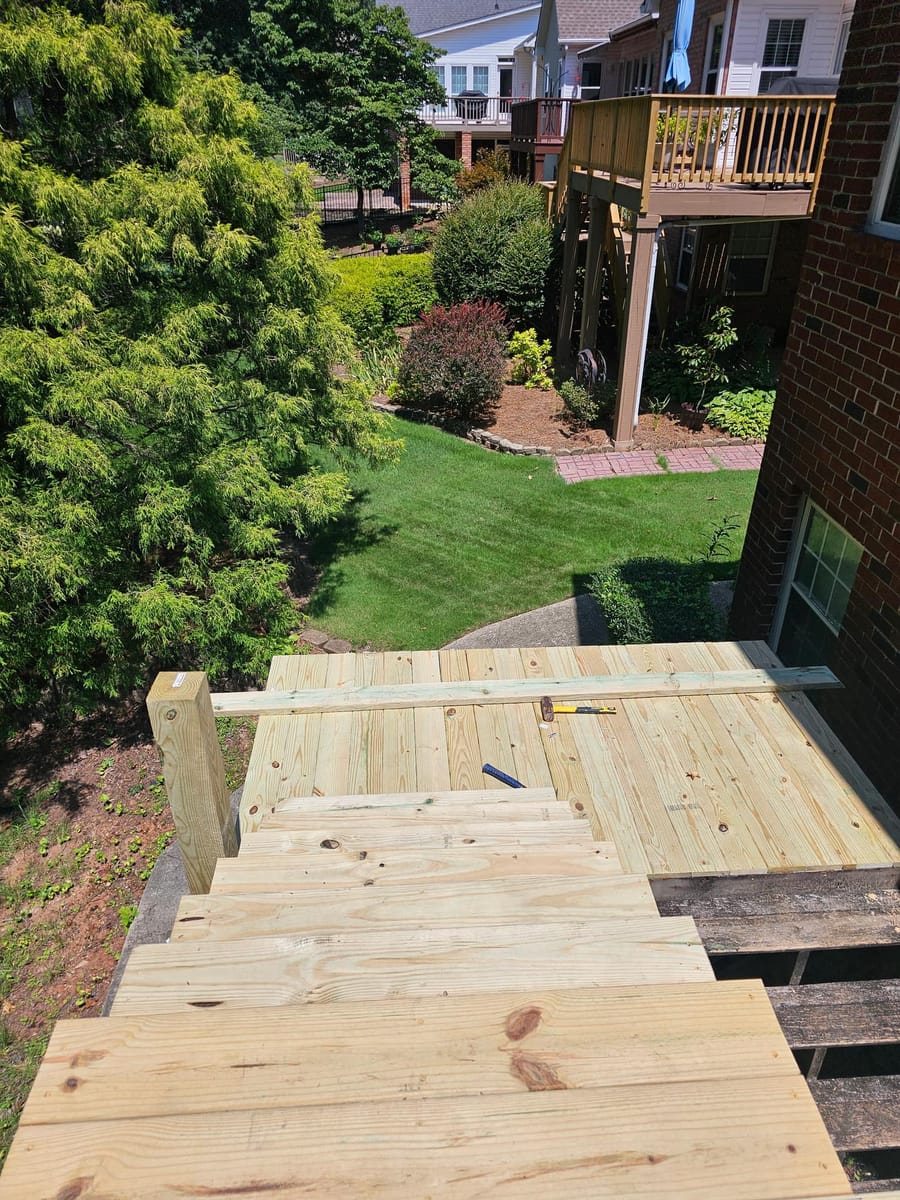
Deck re-boarded and stairs rebuilt on a brick home, existing lattice skirting retained, Fulton County, Georgia
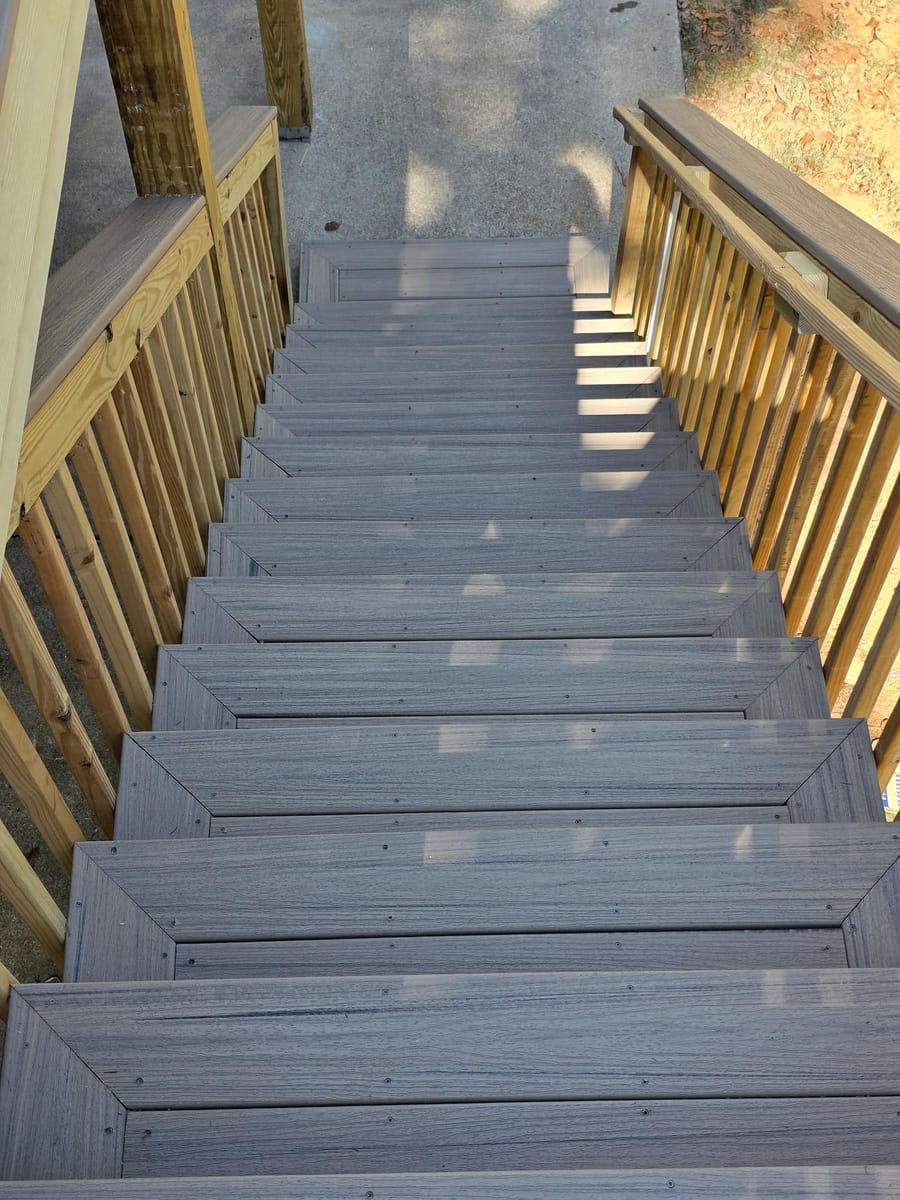
Weathered boards replaced with gray Trex composite decking on the existing frame beneath a covered deck, Kingston, Georgia
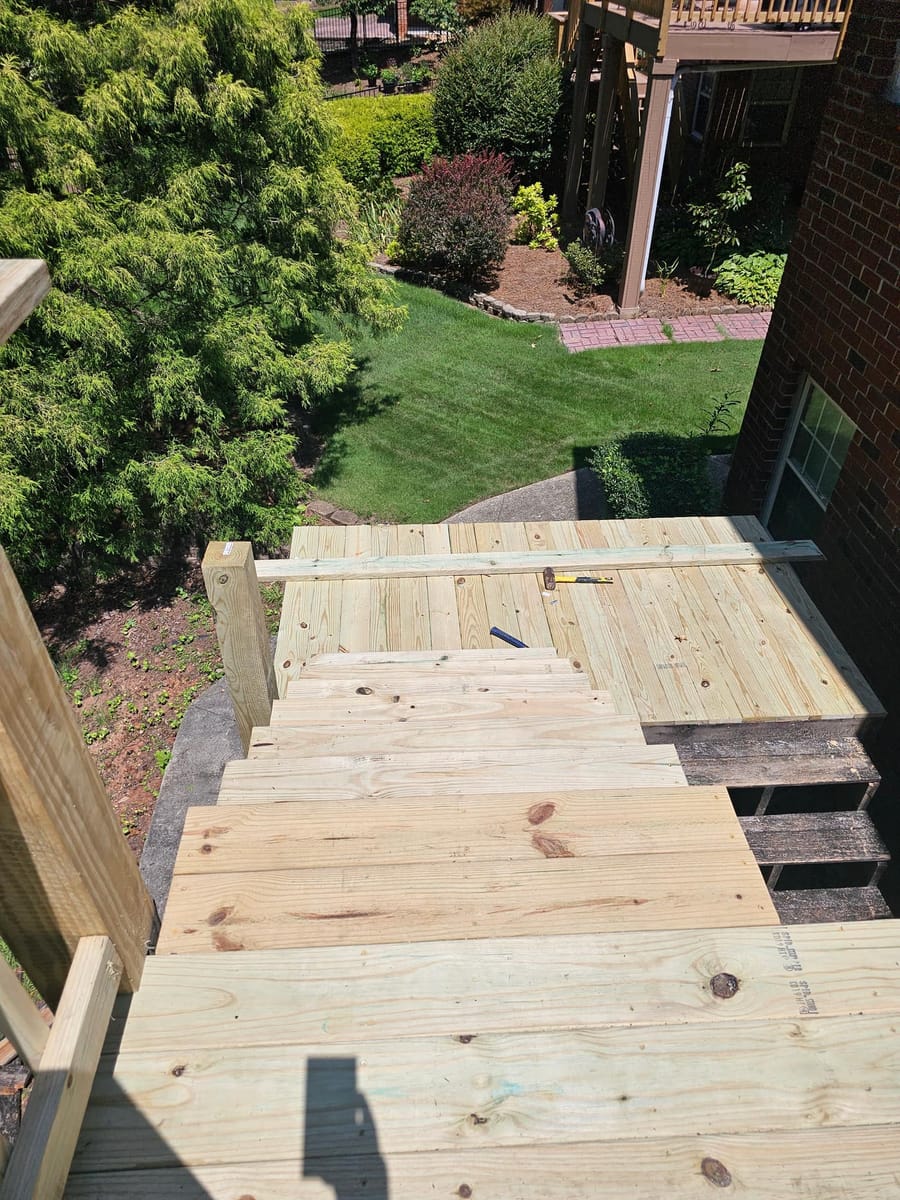
Deck re-boarded and stairs rebuilt on a brick home, existing lattice skirting retained, Fulton County, Georgia
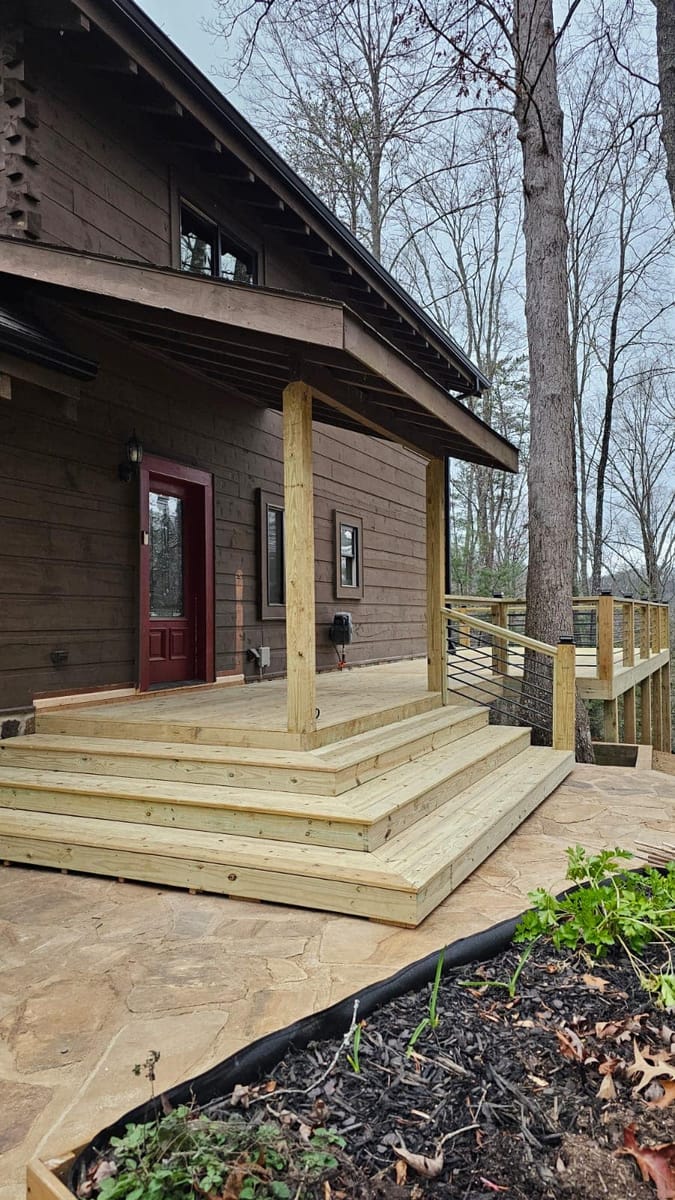
Wide entry steps and landing in fresh timber, with cable railing, meeting the flagstone path at a cabin door, Blue Ridge, Georgia
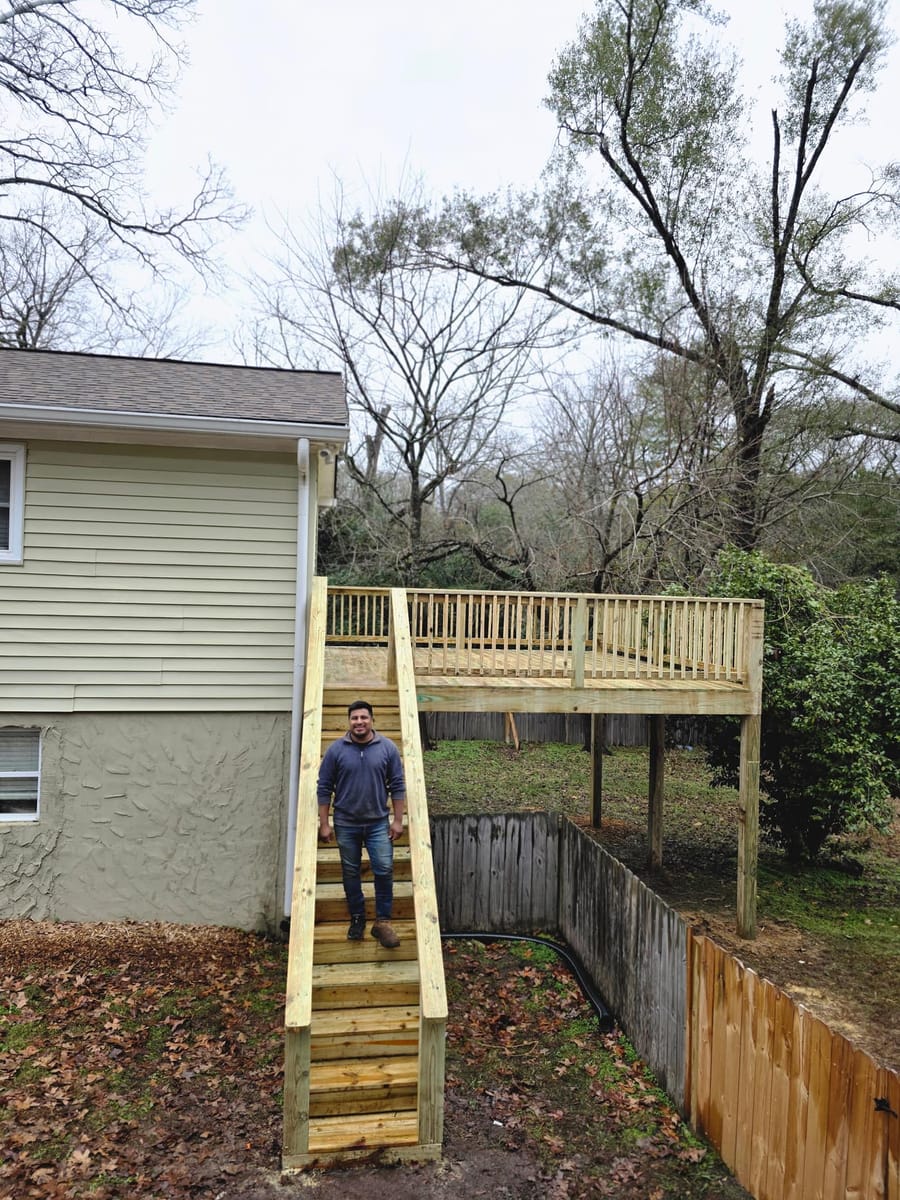
New elevated deck with railings and a long stair run to grade, Dacula, Georgia
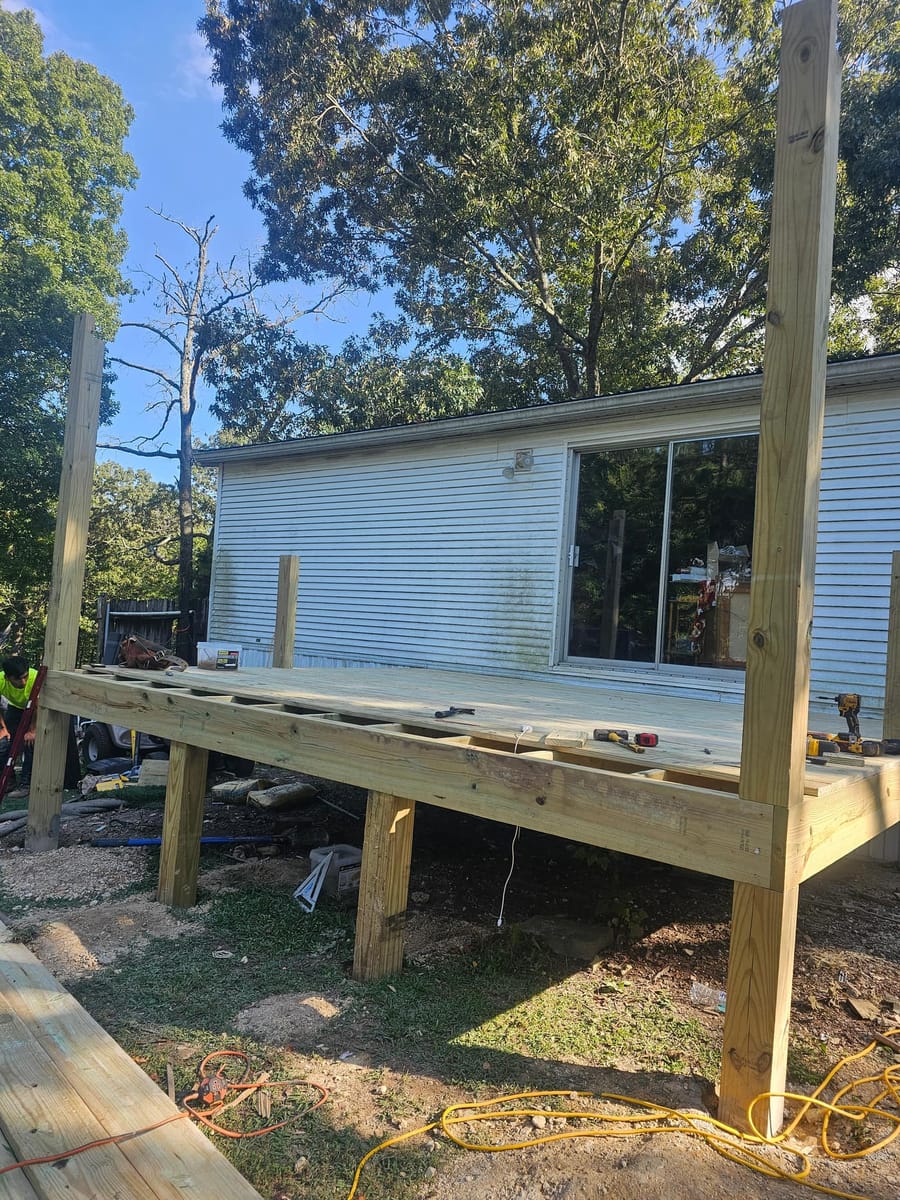
New deck with roof structure and stair access built onto a manufactured home, Dalton, Georgia
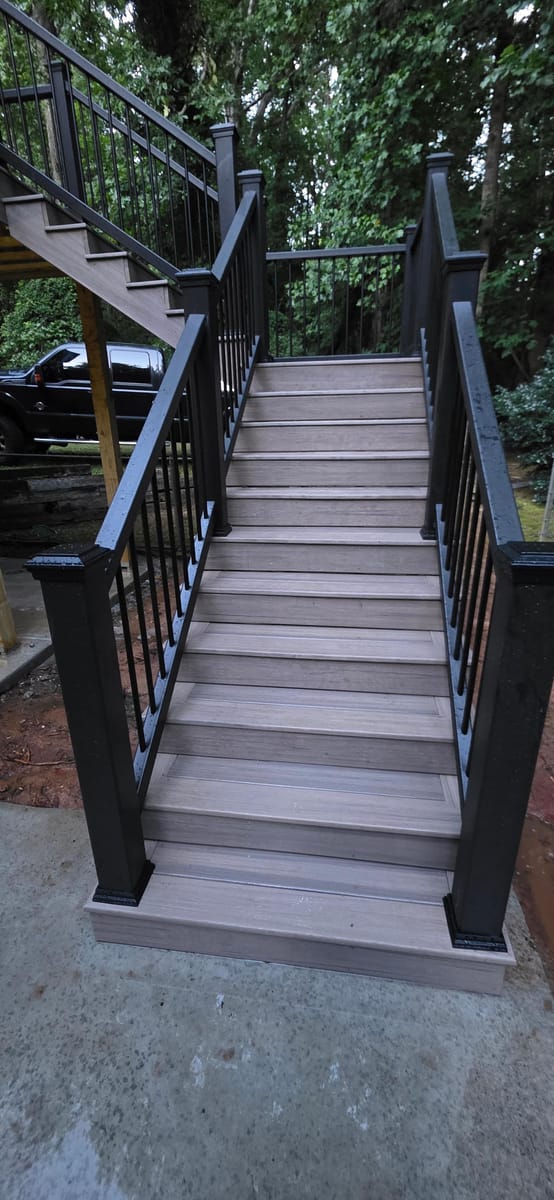
Stair treads landing on the poured concrete pad, Stockbridge, Georgia
Three quick steps. We call you back ourselves, and nothing here commits you to anything.
We call back ourselves, so the number that rings you will be (706) 879-8873. If you would rather not wait, call us now at (706) 879-8873.
Got a photo of the spot? Text it to (706) 879-8873. It answers more than a paragraph does, and it reaches the same phone as your request.
What actually happens
Sound wood pushes back. Wood that has gone soft takes a blade with almost no pressure. Ten minutes under a deck answers more questions than an hour standing on it.
Where the deck meets the house, where posts meet the ground, and where stair stringers land. Failures cluster at joints and at the soil line because that's where water stops moving.
We lean on rails, walk the middle of the longest span and watch the frame, not the boards. Movement travels. A rail that moves can be a rail problem or a rim joist problem.
What has to be done now, and what can wait a season or two. Those are different lists and you should get both of them before you decide anything.
Questions we get asked
Boards that are gray, splintered or cupped are a surface problem. Boards that flex, dip or feel spongy under one foot are usually telling you about the joist beneath them. If the whole deck moves when somebody crosses it, the movement is in the frame or the posts.
Yes, when the frame under them is sound, and that's checked first. Laying new decking over tired joists buys a few seasons and hides what's really happening. We'll tell you if that's what you're about to pay for.
Yes. Storm damage is usually easier to price than slow rot because the failure is visible. The question worth asking is whether the rest of the run was already weak and the storm simply found it first.
When the frame is the problem, not the surface. Once posts, beams or the ledger have to come out, most of the deck is already coming apart, and rebuilding costs less than repairing it twice. Repairs make sense when the structure is sound and the damage is local.
Where we work
Describe it on the phone and we'll tell you what we need to see. English or Spanish, whichever is easier.