
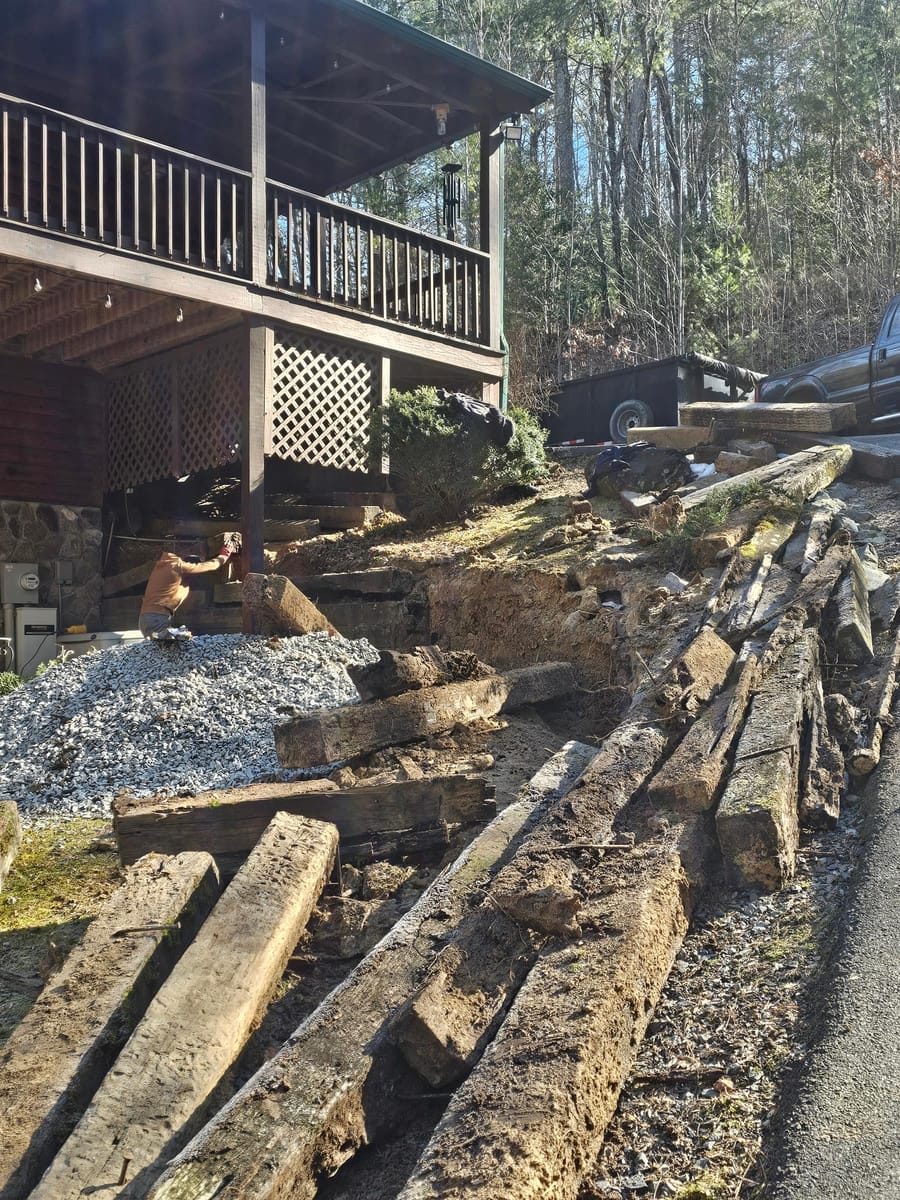
Rotted timber wall members removed, Blue Ridge, Georgia
Fannin County
The highest ground we build on, and a long way from any interstate ramp. We have already worked up here.
Around 85 minutes, 62 road miles by Fairmount Highway Southeast and APD Highway. Only 3.8 of those miles are interstate and the nearest ramp is 33.8 miles from town.
Blue Ridge is 62 road miles out of Adairsville and the route is almost all two-lane. The nearest interstate ramp is 33.8 miles from town, further than for any other town we cover.
So this is a town we drive up to for a job worth the day, and we have driven it. Deck work and block walls, up where the ground is steepest, and both kinds turn up on the gallery. Blue Ridge sits in Fannin County, the top corner of the area we cover.
Send a description of the lot and we'll tell you what it needs.
Order the Blue Ridge houses by age and the one in the middle was finished in 1989. The deck that went on with it is well past thirty now. What gives out first is a post base, a stair stringer, or where the deck hangs off the house.
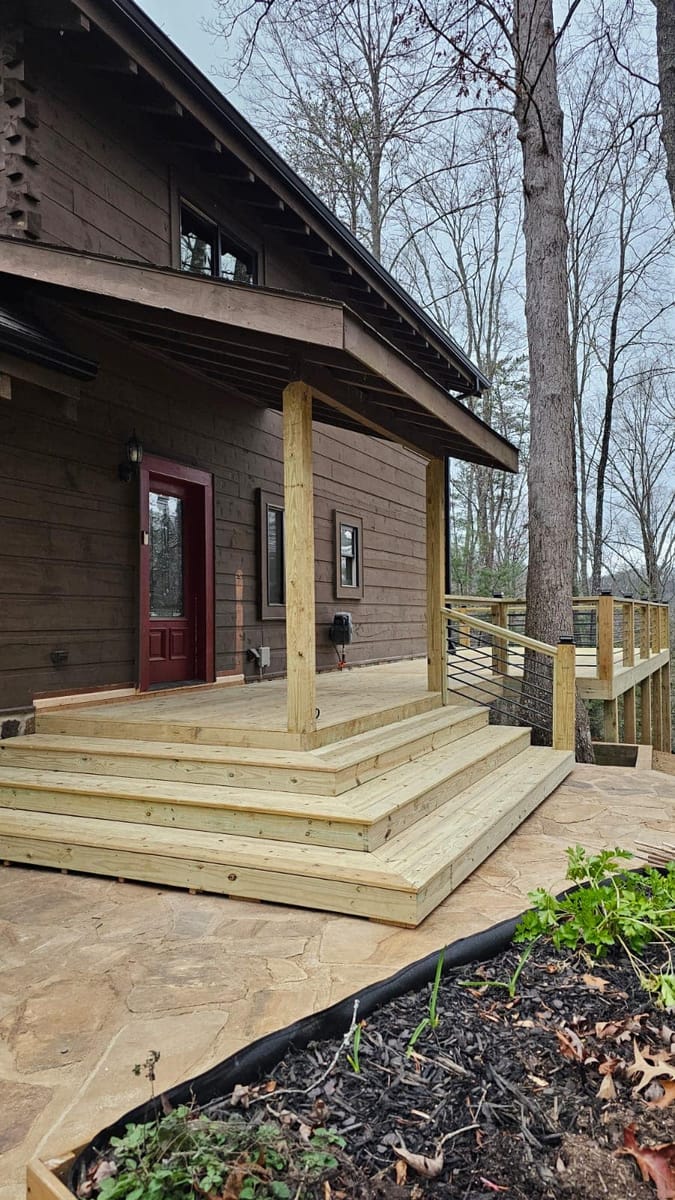
We have built decks in this town, including one that carries around more than one side of the house. What's left of the frame decides between saving a deck and replacing it and starting again from footings.
There are 787 homes in the whole of Blue Ridge. At that size no two lots repeat down the street, so a fence line follows the shape of the yard and the ground it crosses. Squaring off a subdivision lot this isn't, and the fence company page settles which material belongs on ground that moves.
That works out at 33.8 percent. In a town this small that share shifts from one year to the next, but the direction of it is not in doubt: most homes lived in up here are rented instead of owned. A pergola, or a patio cover with a real roof on it gets bought by the household that's staying, so the work here concentrates in a small share of the town.
Blue Ridge Lake covers 3.84 square miles inside the town line and the Toccoa River is in there with it. No other Georgia town we cover holds that much water inside its own boundary. Still water on that scale settles whether a porch left open is any use after dark in August, and the screened porch page takes it from there.
The lowest ground inside the Blue Ridge boundary is 1,553 feet, higher than the highest point of any other town we cover. The top of the town is 1,903, so 350 feet of fall sits between the two and a yard here gets cut into the slope, not laid on it.
We have built block retaining walls in Blue Ridge. What decides whether one stays put happens before the first course goes down: what's behind it, and where the water that lands above it is going to end up.
Four creeks carry names inside the Blue Ridge line, and on this much fall none of them is ambling. Water leaves fast, along a route it picked long before anybody built a house above it. Put down a hard surface and you have moved that route whether you meant to or not. Laying out a patio, a walkway or a run of steps starts with where the water was already going.
On a lot with 350 feet of fall across the town, level ground is the scarce thing. A fire pit usually ends up on a shelf that has to be made for it, which is why it gets planned with the wall or the patio, not dropped in afterwards.
Building it's hardscape work. The guide to fire pits shows what suits what.
Finished in Blue Ridge
Rotted timber wall members removed, Blue Ridge, Georgia
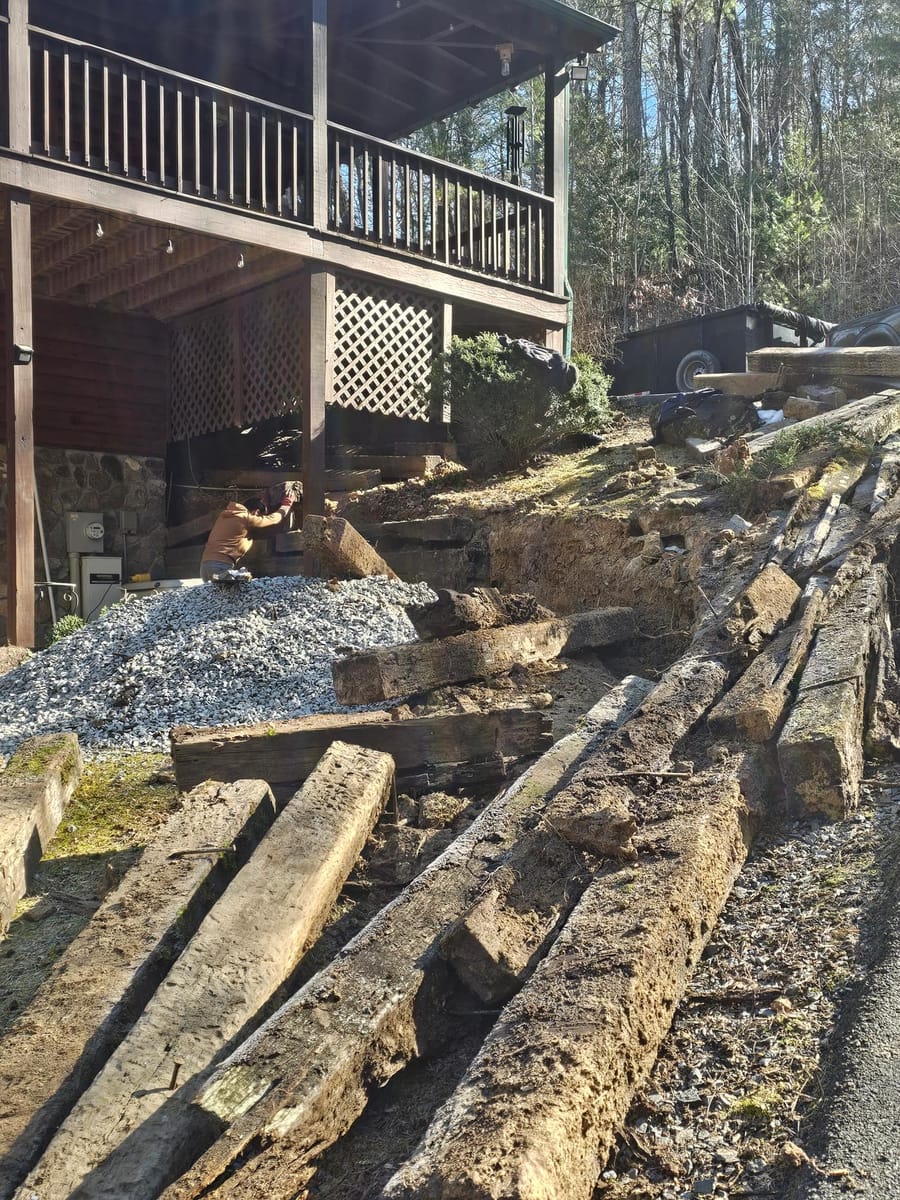
Old timbers stacked clear of the new work, Blue Ridge, Georgia
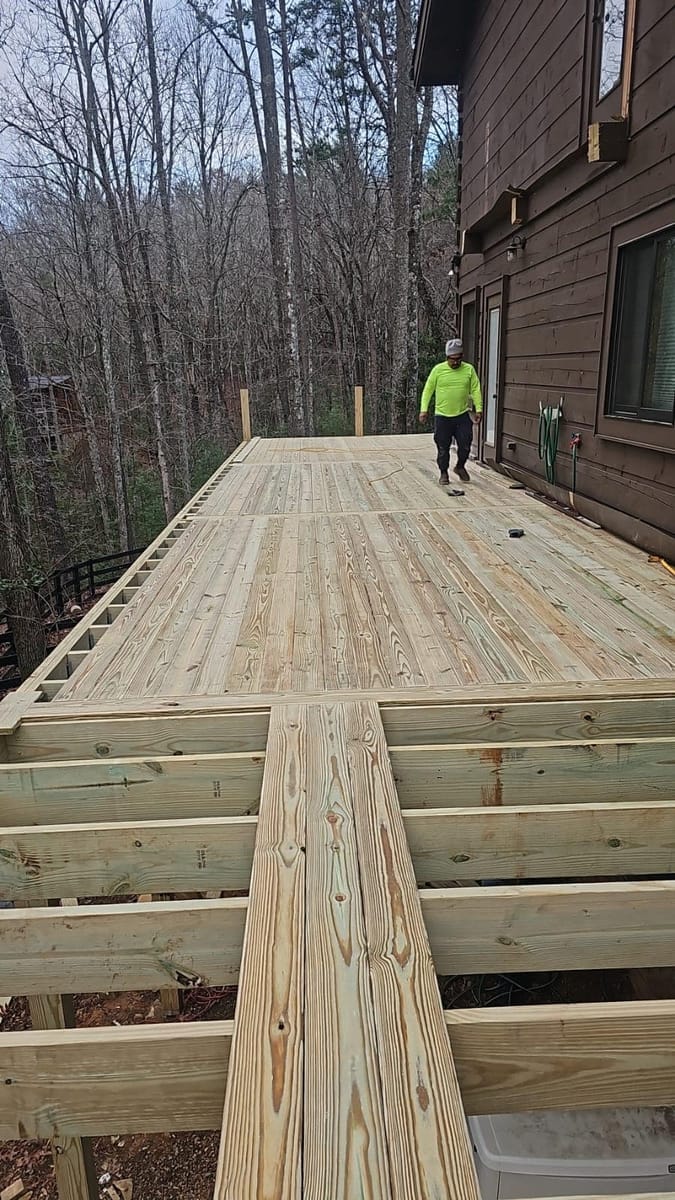
Wraparound deck built around a timber cabin, with beam work and footings cut into the hillside, Blue Ridge, Georgia
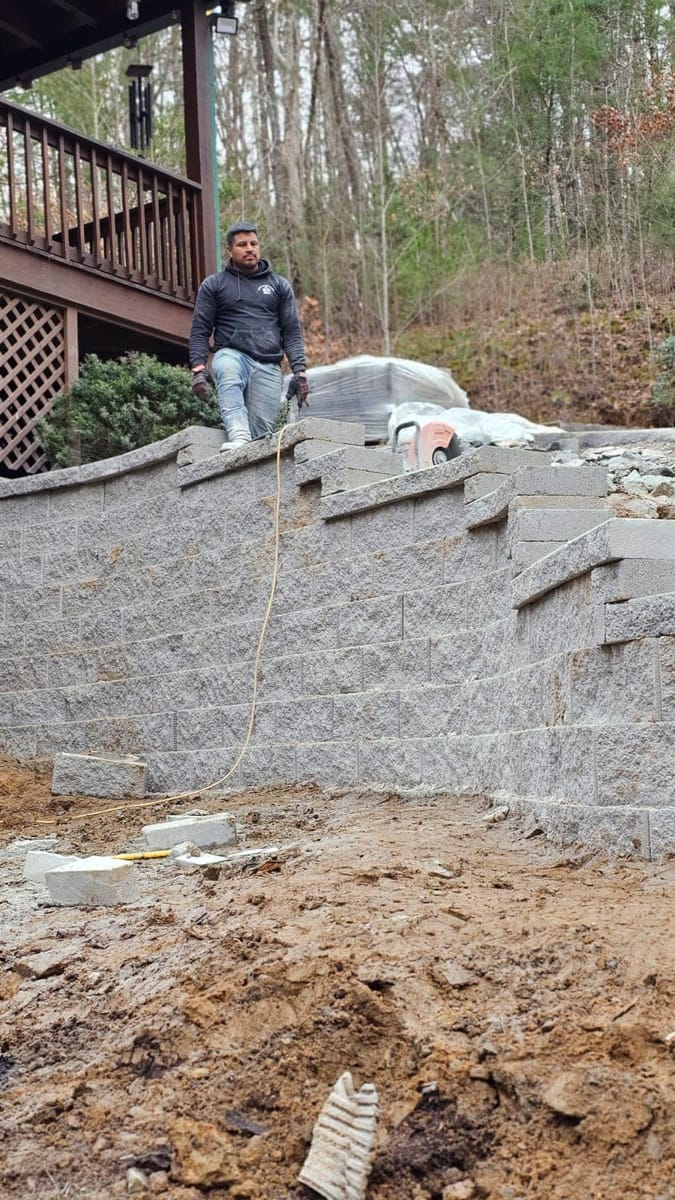
Failed timber retaining wall replaced with segmental concrete block on a steep mountain lot below a cabin, Blue Ridge, Georgia
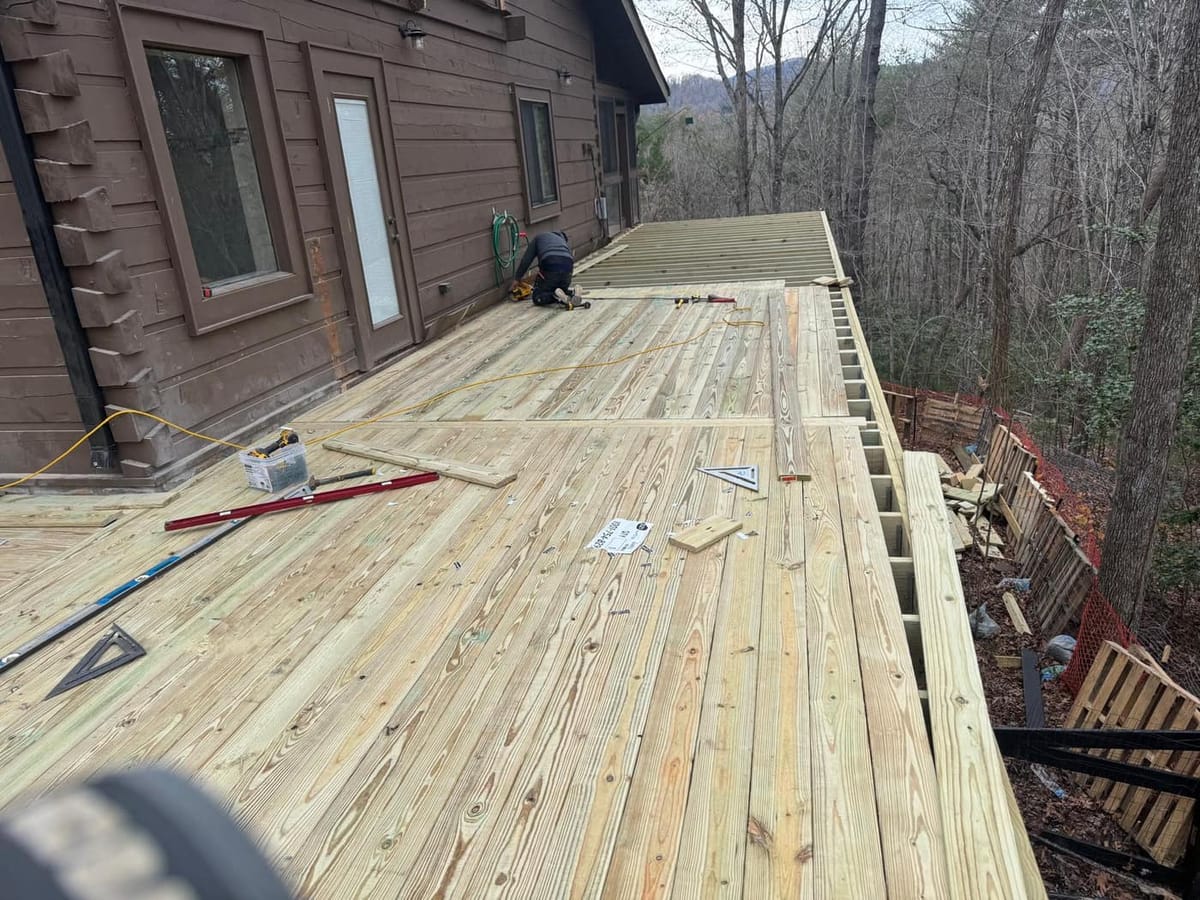
Wraparound deck built around a timber cabin, with beam work and footings cut into the hillside, Blue Ridge, Georgia
Yes. We have deck and wall work up there already. The distance changes when we can get to you, not what we do once we arrive.
Once a timber wall starts to lean, the timber is usually why: wet ground has been sitting against wood for years and there's no straightening that. Rebuilding the same line in block is the usual answer, and it's the kind of wall we build up here.
Yes, and we have built one in Blue Ridge that does. How far it can carry depends on where the ground drops away and where the doors come out.
Nearby
Work up the ridge takes the whole day and we plan for it. Call and describe the lot.