
Fire pits
Fire Pit Ideas and Designs
A fire pit is the cheapest thing you can add to a yard that changes how often people are in it. Getting it right is mostly about size, position and what you sit on.
Updated August 2026
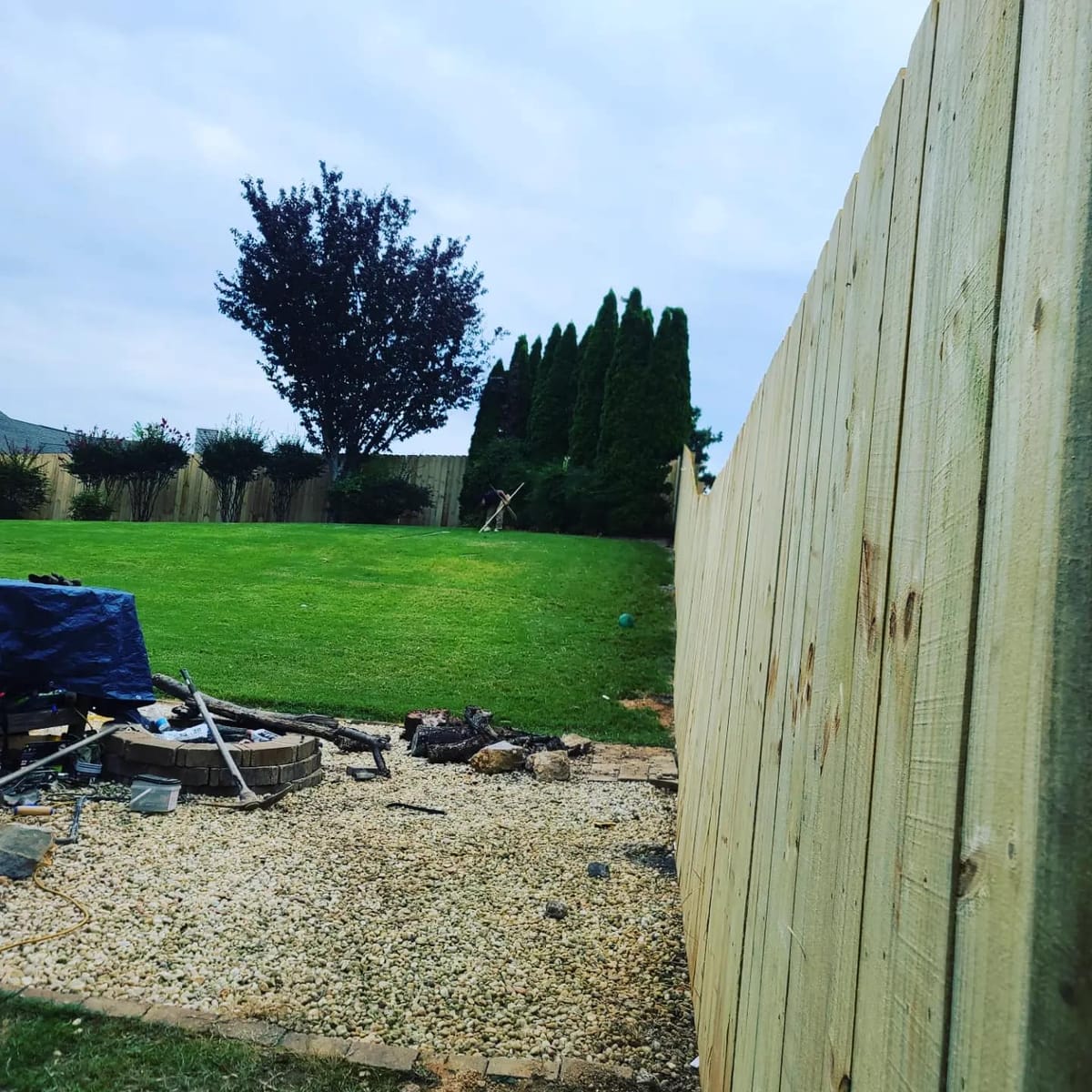
The first fork: built in place, or something you can move
Both are legitimate and they suit different people.
A freestanding unit is bought, delivered and set down. It can be moved, stored and taken with you. It never quite looks like part of the yard, and the cheap ones rust through in a couple of seasons.
A built pit is a small masonry structure on a proper base. It sits in the landscape as if it had always been there, it can be sized to your seating, not to a catalog, and it's permanent, which is the point and also the risk if you get the position wrong.
The construction is the same discipline as any other hardscape at a smaller scale: a compacted base, a level first course, and something that stays put. That work is covered on the hardscape page.
Size it to the chairs, not to the yard
The most common mistake is building it too big.
A pit around thirty six to forty four inches across the inside works for a family and a couple of guests. It holds a real fire, it throws heat to a ring of chairs, and everyone can still hear each other.
Go much larger and the fire pushes the seating back, the circle gets wide, and conversation breaks into two halves. Go much smaller and you have a nice bowl with a small fire in it.
Work backward from the seating instead. Count the chairs you actually own, allow around thirty inches of arc per person, and size the circle around that. Then leave a walking gap on one side so people aren't climbing over each other to get in.
Where it goes
Position is the part that decides whether the pit gets used, and it comes down to four things.
- Clear of anything that burns. Distance from the house wall, the deck, the fence and low branches. Steel inserts and gas burners publish a clearance to combustible surfaces and that figure is the floor. We build with more room than the box asks for, because a fire on a windy evening isn't the same fire as the one in the instructions.
- Downwind of where people sit. Watch which way smoke drifts on a normal evening before you commit. Prevailing wind here is generally out of the west and northwest, but the house, the fence and the trees around any particular yard bend it.
- Not in the low corner. The natural instinct is to put the pit in the far corner, which in most yards is also the wet corner. A fire pit sitting in standing water is a fire pit nobody uses in spring.
- A short walk from the door. The further it is, the less it gets lit. On a big lot, give it a proper route, because a lit path is what makes people go out there in November.
Twenty designs
- Round block pit with a steel insert, set flush into a paver field.
- Square pit tucked into the corner of a rectangular patio.
- Sunken seating area one step down, with the surrounding wall as the seat.
- Tall stacked stone surround with a wide cap for drinks.
- Low surround at knee height, so the fire is visible from a chair.
- Gas ring in a stone table, at coffee-table height.
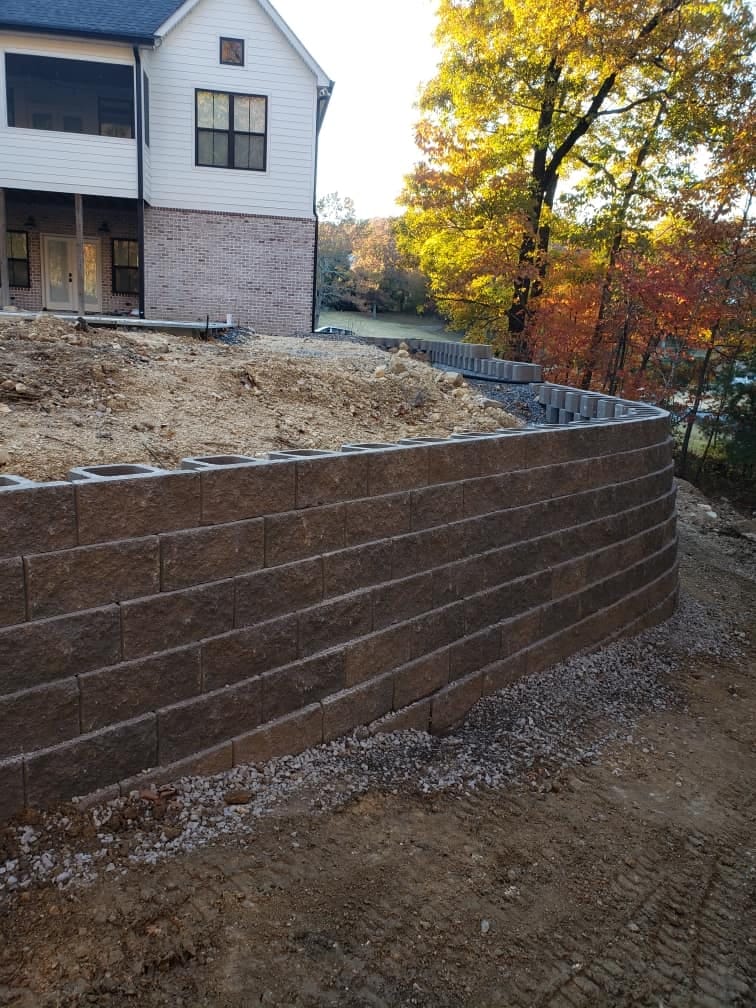
- Pit built into the end of a retaining wall, using the wall as the back of the seating.
- Gravel apron, not paving, which is cheaper and drains beautifully.
- Fire pit with a grill grate that swings over it.
- Rectangular linear fire feature along the edge of a patio.
- Boulder surround on a wooded lot, matching stone already on the property.
- Brick pit matching the house, which ties the yard to the building.
- Pit with a removable cap that turns it into a table out of season.
- Two-level design: fire below, wide cap above for feet.
- Fire pit inside a walled courtyard, where the wall blocks the wind.
- Pit at the end of a walk, deliberately away from the house as a destination.
- Pit paired with a pergola beside it, not over it, so there's shade by day and open sky above the fire at night. Never directly over a wood fire, for reasons the pergola guide makes obvious.
- Built-in wood store in the seat wall.
- Curved bench wall on the windward side, chairs on the other three.
- Cap lighting in the seat wall, so people can find the seats without a floodlight.
Seating, which matters more than the pit
A beautiful pit surrounded by four plastic chairs is four plastic chairs. Three approaches, in order of cost.
Chairs. Flexible, storable, and the right answer if the space does other jobs. Needs a flat, firm surface or they rock.
A seat wall on one or two sides. The best value in the whole category. A wall at sitting height with an overhanging cap seats several people, blocks wind, and defines the space. It also means the seating is always there, which is why these get used more.
A full sunken circle. Drop the fire area one step below the patio and the surrounding wall is sitting height from the inside and low from the outside.
It's the most enclosed and most sheltered layout, and on a sloping lot it can be close to free, because the ground was going to be cut anyway. That sequencing is covered in the sloped yard guide.
Gas or wood
| Wood | Gas | |
|---|---|---|
| Getting started | Ten minutes and some kindling | A switch |
| Smoke | Yes, and it follows you | None |
| Heat | More | Less, and steadier |
| Cleanup | Ash, regularly | None |
| Install | Simplest | A gas line, which is a separate trade |
| Used on a Tuesday | Rarely | Often, which is the real argument |
Wood wins on atmosphere and nothing else. Gas wins on frequency of use. Households with young children almost always end up glad they chose gas.
Materials and what they do
- Segmental block. The workhorse. Made for curves, comes with caps that fit, and the same system that builds garden walls.
- Natural stone. Best looking, most labor, and it suits wooded lots where the stone matches the ground.
- Brick. Ties to a brick house better than anything else does.
- Steel insert. A ring inside the masonry that takes the heat so the block doesn't. It's the single cheapest thing you can add that extends the life of a built pit, because direct fire on the wrong material spalls it.
Whatever the surround, the bottom needs to drain. A pit that fills with water holds it, and in winter that water freezes inside the masonry.
What drives the build
A stone pit on a flat paved patio and a sunken seating circle cut into a bank aren't the same job, and no average covers both.
What moves the number:
- Whether the surface it sits in already exists, or is being built at the same time.
- The size of the surround and the number of courses.
- Block against natural stone. Stone is the labor, not the material.
- Whether a seat wall is included, and how long it is.
- Gas, which brings a line and a separate trade with it.
- Excavation, if the area is being sunk below the surrounding grade.
The cheapest good result is almost always a modest pit built into a patio that's being laid anyway, with a short seat wall on the windward side, and what drives a patio quote covers the larger half of that job. Ask what that looks like for your yard.
Living with it
Clear the ash out. Keep a metal lid or a mesh screen for windy evenings. Keep wood dry and off the ground. And accept that the surface immediately around a wood pit will collect ash and the odd scorch mark, which is why gravel and pavers beat grass there.
We build these as part of hardscape work across Canton, Cedartown and the rest of northwest Georgia from Adairsville.
If you're planning the surface at the same time, the patio layout guide is worth reading first, because the pit should be positioned before the paving pattern is set. Walk us through the yard and we'll tell you where we would put it.
Want a straight answer for your own yard? Call (706) 879-8873 and talk it through with Hervin Ramirez, or send the details over and we will call you back.
Our work
Our completed work
Designs
Pits, and the seating that made them work
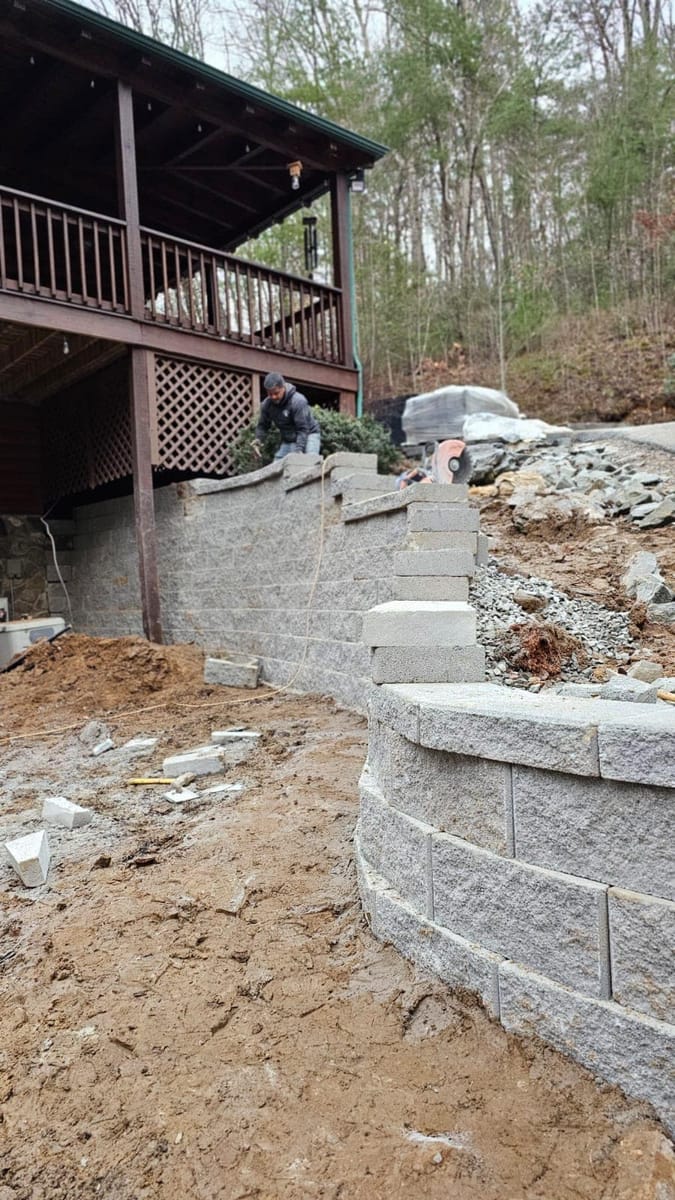
- Round block pit with a steel insert, forty inches inside, sitting in a paver field with a soldier course ring around it.
- Square pit in a corner of a patio, wall seating on two sides, chairs on the other two. Seats six without a single chair being moved.
- Sunken seating area one step below the patio, so the wall around it is at sitting height from inside and knee height from outside.
- Gas ring in a low stone surround, no wood, no smoke, and it goes on with a switch on a Tuesday evening.
- Pit sited well clear of the deck, downwind of the seating, on a gravel apron that catches embers and stays put.
- Tall stacked stone surround with a wide cap. The cap is where the drinks go, and it's the detail people remember.
Common questions
Questions people ask about this
How big should a fire pit be?
Around thirty six to forty four inches across the inside for a family group. Smaller than that and the fire is a candle. Much larger and everyone sits too far apart to talk, because the heat pushes the chairs back.
How far from the house should a fire pit sit?
Far enough that heat, smoke and sparks aren't reaching anything that burns, and that means further than most people first plan. Steel inserts and gas units publish a clearance to combustible surfaces on the box, and that number is the floor, not the target.
Can a fire pit go on a wood deck?
A built masonry pit doesn't belong on a wood deck. A purpose-made freestanding unit on a proper heat barrier is a different question and depends entirely on what the manufacturer of that unit says about it.
Gas or wood?
Gas for convenience, no smoke and instant off. Wood for the sound, the smell and the reason most people want a fire in the first place. Gas gets used far more often on weeknights.
What surface should surround a fire pit?
Something that doesn't burn and doesn't move. Pavers, concrete or a compacted gravel apron. Grass right up to a wood-burning pit gets scorched and then muddy.