
Decks
Deck Size and Board Calculator
Work out the size first. Once you know the square footage, the board count and how many joists sit under it, every quote you receive becomes readable.
Updated August 2026
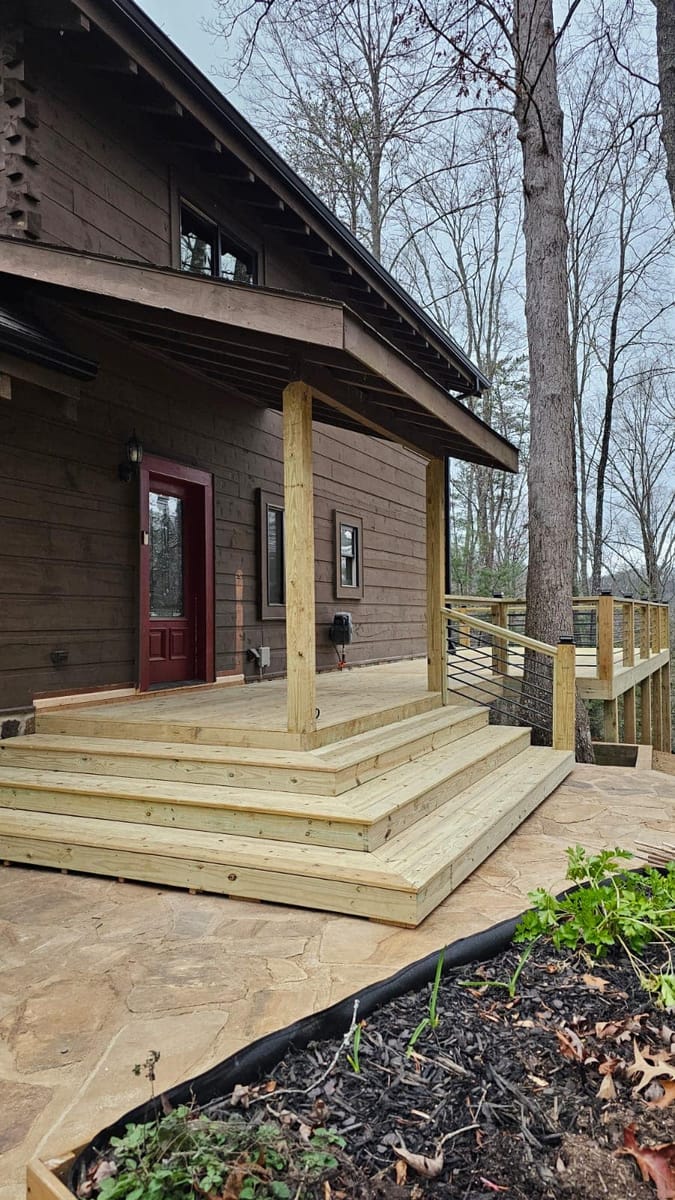
Size it before you price it
Almost everyone starts with a budget and works backward to a size, which is why so many decks end up slightly too small to use properly.
Start with furniture instead. Measure what you own or intend to buy, then add about three feet around it for chairs pulling back and people walking past. That's your deck.
| Size | Square feet | What genuinely fits |
|---|---|---|
| 10 by 12 | 120 | A small table for four, or two loungers. Not both |
| 12 by 12 | 144 | A round table for six with chairs pulled back |
| 12 by 16 | 192 | Dining for six plus a grill station against the rail |
| 14 by 20 | 280 | Dining plus a separate seating group. The most common family size |
| 16 by 20 | 320 | Two defined zones with a clear walking route between them |
| Wraparound | Varies | Access to two doors. Costs disproportionately more, because corners are framing |
The calculator
Put in the deck you're picturing. It returns square footage, how many boards to buy, and how many joists sit under them. Quantities, not prices, because material prices move and a quantity doesn't.
A starting point for a rectangular deck, not a material order. Stairs, railings, blocking and the beam aren't counted here.
Joist spacing, and why a deck feels the way it feels
This is the part of a deck nobody sees and everybody notices.
We frame joists at sixteen inches on center for boards running straight across, and tighten to twelve for boards laid on a diagonal or for most composite. The reason is simple.
A deck board is a small bridge between two joists, and shortening that bridge stops the board flexing under a foot. A diagonal board crosses the joists at an angle, so its unsupported run is longer than the spacing suggests, and composite is more flexible than wood at the same thickness.
The practical consequence is what you feel when you walk out onto it. Two decks built the same week from the same boards, one at sixteen and one at twelve, feel like different quality construction, and the difference is a handful of extra joists.
When you compare quotes, the spacing is the line that explains a gap in the price that otherwise looks like nothing.
Board gaps, blocking and the beam
Board gaps. The gap between boards exists so water and pine straw fall through and so the boards can move. Pressure treated lumber usually arrives wet and shrinks as it dries, so it goes down close and opens up on its own.
Kiln dried lumber and composite go down at the gap they will keep, because they're not going to shrink much. Get this backward and you either end up with no gaps at all or with gaps you could lose a phone through.
Blocking. Short pieces set between joists, at the board seams and where the frame needs stiffening. Blocking is the cheapest thing on the material list and it's the first thing left out of a thin quote. A deck with no blocking feels bouncy at the middle and its board ends move against each other.
Posts and the beam. Post spacing follows the beam, not the other way around. A heavier beam carries further and needs fewer posts.
Whether that saves money depends on lumber prices in the week you build, which is why two competent builders can land on different post counts for the same deck and both be right.
What actually drives the price
Roughly in order of impact on the total.
- Square footage. Obvious, and the one everybody already knows.
- Height off the ground. The single most underestimated factor. A deck two feet up and a deck ten feet up aren't the same job: taller posts, bigger footings, a railing, bracing, and a long flight of stairs.
- Stairs. A stair flight is framing, treads, risers, a landing and a handrail. It's effectively a small separate structure and it's priced like one.
- Railing choice. The gap between a plain wood rail and a cable or composite system is large, and rails are sold by the running foot, so a long thin deck carries more rail than a square one of the same area.
- Board material. Pressure treated pine, cedar, and the composite range all sit at different levels, and composite spans a wide band on its own. The composite page covers what separates the tiers.
- Demolition. Taking an old deck down and hauling it away is a day of work and a dumpster.
- Access. Whether material can be carried straight to the back of the house or has to go through it.
- Shape. Angles, curves, wraparounds and picture framing all add cuts and framing that a rectangle doesn't need.
Getting a real number
Bring the square footage and the board count from the calculator above to the conversation. From those two numbers plus the height and the stair count, we can say a lot on the phone before anyone drives out. Call with those and ask for a number.
Replacing boards on a frame that's still good
This is the best value job in decking and it's worth knowing whether you qualify.
Three things have to be sound: the ledger where the deck attaches to the house, the posts and beams, and the joists at their ends where they sit on the beam.
If those are solid and only the walking surface has gone, the deck can be re-boarded at a fraction of a rebuild, and the new surface gets the full life of the material.
If any of the three aren't, you're being sold a fresh floor on a deck that's failing underneath. Deck repair covers how to tell the difference from ground level, and the finish side is in the cleaning and staining guide.
Reading a deck quote
Five lines to ask for. They cost nothing to request and they make two quotes comparable.
- Joist spacing, and whether blocking is included.
- Footing size and depth, and how many.
- How the deck attaches to the house, or whether it's freestanding.
- Railing type and total running feet of it.
- Stairs: number of flights, and whether a landing is included.
A quote with a square footage and a total and nothing else isn't comparable to anything.
Where we build
We're based in Adairsville and cover the I-75 corridor and northwest Georgia. Adairsville and Calhoun are the two closest, and the housing era in each means very different deck conversations: replacement in the older stock, first decks on newer builds.
All twenty eight reviews on our Google profile are five stars. If you're still deciding between wood and composite, or between a deck and a patio, the comparison guide is the next page to read. Otherwise send the numbers over.
Want a straight answer for your own yard? Call (706) 879-8873 and talk it through with Hervin Ramirez, or send the details over and we will call you back.
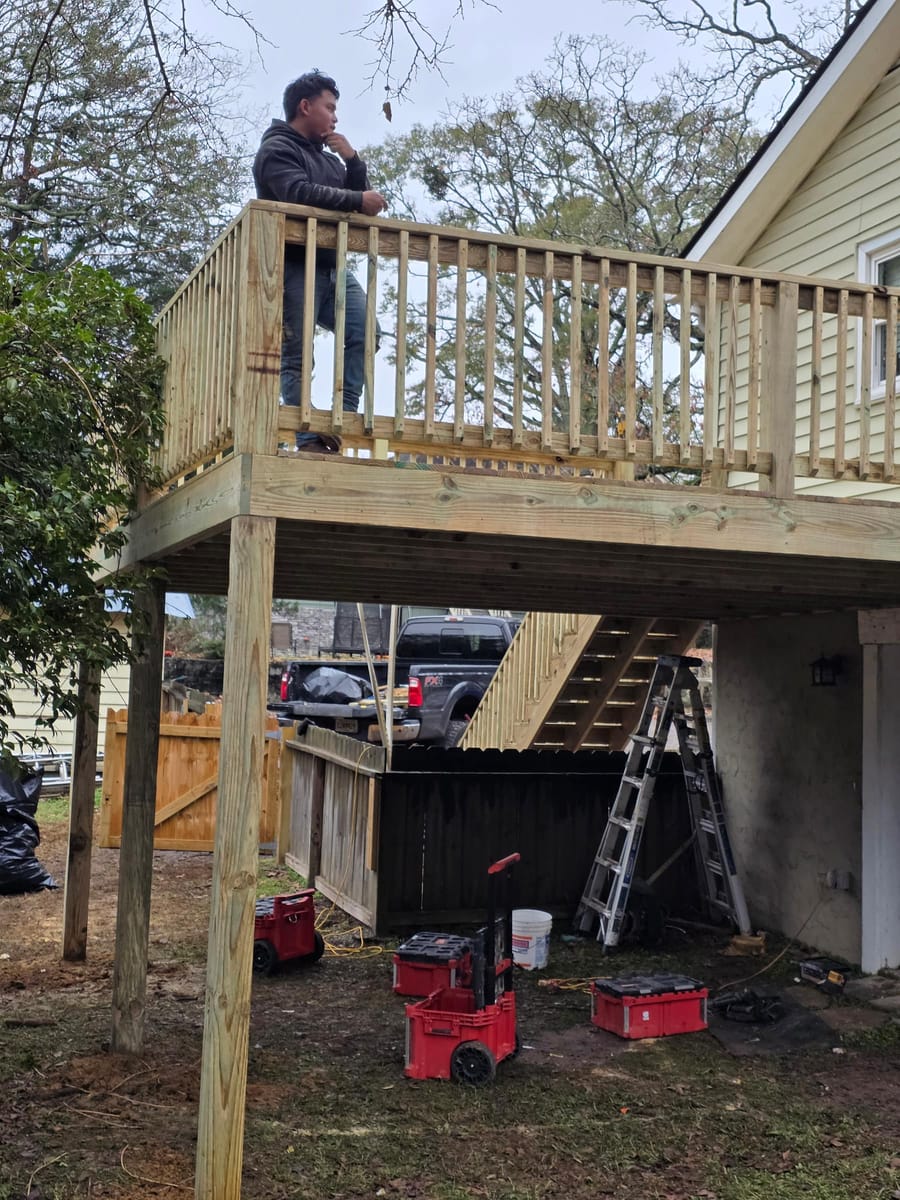
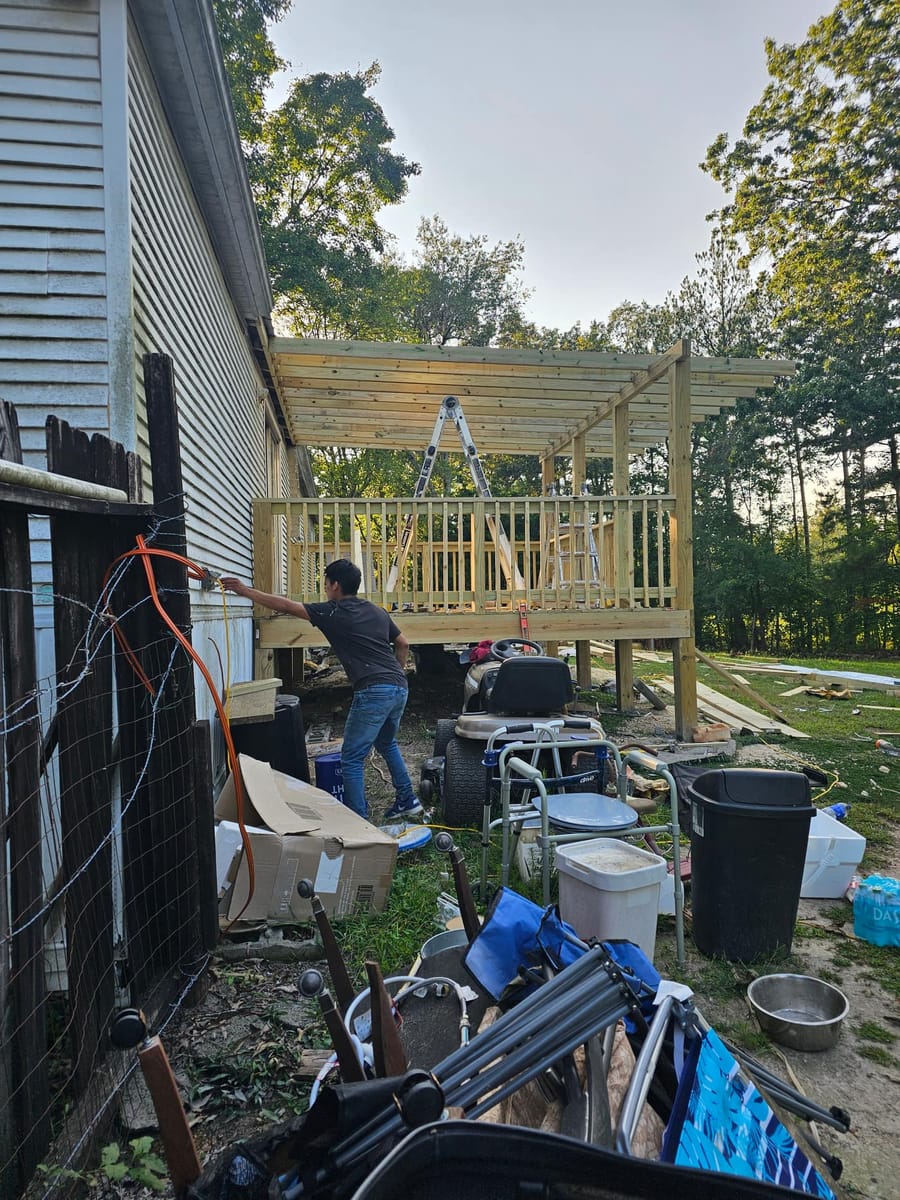
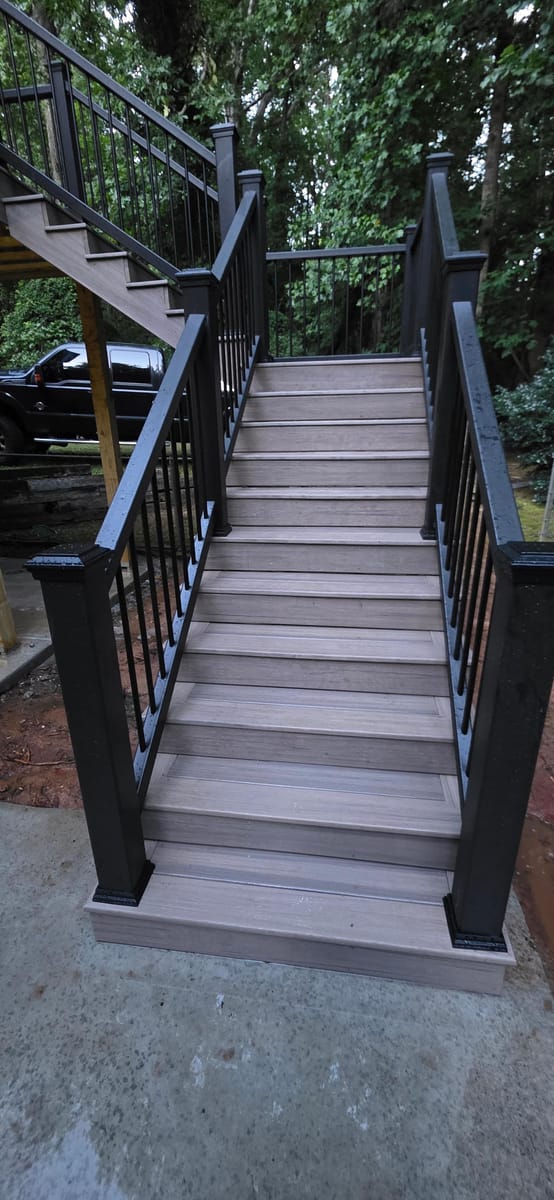
Our work
Our completed work
Common questions
Questions people ask about this
What size deck do I actually need?
A table for six plus chairs pulled back needs about twelve by twelve on its own. Add a grill zone and a seating group and you're at twelve by twenty. Measure your furniture and add three feet of walking room around it.
How many deck boards will I need?
Divide the depth of the deck in inches by the board width plus the gap to get the number of rows, then multiply the rows by the deck width to get linear feet. The calculator on this page does it, and adds waste.
What joist spacing do you frame to?
Sixteen inches on center for boards laid straight across, and twelve for boards laid on a diagonal or for most composite. Tighter joists are the difference between a floor that feels solid and one that gives underfoot.
How much gap should there be between deck boards?
Enough for water and debris to fall through and for the board to move. Wet pressure treated lumber is laid close because it shrinks as it dries. Dry lumber and composite are laid to the gap they will keep.
Is replacing the boards on an old deck worth it?
If the frame, the posts and the ledger are sound, yes, and it's far cheaper than a new deck. If any of those three aren't sound, new boards are money spent on a deck with the same problem.