
Deck care
How to Stain a Deck in Georgia
Most deck finishes in north Georgia fail early for one of two reasons: the boards weren't dry, or they weren't clean. Neither has anything to do with which can you bought.
Updated August 2026
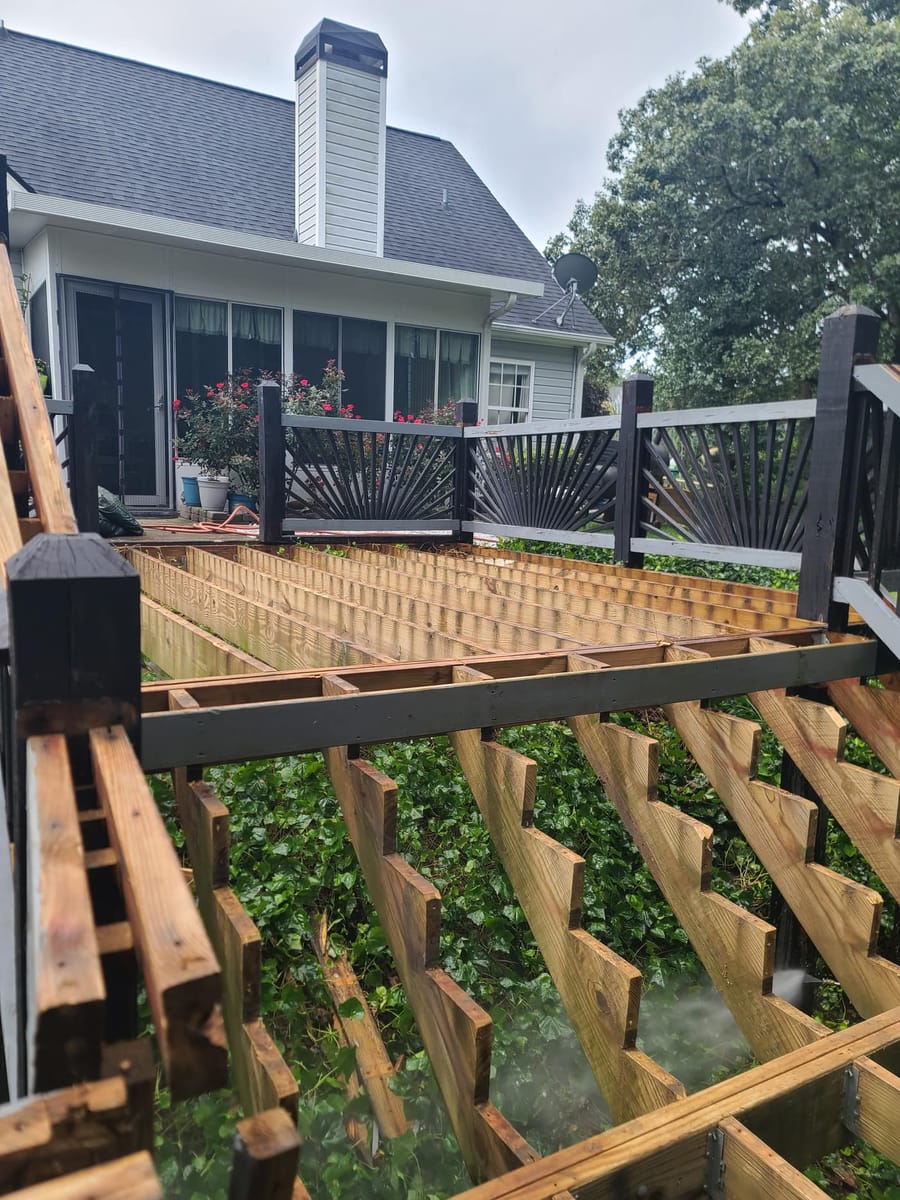
The Georgia calendar decides more than the product does
You can buy the best finish on the shelf and lose it to a bad week.
Here's the year as it actually runs in northwest Georgia.
| Window | What it's like | Verdict |
|---|---|---|
| February to mid April | Pollen. The yellow layer coats everything and comes back the next morning | Clean now, finish later |
| Late April to early June | Warm, drier, long dry stretches between fronts | The best window of the year |
| Mid June to August | Humid, and an afternoon storm most days. Board surface temperature gets high enough to flash the finish off | Difficult. Early morning only, and watch the radar |
| September to October | Cooler nights, lower humidity, settled days | The second best window |
| November onward | Overnight temperatures drop below what most finishes will cure at | Cleaning only |
Two rules matter more than any of this. Don't put finish on a hot board in direct sun, because it skins over before it soaks in. And give yourself two dry days after, not two dry hours.
Clean first, and understand what you're removing
There are three different things on a weathered deck and they need different treatment.
Dirt and pollen come off with soap and water and a stiff brush. This is the easy part and it's the only part most people do.
Mildew and the gray film are biological. They need a cleaner with a mildewcide, dwell time, and a rinse. Scrubbing alone spreads it around.
Gray wood isn't dirt. It's UV-damaged surface fiber. A brightener, usually an oxalic acid wash, restores the color chemically. Skipping the brightener after a cleaner is why a lot of decks come out clean and still look dead.
The order is cleaner, rinse, brightener, rinse, dry. Then finish.
Pressure washing without wrecking the boards
Pressure washers are the leading cause of ruined deck surfaces in this trade, and it's always the same mistake: too narrow a tip, too close.
- Use the widest fan tip you have, and keep the wand back from the board.
- Keep it moving. A pause leaves a mark you'll see through the finish for years.
- Work along the grain, one board at a time, not across the deck at an angle.
- If you can see fuzzy raised fiber afterward, you have gone too hard. That surface now needs sanding before anything goes on it.
Softwash and scrub with a chemical cleaner does the same job with none of that risk, and on southern yellow pine it's usually the better call.
Is the wood dry enough
Forget the calendar advice about waiting a year on new lumber. Modern pressure treated boards vary enormously in how wet they arrive.
The test takes ten seconds. Put a spoonful of water on the board. If it beads and sits, the wood is still too wet or too mill-glazed to take a finish, and anything you apply will sit on top of it. If it soaks in within a minute or two, you're ready.
Do the test in three or four places, including one board that never gets sun. Decks dry unevenly.
Choosing a finish
The choice is a slider between two things you can't have at once: how much wood grain shows, and how long it lasts. More pigment means more UV protection and less visible grain. Every product category is a point on that line.
| Type | Grain visible | Life on a floor here | Recoat behavior |
|---|---|---|---|
| Clear sealer | All of it | Shortest | Easy, just reapply |
| Toner | Nearly all | Short | Easy |
| Semi-transparent | Most | Middle, and the usual choice | Clean and recoat |
| Semi-solid | Texture only | Longer | Needs more preparation |
| Solid | None | Longest, until it doesn't | Fails by peeling, which means stripping |
Semi-transparent is where most Georgia decks land, because it protects reasonably and it fails gracefully. When it wears out it goes thin and patchy, and you clean and recoat. Solid finishes last longer and then fail by lifting off in sheets, and stripping a solid finish off a deck floor is a genuinely miserable job.
Oil or water based
Oil penetrates further and is more forgiving to apply on an uneven old board. Water based products hold color longer against UV and clean up easier.
In practice the bigger factor is what's already on the deck: putting water based over an oil finish that hasn't been stripped is a peeling problem waiting for July.
Stain or paint
Paint on a deck floor is a film. Films on horizontal wood that gets standing water, sun and shoes will peel, and there's no brand that changes that.
Paint is perfectly good on rails, posts and risers, which are vertical, shed water, and take no traffic. A painted rail with a stained floor is a very common and very sensible combination.
Applying it
- Work two or three boards at a time, full length, so you never leave a wet edge in the middle of a board.
- Back-brush whatever you spray or roll. The brush is what pushes finish into the grain, and it is the step that gets skipped.
- Do the rails and the top of the skirting before the floor, so drips land on unfinished wood.
- Don't flood the gaps between boards. Finish that pools in the gap stays soft and picks up dirt.
- Two thin coats beat one thick one, but only if the first has properly gone in. On a penetrating stain, a second coat on a saturated board just sits there.
Composite decks are a different problem
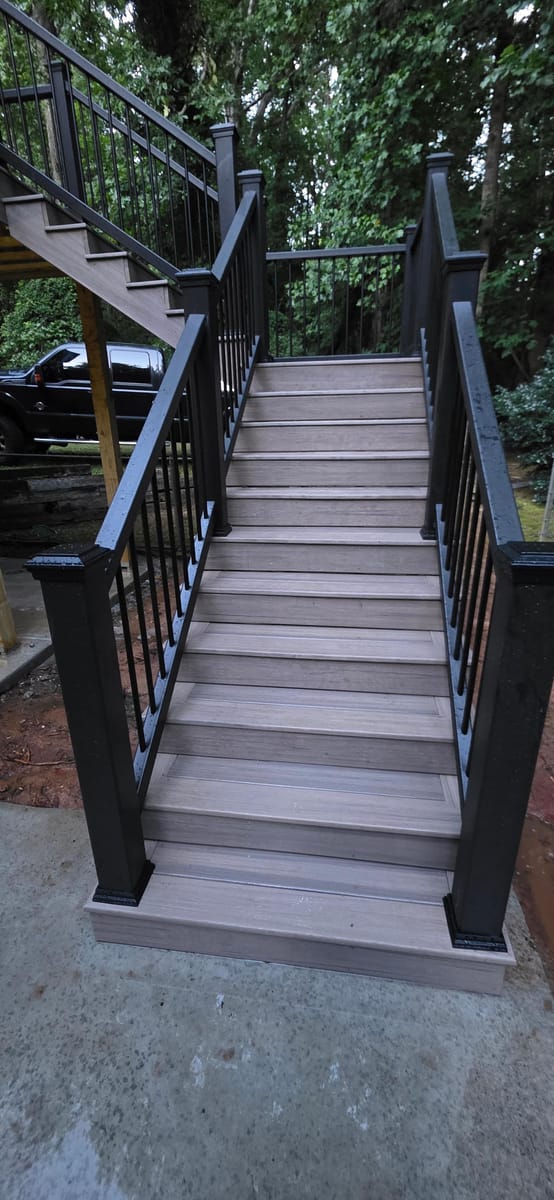
Composite doesn't need a finish and must not be given one. What it needs is cleaning, and the problem isn't UV, it's biological growth in the surface texture and in the gaps.
- Soap, water and a soft brush, worked along the grain pattern, handles most of it.
- A dedicated composite cleaner deals with mold in the embossing.
- Keep leaves and pine straw out of the gaps. That damp organic layer is what feeds the black spotting on the shaded side of nearly every composite deck in this area.
- Pressure washing composite is possible at low pressure and will void some warranties at high pressure. Check the board maker's own guidance before you point anything at it.
If you're choosing between wood and composite in the first place, the maintenance difference is one of the main arguments, and the composite page covers how the boards behave in this climate.
When finishing is the wrong answer
A finish is a coating. It doesn't add strength.
Stop and look underneath if any of these are true: boards flex underfoot, a screwdriver sinks into the wood at a joist end, the ledger where the deck meets the house shows staining, or the rail moves when you lean on it.
Those are structural, and putting a fresh coat over them buys a better looking deck with the same problem. Deck repair covers what's worth fixing and what's not.
If it turns out the frame is sound and only the boards are gone, replacing the surface on a good frame is a common and reasonably priced job, and the sizing guide will help you work out how many boards that is.
A realistic maintenance rhythm
Twice a year, sweep the gaps and wash the deck. Every two to three years, clean, brighten and recoat the floor. Rails and vertical surfaces usually go twice as long.
Decks in Rome and Cedartown tend to be older than the rest of the area we cover, and an older deck is worth looking under while it's clean, not after it is coated.
If yours has never been cleaned properly and you're not sure it's worth finishing, tell us what you're looking at and get an honest answer before you buy product.
We do this work as well as building new, and we would rather tell you a deck is fine than sell you a coat it doesn't need. Ask us.
Want a straight answer for your own yard? Call (706) 879-8873 and talk it through with Hervin Ramirez, or send the details over and we will call you back.
Our work
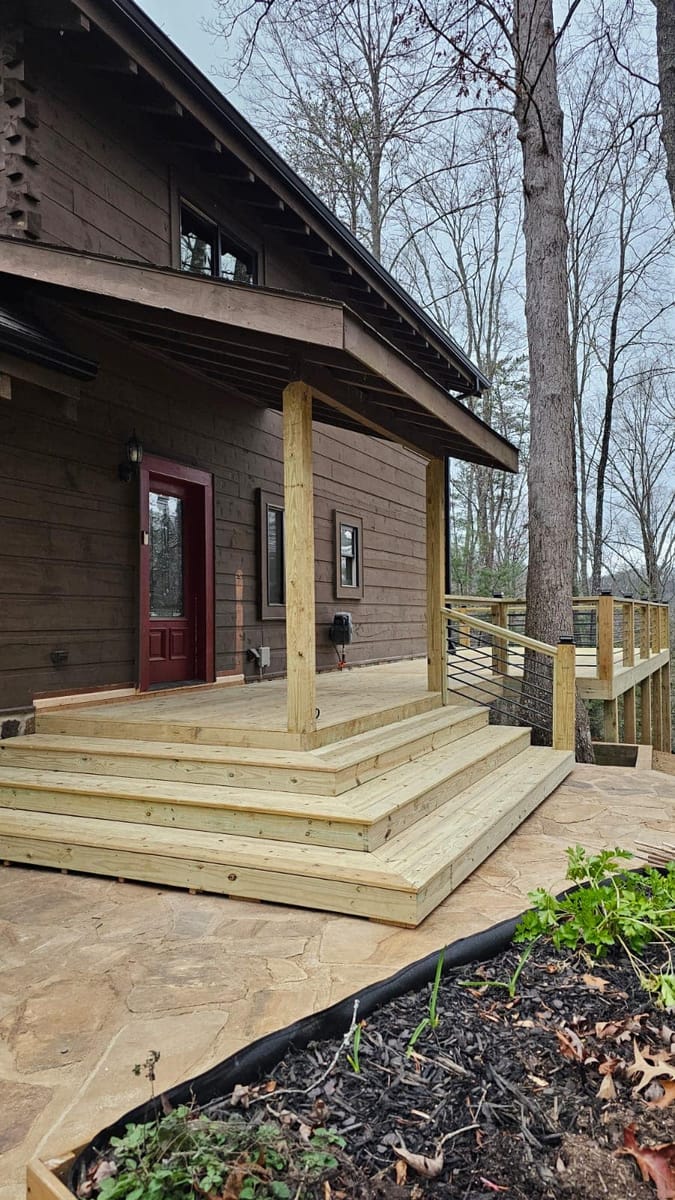
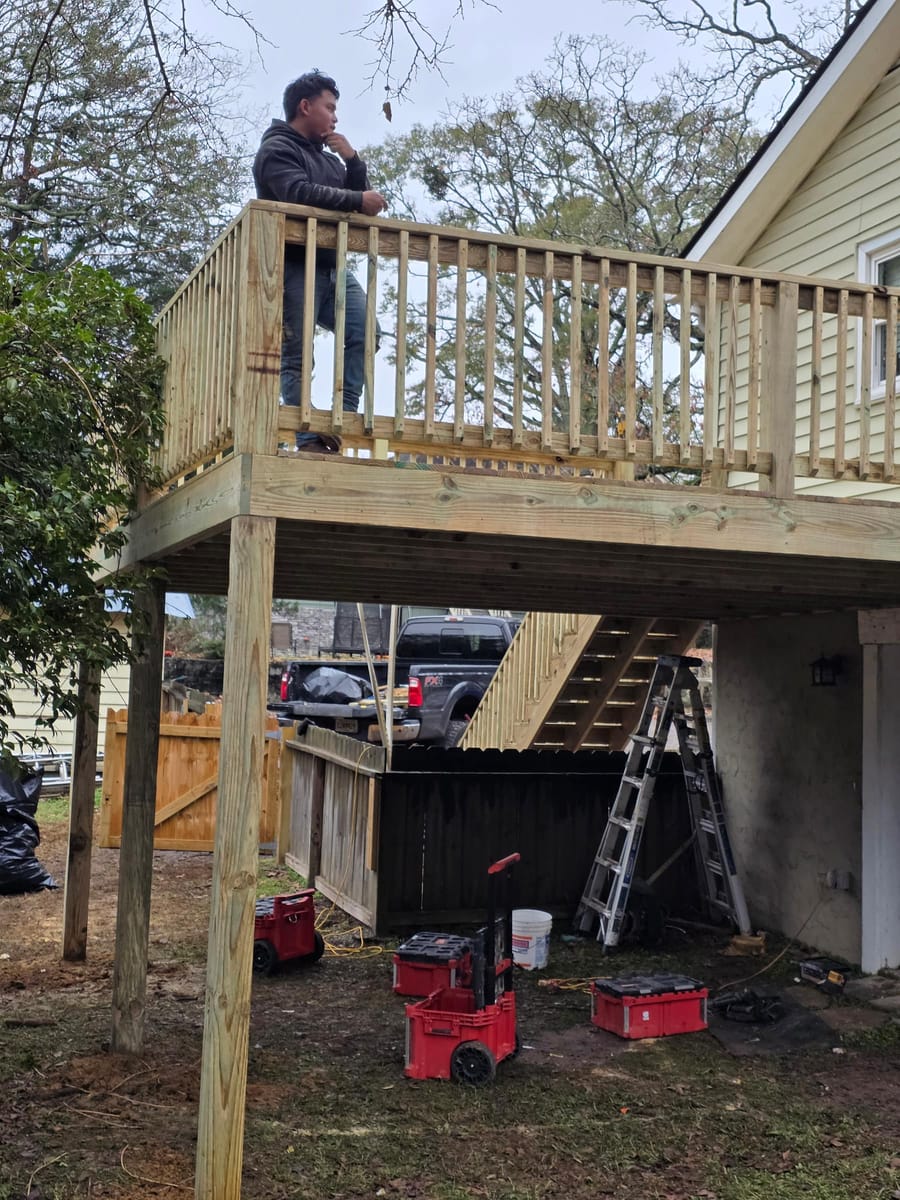
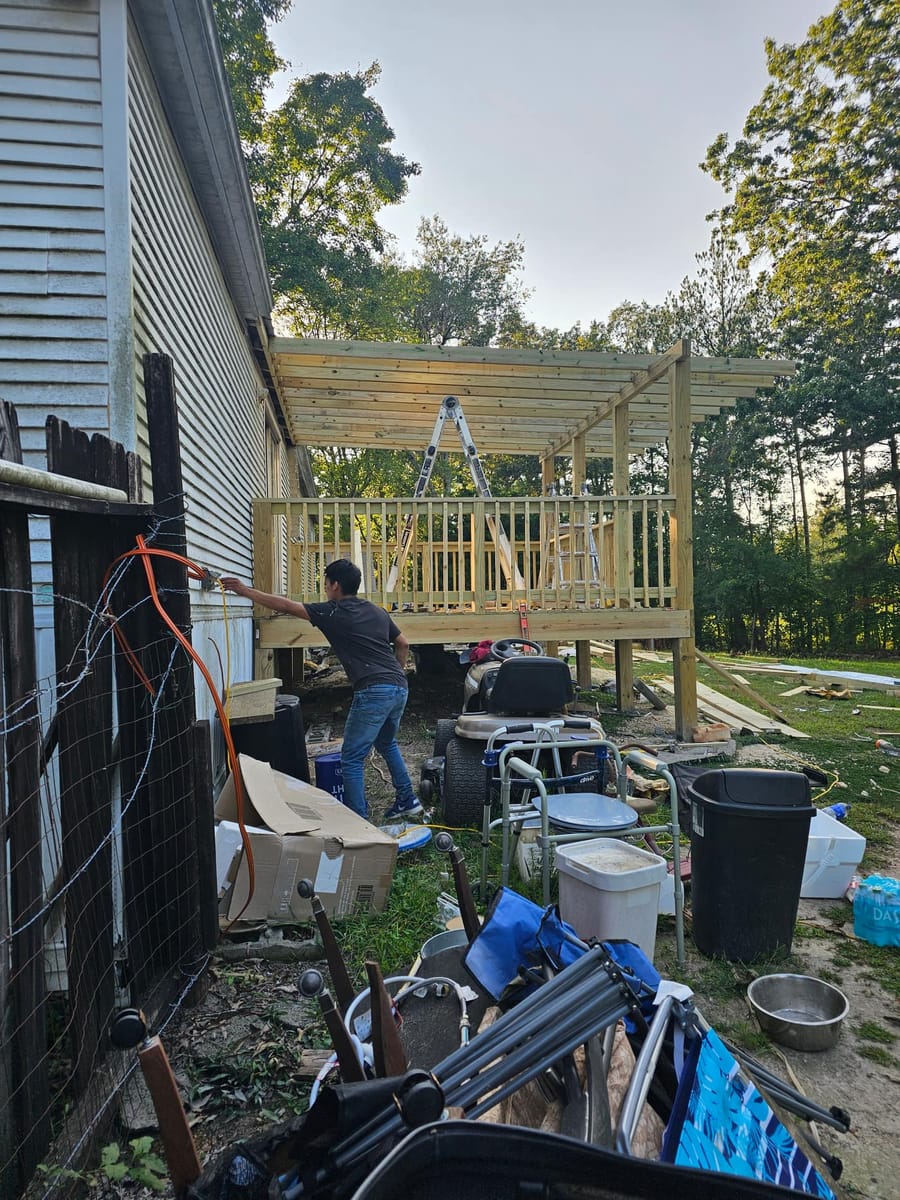
Our completed work
Common questions
Questions people ask about this
When is the best time to stain a deck in Georgia?
Late April into early June, or September into October. Spring pollen has to be off the boards first, and midsummer afternoons bring storms that will ruin a coat that hasn't set. Avoid staining in full sun on a hot board.
How long do you wait to stain a new deck?
Until the boards will take water in, not bead it off. On new pressure treated lumber in this climate that's usually a few months, not the year people quote. Test it with a spoonful of water instead of a calendar.
Should I stain or paint a deck?
Stain, on any surface you walk on. Paint sits on top of the wood as a film, and a film on a horizontal board that gets sun, rain and foot traffic will eventually peel. Paint belongs on rails and risers, not on the floor.
Can I pressure wash a wood deck?
Yes, carefully. A wide fan tip, low pressure, held back from the board and kept moving. A narrow tip at full pressure tears the soft grain out of pine and leaves a furred surface that no finish will save.
How often does a deck need re-staining?
In this climate, most semi-transparent finishes want attention every two to three years, and horizontal surfaces go first. Rails and skirting often look fine when the floor is due.