
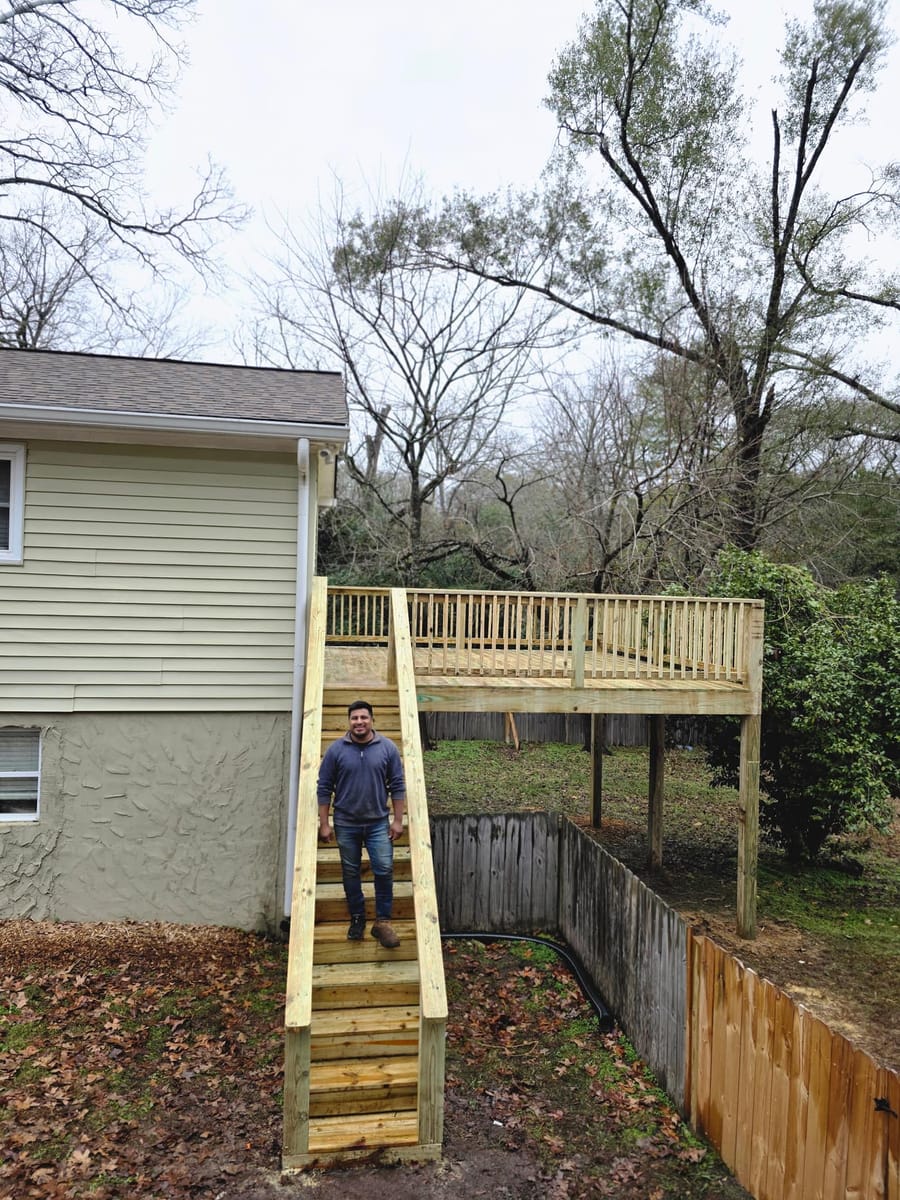
New elevated deck with railings and a long stair run to grade, Dacula, Georgia
Order of operations
A finish fails for two reasons: it went onto a surface that wasn't ready, or it went on in the wrong weather.
Northwest Georgia and the north Atlanta metro
The coat itself is the short part of the job. Everything before it is the long part, and it's the part that decides the result. A deck left alone for a few summers isn't one surface.
It's bare wood in the traffic lanes, old finish under the furniture, mildew on the shaded end, and mill glaze on any board replaced last year. Put one coat across all of that and you get four different colors and four different lifespans.
Every finish sold carries a temperature range and a humidity range on the label. Both are frequently outside what a Georgia afternoon offers. Too hot and the carrier evaporates at the surface before it can take pigment down into the wood. Too damp and it never fully cures. Rain inside the drying window and the whole coat lifts.
So the job is scheduled against a forecast instead of a calendar, and it moves when the forecast moves. That's inconvenient once. Redoing a deck is inconvenient for a lot longer.
Wood doesn't dry uniformly. The end of a deck that catches morning sun is ready before the end that sits under a tree, and the underside of a board never matches the top. So the drying step gets measured, not eyeballed.
A surface can look dry, feel dry, and still hold enough water to reject a penetrating finish.
Finish stops the sun bleaching the wood and slows how fast water moves in and out. It does that well.
It doesn't glue a split board back together. It doesn't stop a cupped board cupping, and it does nothing at all for a soft joist under your feet. If any of that is going on, the honest order is structure first and color afterward.
Horizontal boards in full sun give up their finish faster than vertical rails in shade. So a deck doesn't wear out evenly, and it rarely needs everything doing at once.
The traffic lane in front of the door is usually the first place to go. Catching that early is a wash and a coat. Leaving it is a strip and a coat.
If the wood is past finishing, composite decking is the surface that never needs this done again, and deck repair covers what to do with boards that have gone too far.
For a homeowner working out products, method and how to do it themselves, that's the guide to cleaning, staining and sealing a deck, not this page. Structure questions go to deck building. Wood fences want the same care on a different schedule: see wood fence maintenance.
Our work
New elevated deck with railings and a long stair run to grade, Dacula, Georgia
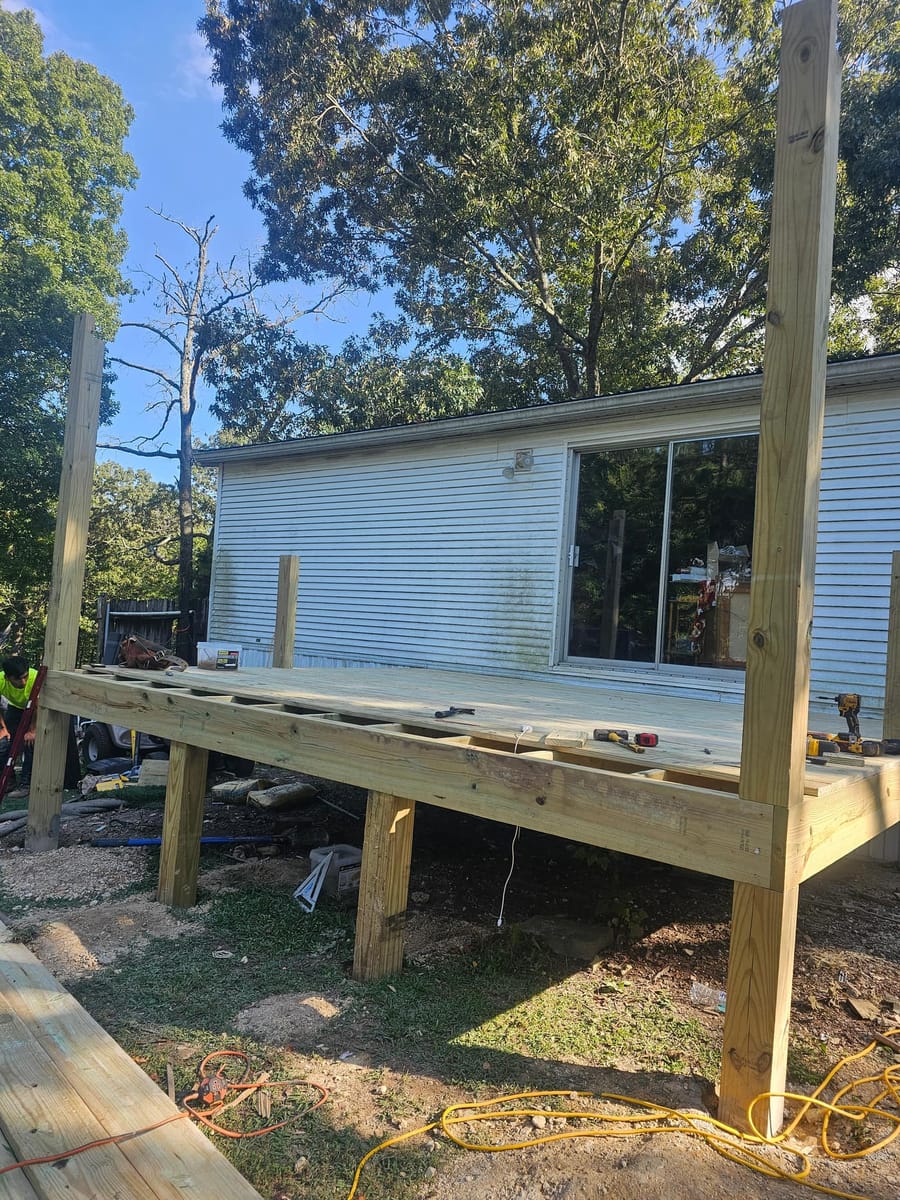
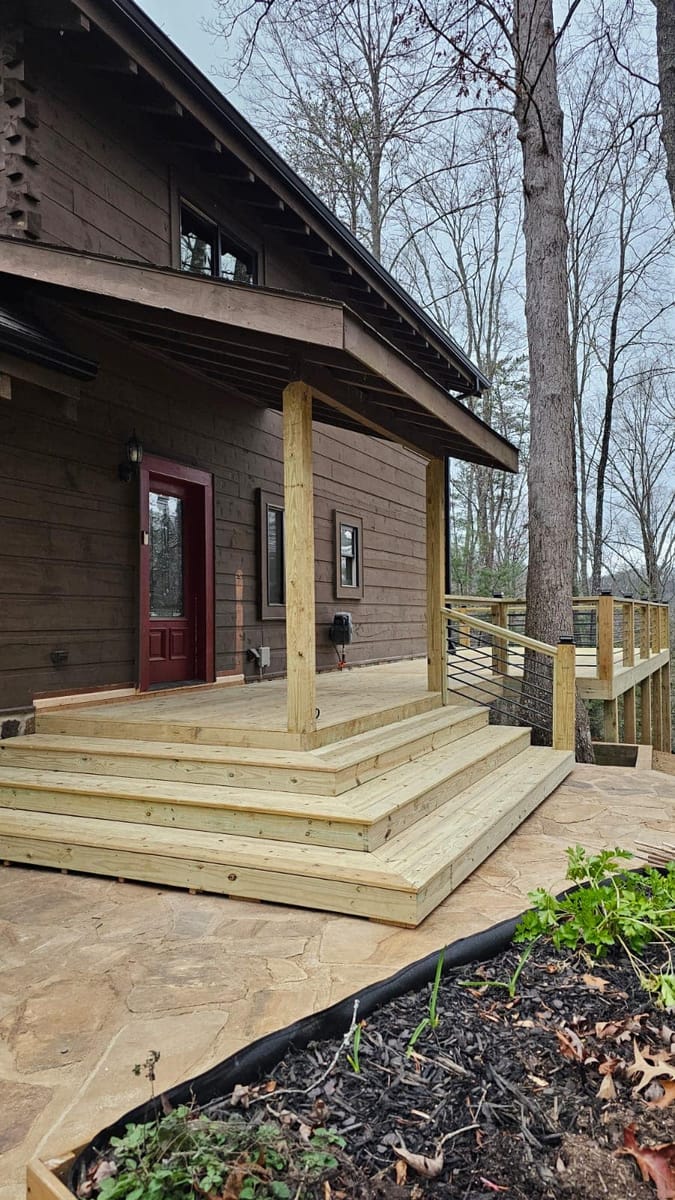
New deck with roof structure and stair access built onto a manufactured home, Dalton, Georgia
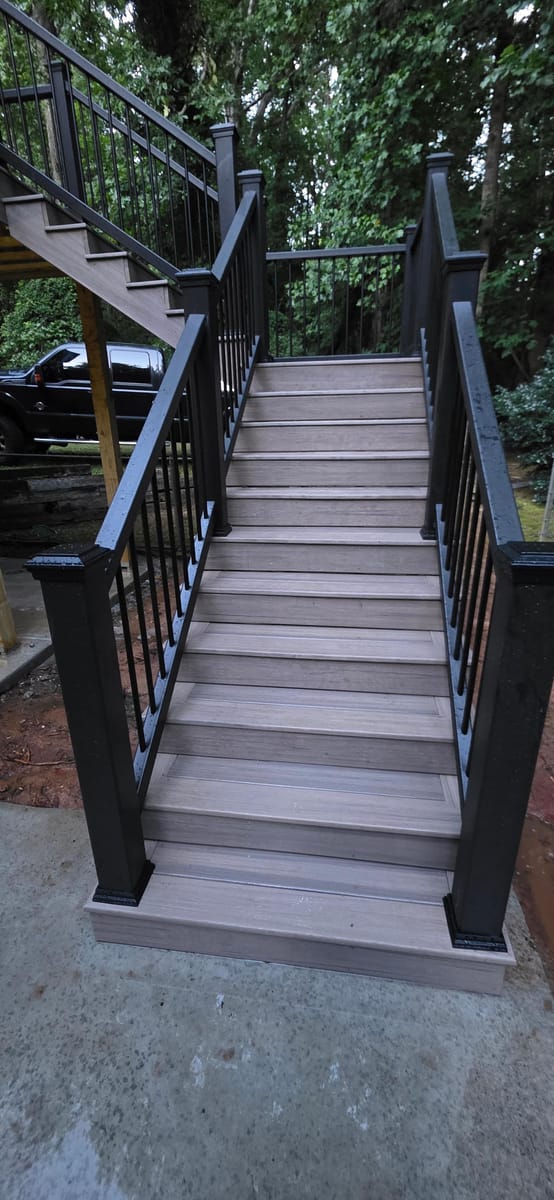
Stair treads landing on the poured concrete pad, Stockbridge, Georgia
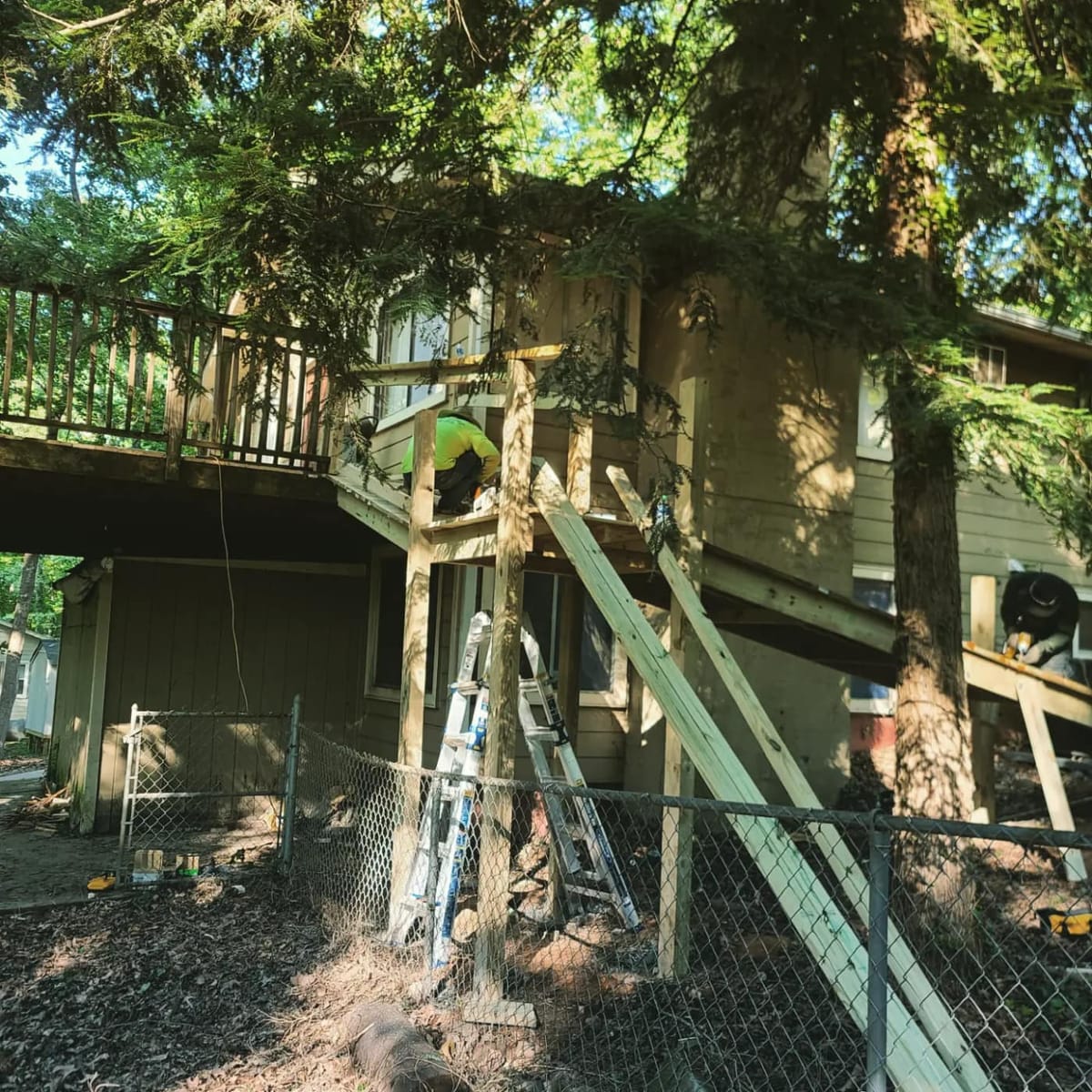
Long switchback accessibility ramp in pressure-treated lumber with full-height railings, rising through wooded ground to an elevated rear entry, Woodstock, Georgia
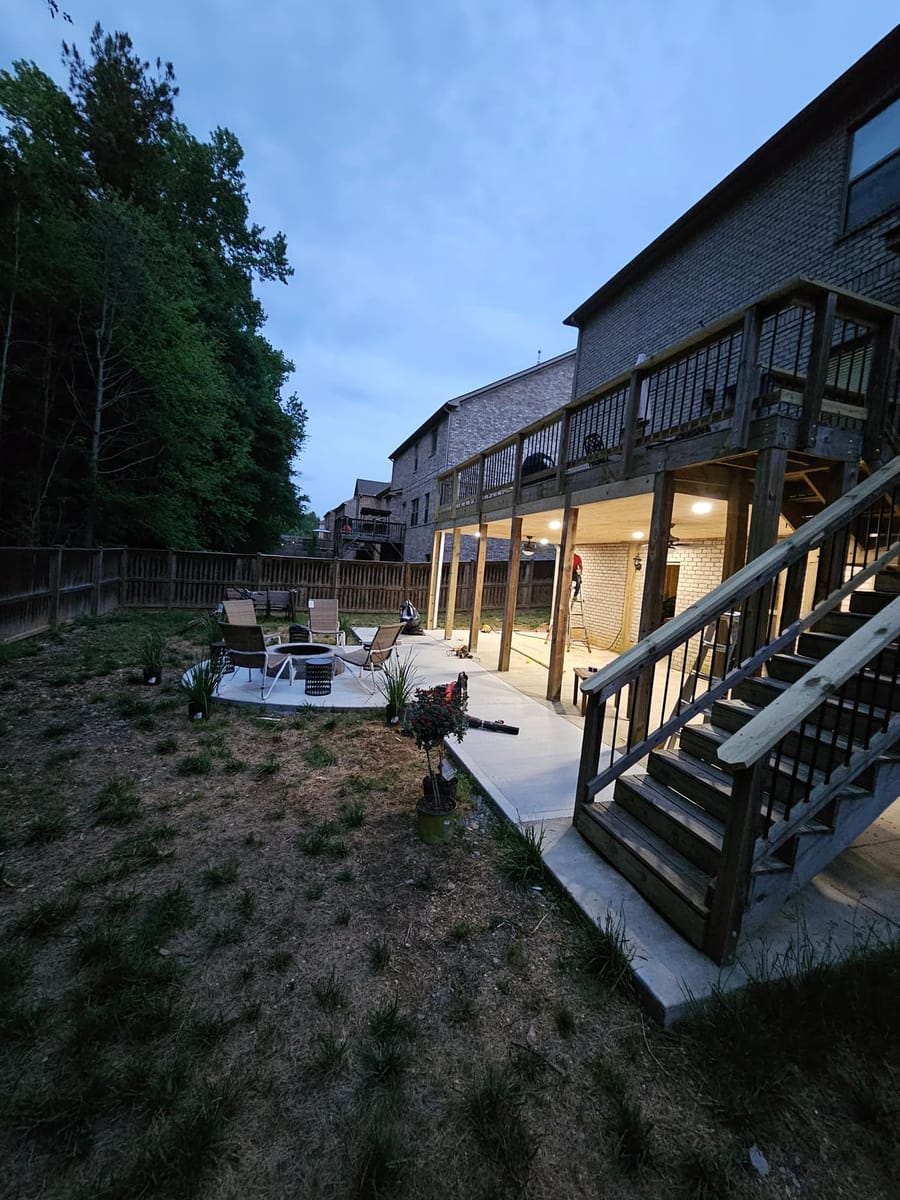
Evening view of the extended deck above the new covered space, Cumming, Georgia
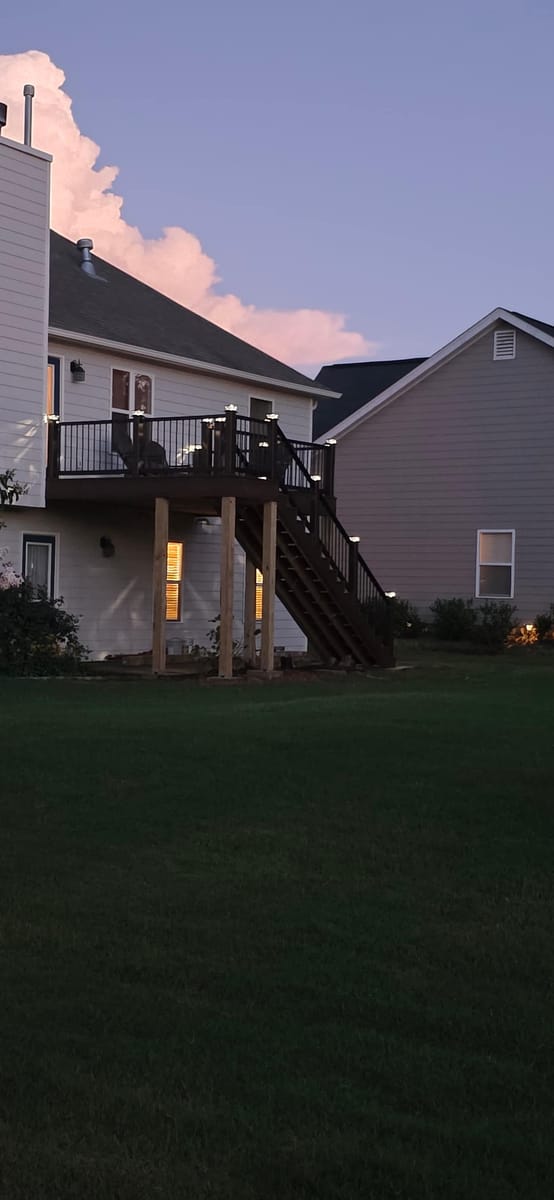
Finished deck at dusk, Adairsville, Georgia
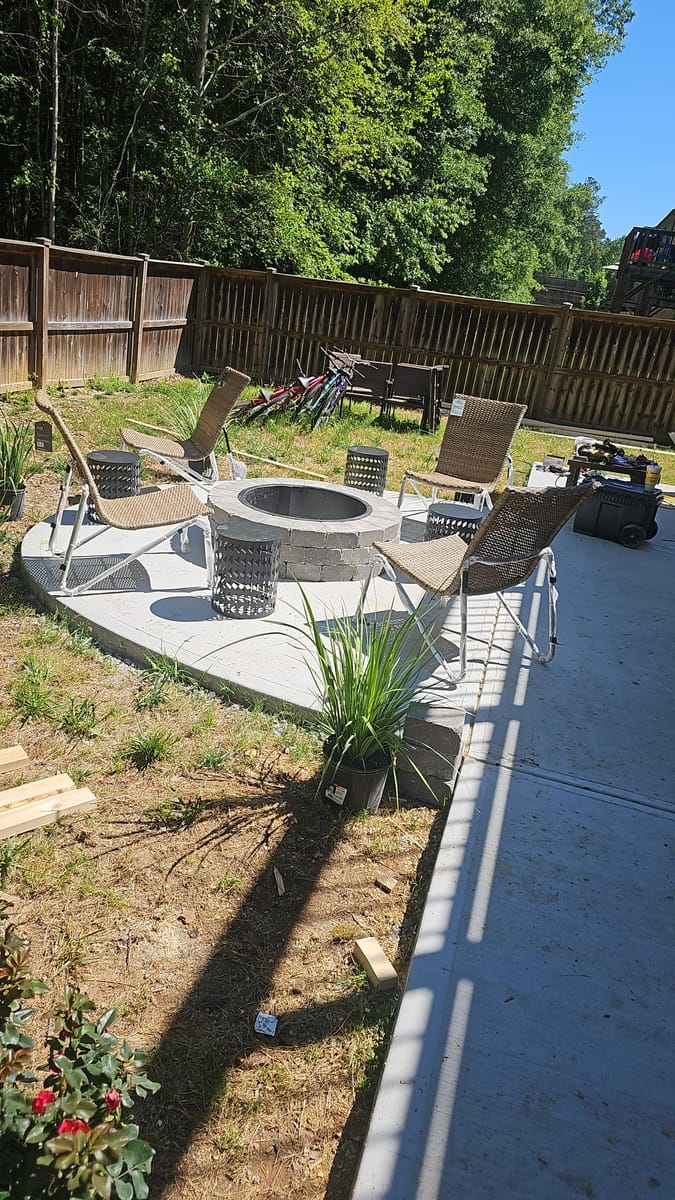
Fire pit and seating on the patio below, Cumming, Georgia
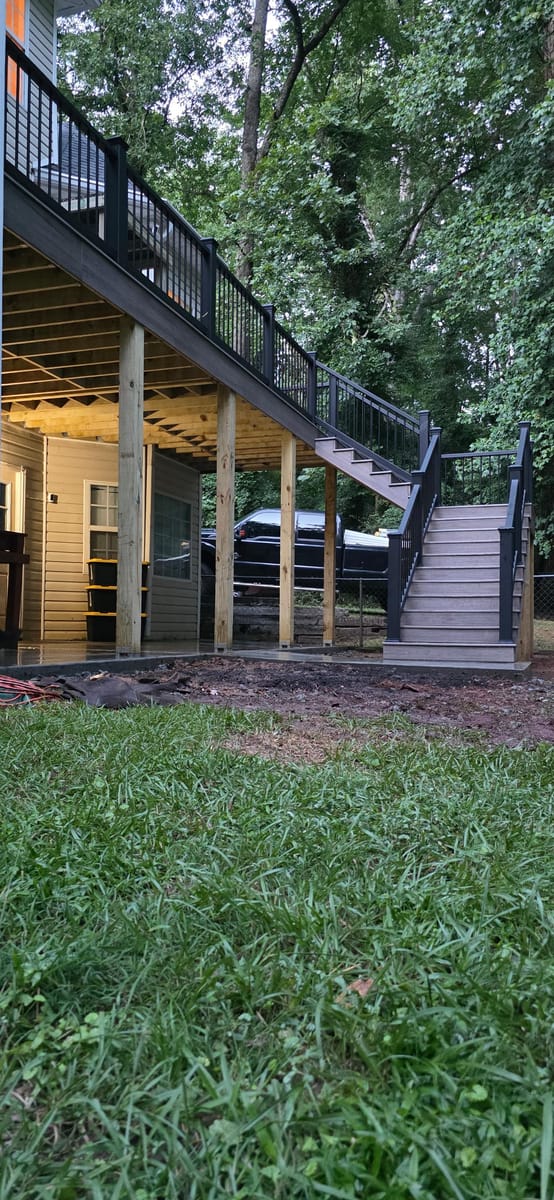
Deck rebuilt in Trex with black metal railings, over a poured concrete landing at the foot of the stairs, Stockbridge, Georgia
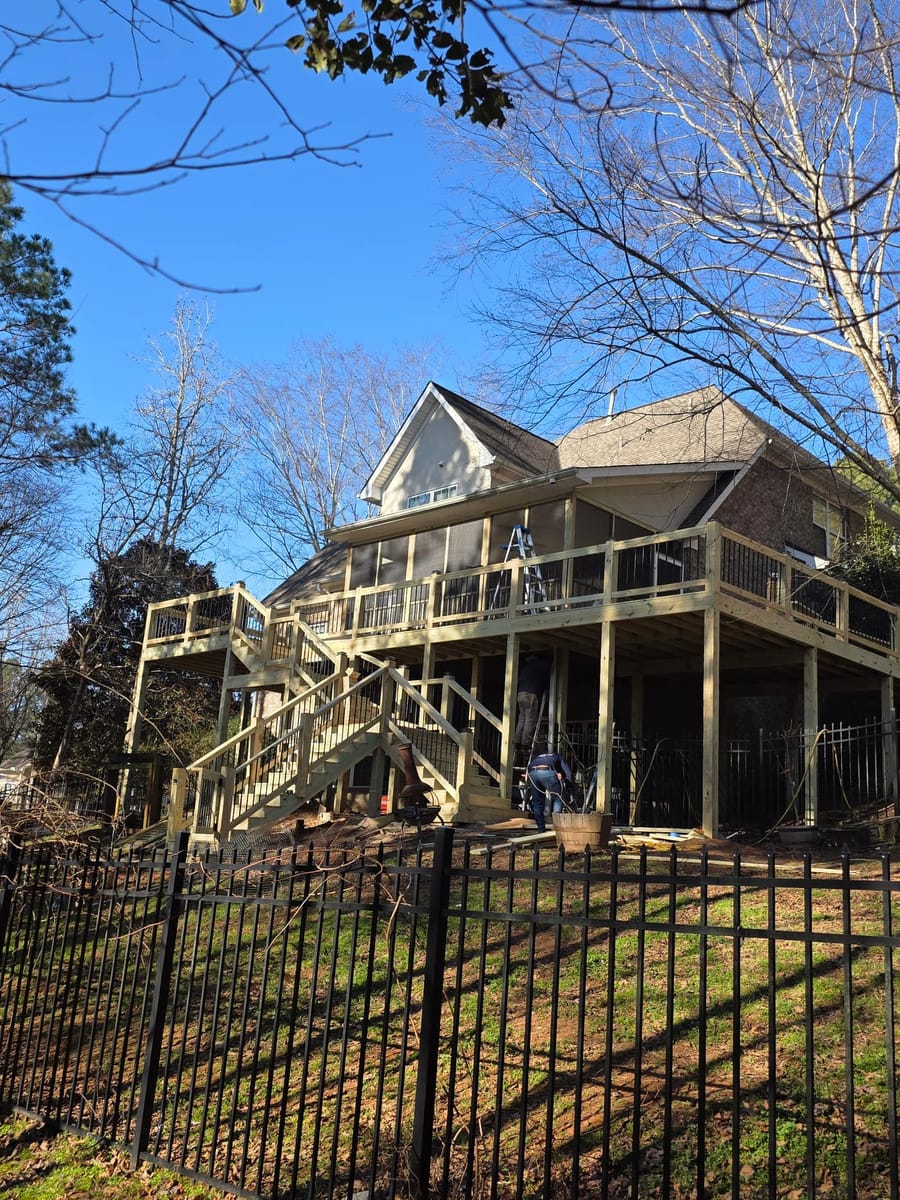
New elevated deck and screened porch on a brick home, with a pergola structure at grade below, McDonough, Georgia
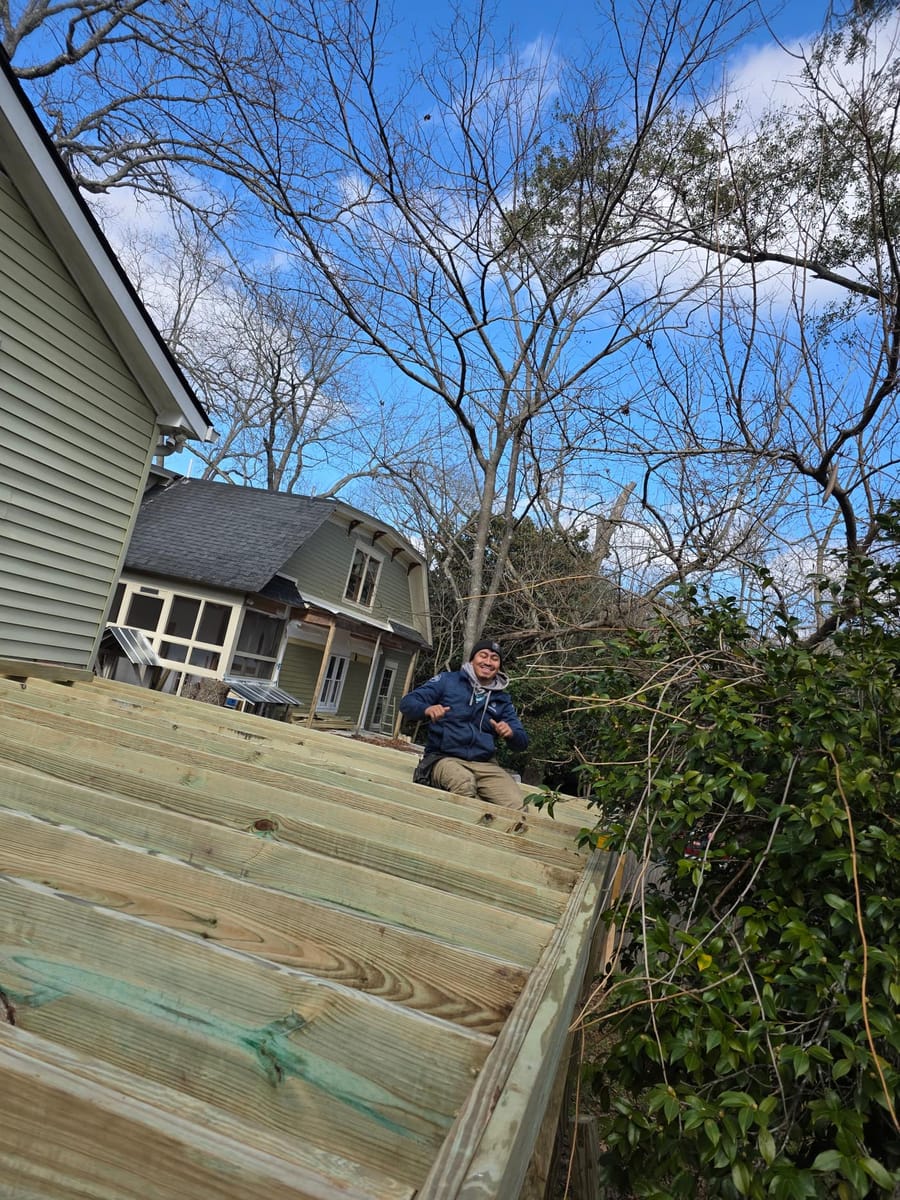
New elevated deck with railings and a long stair run to grade, Dacula, Georgia
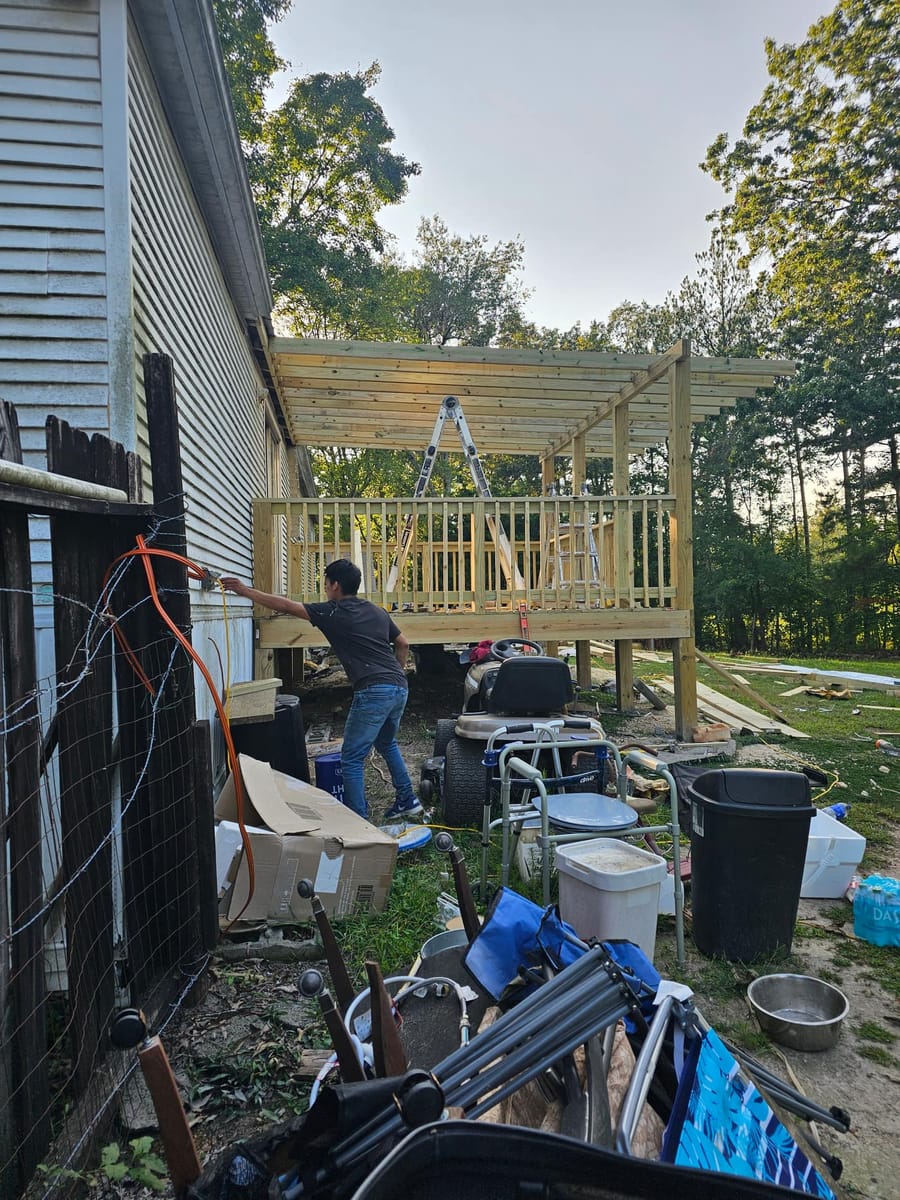
New deck with roof structure and stair access built onto a manufactured home, Dalton, Georgia
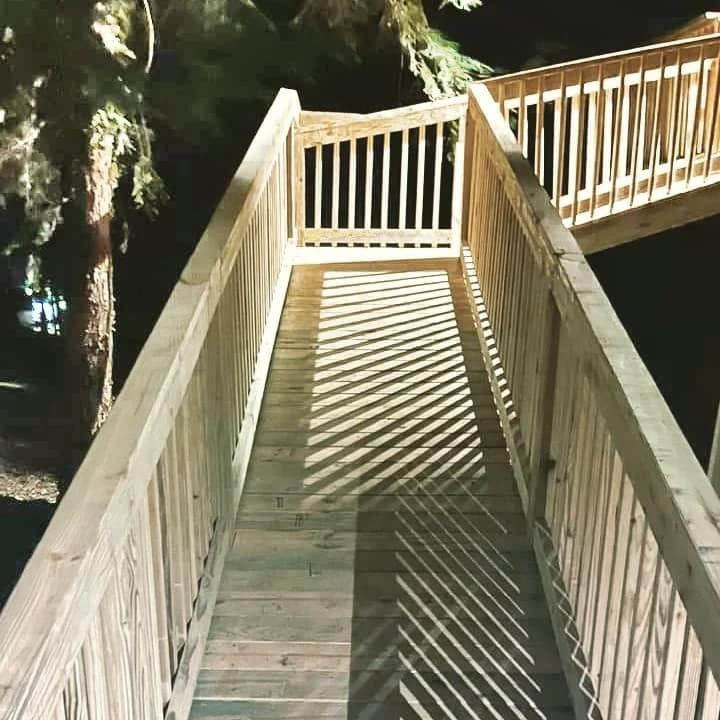
Long switchback accessibility ramp in pressure-treated lumber with full-height railings, rising through wooded ground to an elevated rear entry, Woodstock, Georgia
Three quick steps. We call you back ourselves, and nothing here commits you to anything.
We call back ourselves, so the number that rings you will be (706) 879-8873. If you would rather not wait, call us now at (706) 879-8873.
Got a photo of the spot? Text it to (706) 879-8873. It answers more than a paragraph does, and it reaches the same phone as your request.
What actually happens
An old film coat has to come off before a new one goes on. Skipping this is the single most common reason a refinished deck peels in sheets the following summer.
Cleaners used on decks are alkaline and they leave the wood chemically open. Rinsing alone doesn't close it. A brightener resets the surface so the finish soaks in evenly instead of blotching.
Wet wood won't take a penetrating finish. Depending on the week that's two days or it's five, and the shaded end of a deck dries slower than the end in full sun.
Loose boards, popped fasteners and split ends get dealt with while the deck is bare. A fresh board dropped into a finished deck never matches, and it always shows.
Boards in direct afternoon sun can be far hotter than the air. Finish flashes off a hot board before it can soak in, so the work follows the shade around the deck, not the clock.
Questions we get asked
Late spring after the pollen has washed off, or early fall once the worst of the heat has broken. Midsummer is workable early in the day. The wet stretch in the middle of winter isn't, because the wood never dries enough to take anything.
Foot traffic usually the next day, furniture and grills longer. You get the actual window at scheduling, because it moves with humidity, and it's worth planning around instead of discovering the morning after.
Almost always one of two things. It went over a previous coat that had not been stripped, so the new film had nothing to hold but the old film. Or it went onto wood that was still damp, so it sat on top instead of soaking in.
Not usually. Fresh pressure-treated lumber leaves the yard wet and needs to give that moisture up first. Putting a finish on it too early traps water in the board.
Yes, and they take longer per square foot than the deck surface does, because everything is edges. It's worth being clear at the quote about whether rails are included.
Where we work
Send a photo and we can usually tell you whether it needs stripping or just washing.