
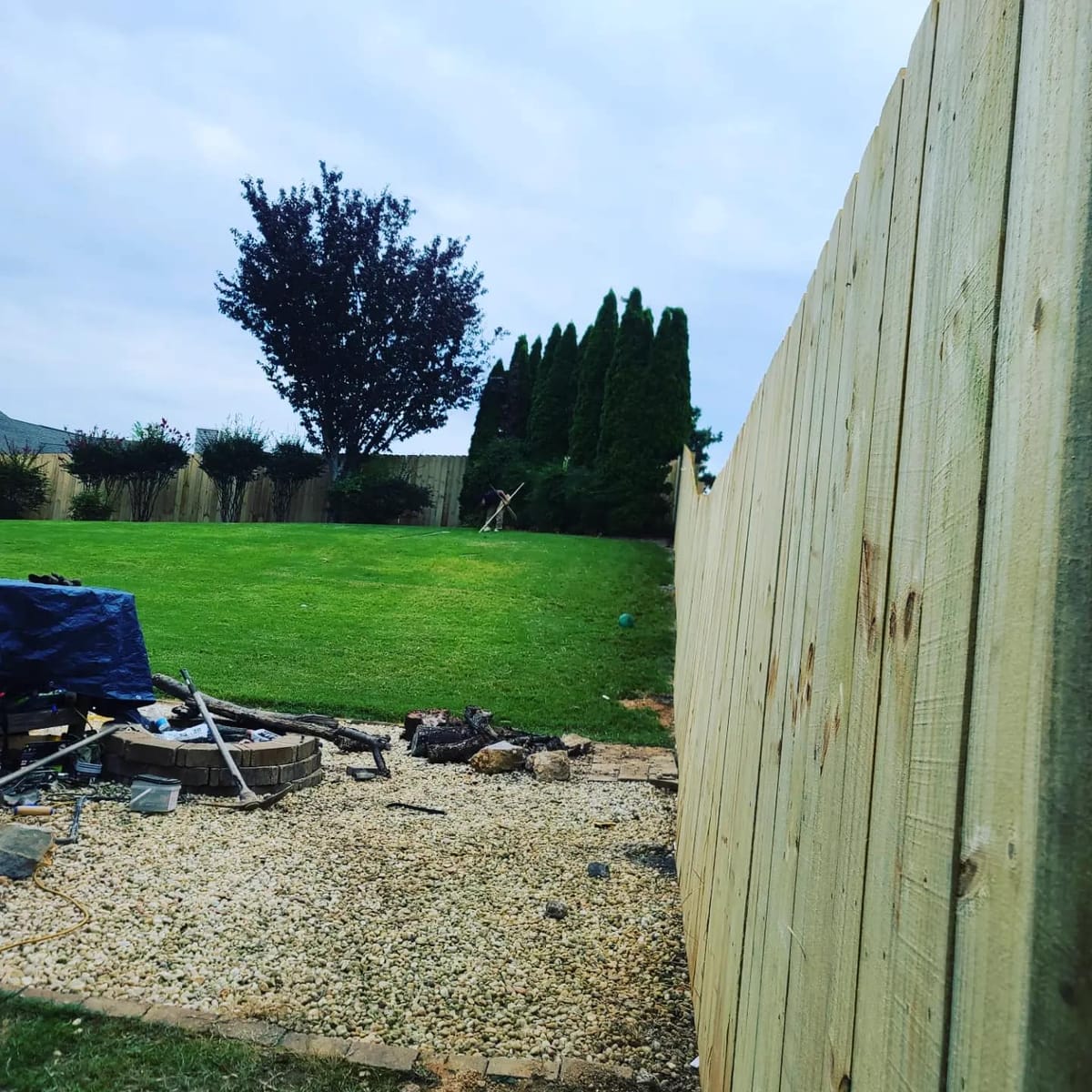
Finished wood privacy fence line seen from the gravel fire-pit area, Ringgold, Georgia
Fix the run, or replace it
Most fences don't fail all at once. They fail in one or two places, and the question is whether the rest is worth saving.
Northwest Georgia and the north Atlanta metro
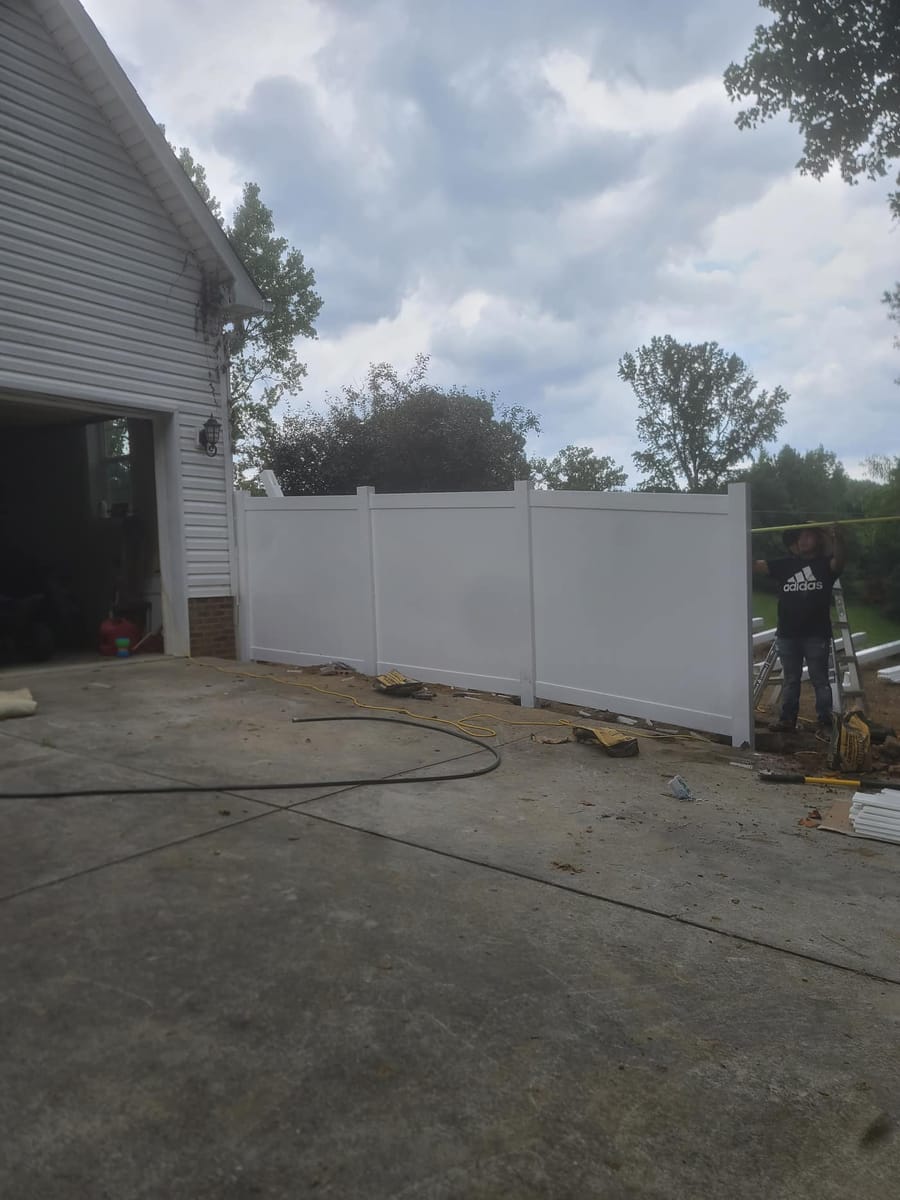
Walk the fence and push on every post. That's it. That's the diagnosis.
Write down how many move and where they are. Bunched at one end usually means ground conditions. Spread evenly along the run usually means age.
Then look at what the moving posts have in common. Under a downspout, at the bottom of a slope, beside a flower bed that gets watered. Those posts have had a wetter life than the rest, and they went first for a reason that will apply again.
Grab a post that moves and watch where the movement happens. If it hinges at ground level while the concrete stays put, the wood has gone.
That post is finished and a new one goes in. If the post and its footing tilt together as one lump, the wood may be fine. Clay that has been through enough wet and dry cycles simply stops gripping.
That's often a reset, not a replacement, and it's a much shorter job.
The test is a screwdriver at the soil line. Sound wood resists. Punky wood takes the blade to the handle.
A gate is a rectangle held on one edge. Gravity has been trying to turn it into a parallelogram since the day it went on. What resists that is a diagonal. Either a brace from the bottom hinge corner up to the top latch corner, or a cable tensioned the other way.
Without one, the free corner sinks and the gate starts to catch. The two diagnoses are easy to tell apart.
Measure the gate corner to corner in both directions. If the diagonals match, the gate is still square and the post it hangs on has leaned. If they don't match, the gate has racked and needs bracing, not resetting.
The third cause is simpler and more common than either. Hinge screws driven into end grain, or into a hollow post with nothing behind it, gradually pull out. The gate then sags at the hinge itself while everything around it is fine.
This surprises people, so it's worth saying plainly. On a new fence the posts go in as one operation.
Every hole is dug in sequence, the concrete is mixed once, and the run moves at a steady pace. A repair means pulling a post that's trapped between two panels, then breaking out an old footing that doesn't want to come. The new post has to meet a line that already exists and can't be adjusted. Each one is a small, awkward job on its own.
Which is why the honest advice flips at some point. A few bad posts are worth chasing. A run where most of them are going is cheaper to replace than to repair twice.
If replacement is the answer, start with the fence company page for layout and setting, then pick a material: wood, chain link or vinyl and aluminum. For keeping the next fence out of this position, wood fence maintenance and repair covers post depth, concrete and what actually extends the life of a run. How to read a fence quote makes the repair-or-replace decision concrete.
Our work
Finished wood privacy fence line seen from the gravel fire-pit area, Ringgold, Georgia
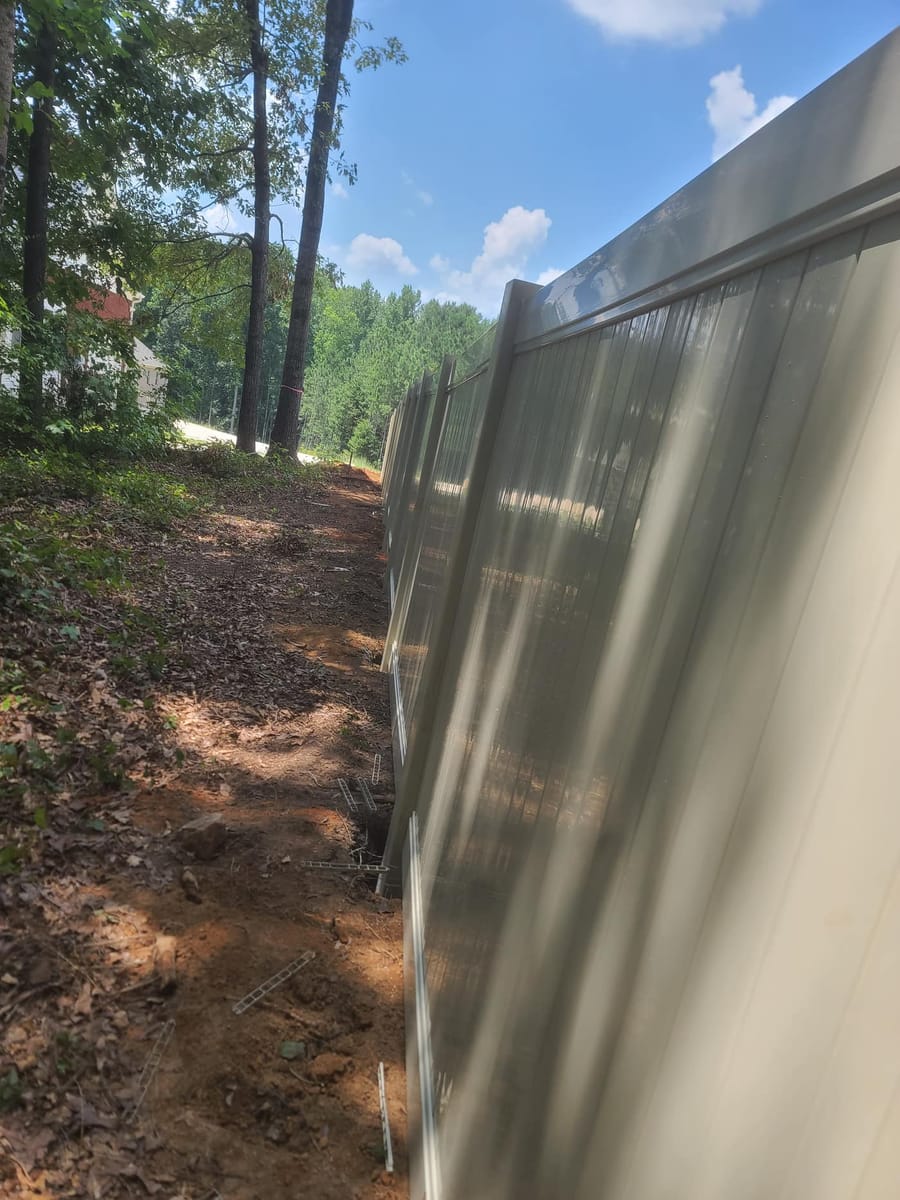
Tan vinyl privacy fence installed across a wooded residential boundary, Stockbridge, Georgia
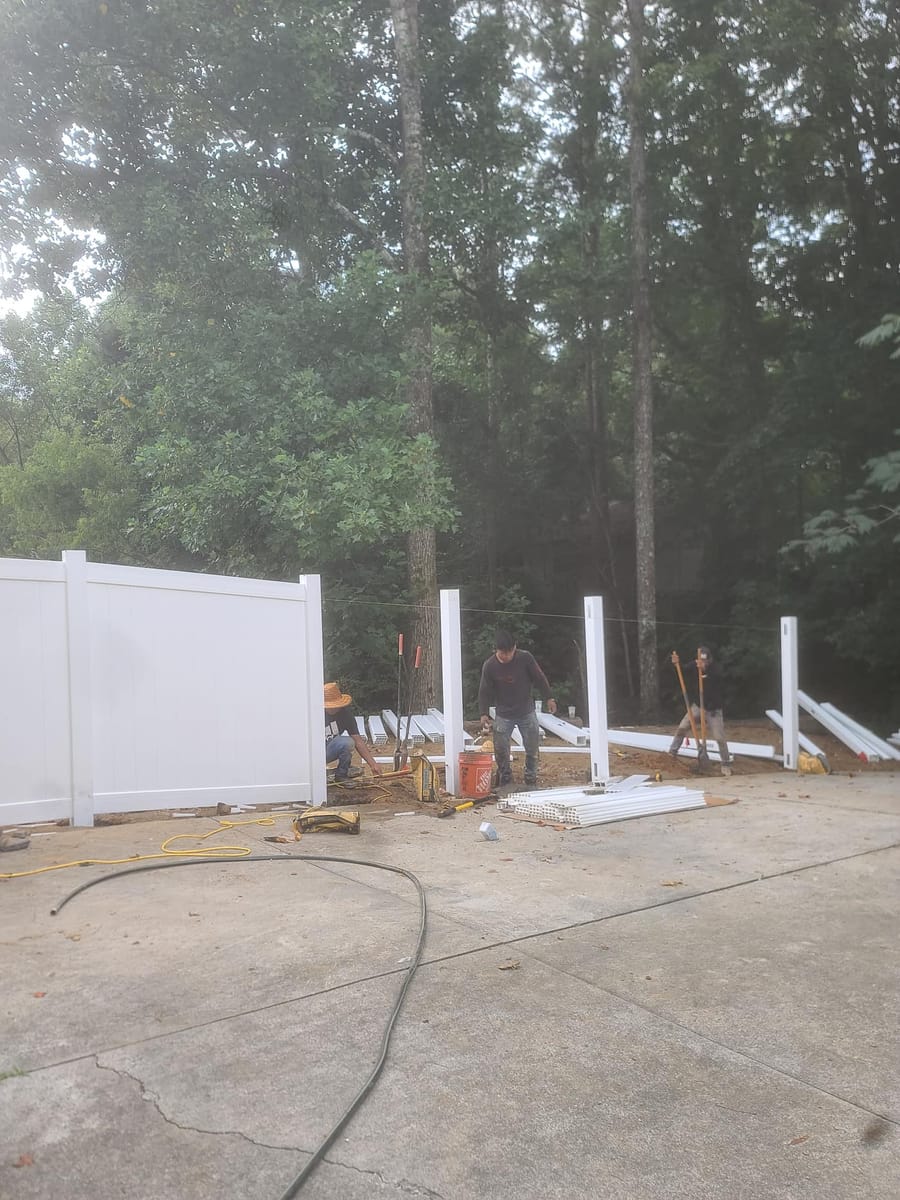
White vinyl privacy fence with braced gate, enclosing a wooded rear garden, Dalton, Georgia
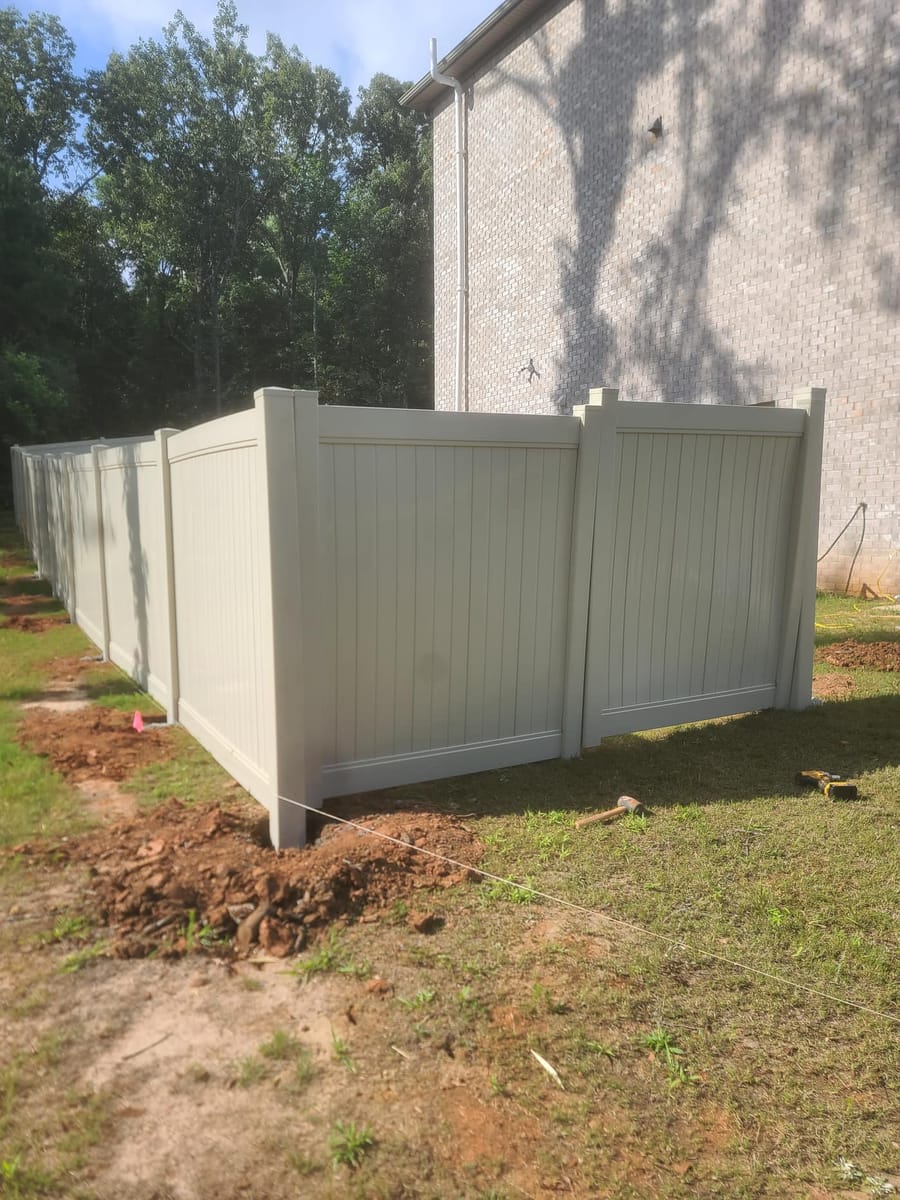
Tan vinyl privacy fence installed across a wooded residential boundary, Stockbridge, Georgia
Three quick steps. We call you back ourselves, and nothing here commits you to anything.
We call back ourselves, so the number that rings you will be (706) 879-8873. If you would rather not wait, call us now at (706) 879-8873.
Got a photo of the spot? Text it to (706) 879-8873. It answers more than a paragraph does, and it reaches the same phone as your request.
What actually happens
Hand on the post, weight against it. A post that moves has failed. Counting how many out of the run have failed is the fastest honest answer to repair or replace.
A post that pivots at ground level has lost its wood. A post that moves as a unit with its footing has lost its hold on the soil. The first needs a new post, the second can sometimes be reset.
Sight down the fence from one end. A wave means the posts are still doing their job and the rails have sagged. A lean that grows toward one end means the tension in the run is pulling.
Corner to corner across the gate frame, both ways. If the two measurements differ, the gate has racked and no amount of hinge adjustment puts it back.
You get the number of bad posts, the state of the rails and boards, and what each option costs you in time on site. The choice stays yours.
Questions we get asked
There's no fixed line, but a useful test is how many posts have gone. One or two in a long run is a repair. When a third of them move, replacing costs less than chasing them one at a time, because each individual reset carries the same setup as a whole run.
Two possibilities. The hinge post has leaned, which drops the whole gate, or the gate frame itself has racked out of square. Measure the diagonals of the gate. Equal diagonals mean the post moved. Unequal diagonals mean the gate did.
Sometimes. If the wood at ground level is still sound and the footing simply lost its grip, resetting works. If a screwdriver goes into the post at grade with no effort, resetting buys a season at most.
Yes. Storm damage is often the easiest repair on this page because the failure is obvious and local. The worthwhile question is whether the posts either side of the gap were already weak and the tree simply found them.
Usually close, rarely exact. Wood that has weathered for a few summers has a color that new lumber won't have for a couple of years. Vinyl and coated metal from a discontinued line can be harder still. You get an honest description of what the repair will look like before it happens.
Where we work
A photo down the length of the run tells us most of what we need to know.