
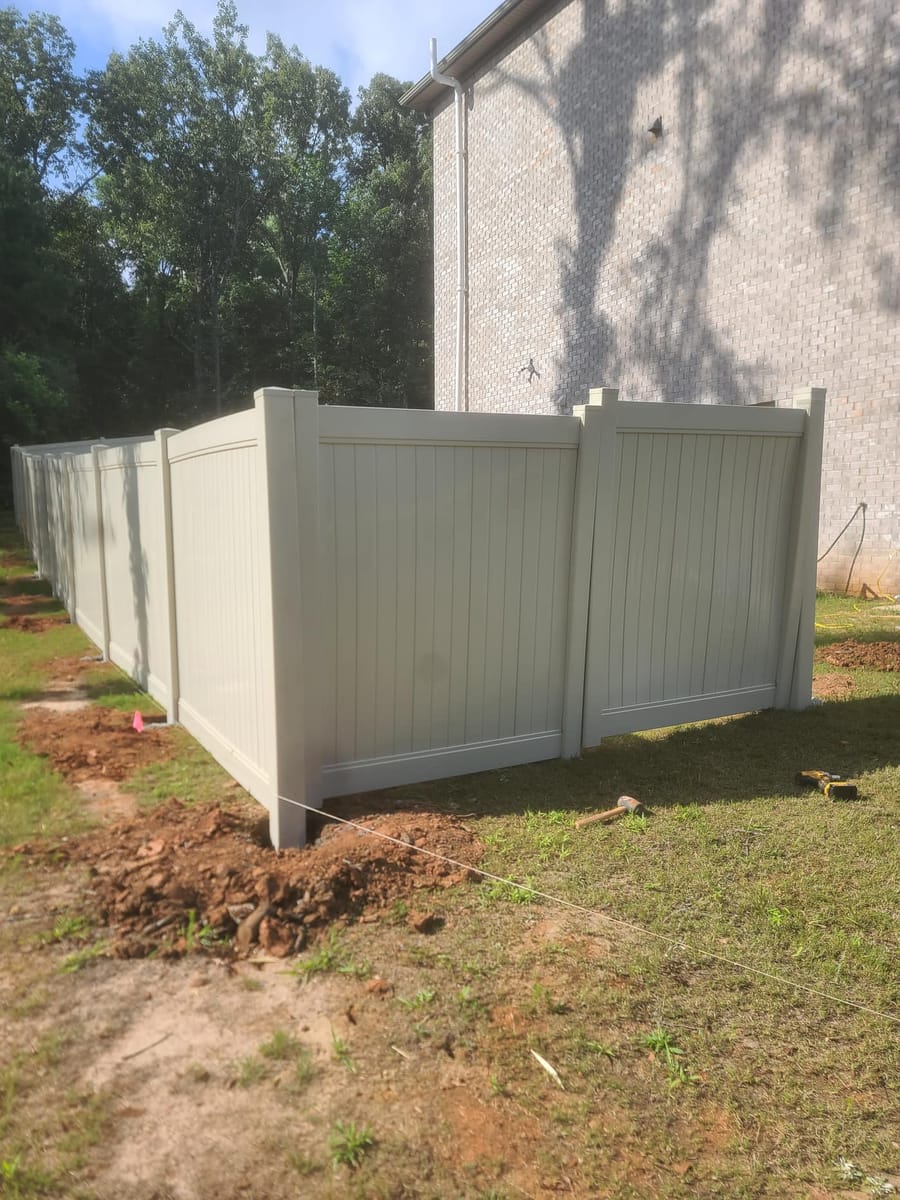
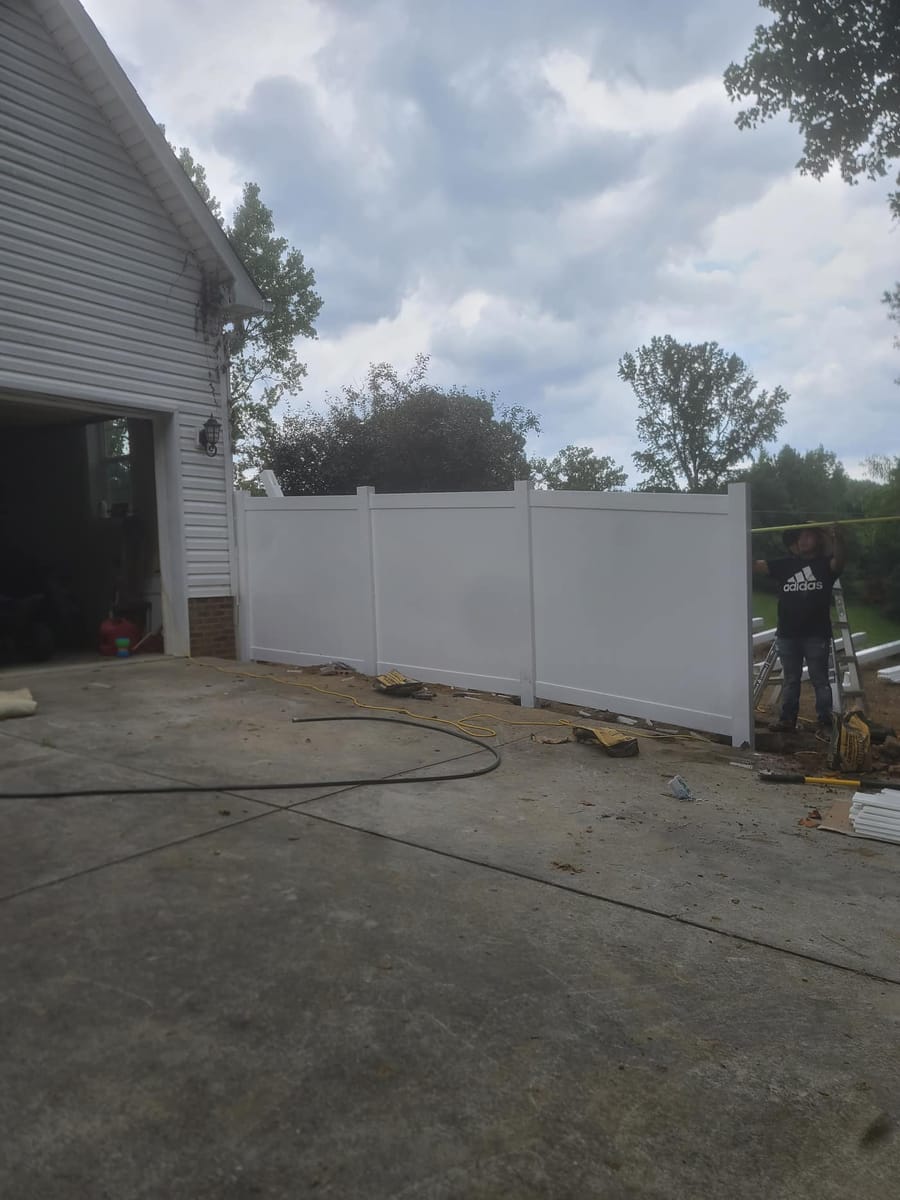
Tan vinyl privacy fence installed across a wooded residential boundary, Stockbridge, Georgia
Nothing to refinish, ever
Neither of these materials asks for a coat of anything. What they ask for instead is that they go in right the first time.
Northwest Georgia and the north Atlanta metro
Both of these are bought for the same reason, and it's not the look. It's that neither one ever has to be sanded, stripped, stained or painted. That's worth real money over the life of a fence. It's worth more than money to anyone who has spent a spring weekend on a ladder.
What you give up is flexibility. Wood can be trimmed, patched, extended and refinished on site with a saw.
These are manufactured parts in fixed sizes, and they only go together the way they were designed to.
A vinyl privacy panel gives you a solid screen that looks the same in ten summers as on the day it went up. Provided nothing hits it.
Impact is the weakness. A post backed into, a rock thrown by a mower deck or a limb coming down will crack a vinyl rail. Wood in the same spot would dent and carry on. Vinyl doesn't bruise, it breaks.
The compensation is that the break is usually local. Rails slide into pockets routed in the posts, so a damaged bay lifts out and a new one goes in without touching the rest of the run. Heat is the second thing to plan for.
Vinyl expands measurably along a rail on a hot afternoon, which is why the rails float in their pockets and never get screwed tight at both ends.
Ornamental aluminum is bought to be seen through. It marks a boundary, encloses a pool or dresses a front yard without blocking the view. It does none of the work a privacy fence does. The metal itself doesn't rust.
What can fail is the powder coat, and it fails where it has been cut, drilled or scraped instead of across the surface. Careful cutting and finished ends are most of what separates a fence that stays black from one that speckles at every screw.
The other advantage is slopes. Ornamental panels are built to rack, so the rails skew to follow the ground while every picket stays upright. On a yard that falls away, that's the difference between a fence that looks fitted and one that looks stepped.
Vinyl is wrong on a run that takes regular knocks, or where you might want a different color later. It comes in the color it comes in. Aluminum is wrong if the point is privacy, or if a small dog has to be kept in. Picket spacing is generous by design.
Both are wrong on very long agricultural runs, where the cost per foot stops making sense against wood or wire.
Post setting, corners and gate hardware in general are on the fence company page.
If the fence has to be solid and you would rather refinish it than replace panels, wood privacy fence is the comparison. If the job is containment on a budget, chain link does it for less.
A reader deciding between materials should start with choosing materials for decking, fencing and patios, and how to read a fence quote shows what moves the price of each one.
Our work
Tan vinyl privacy fence installed across a wooded residential boundary, Stockbridge, Georgia
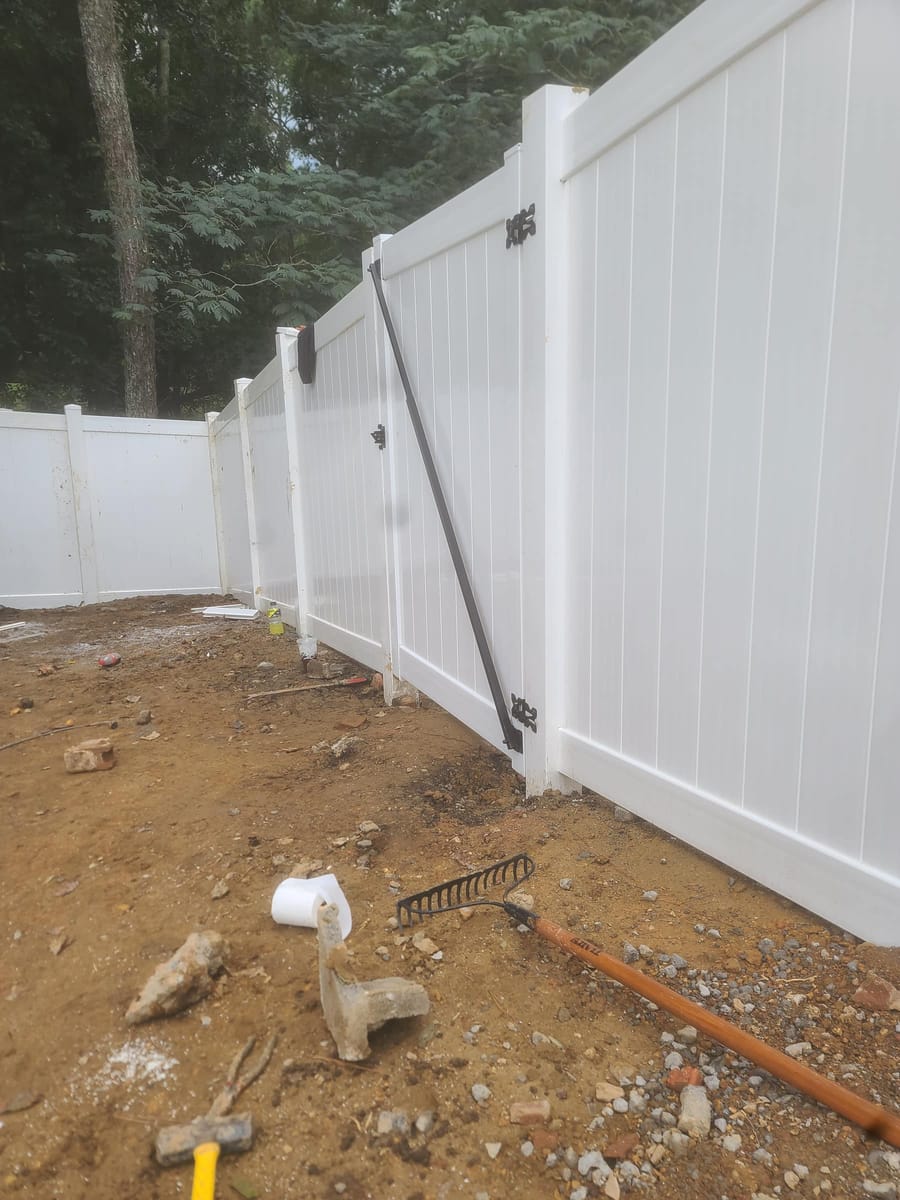
White vinyl privacy fence with braced gate, enclosing a wooded rear garden, Dalton, Georgia
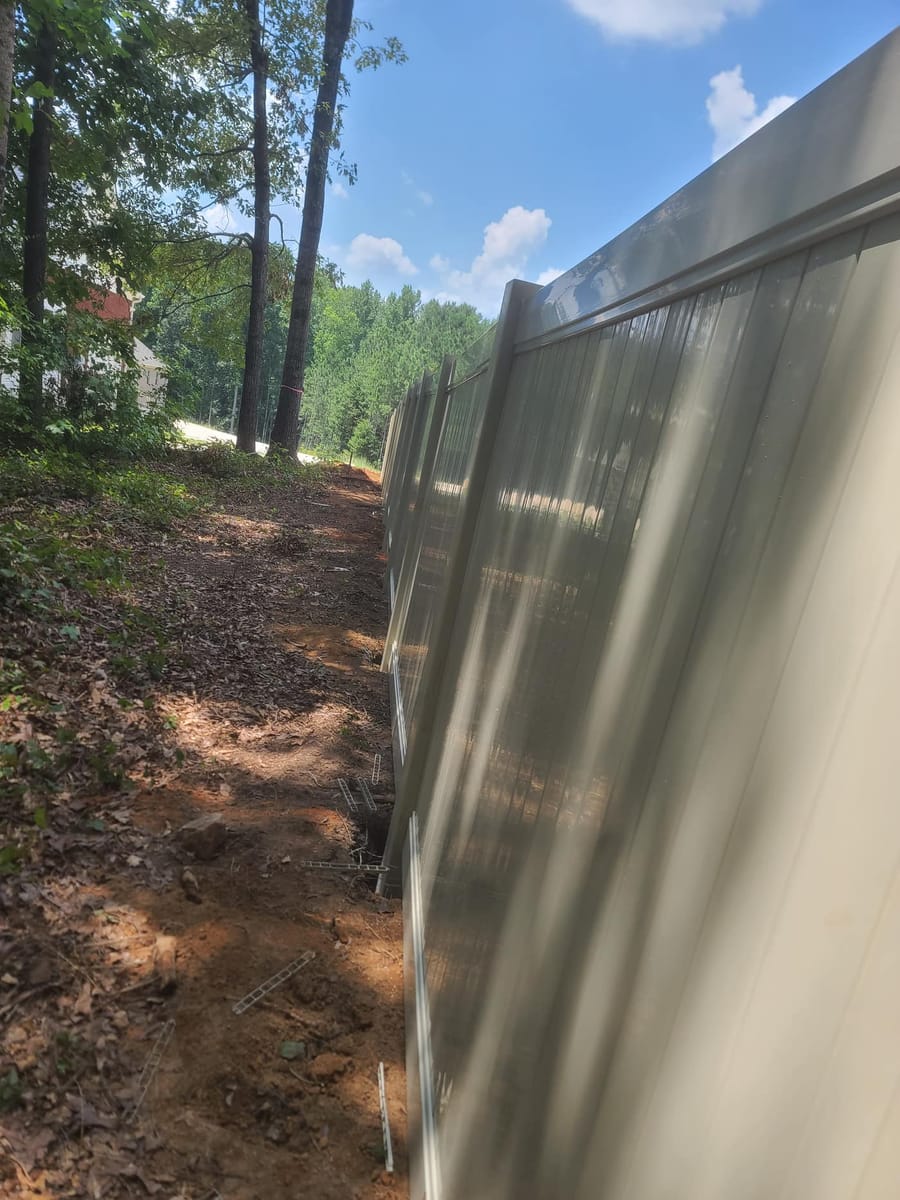
Tan vinyl privacy fence installed across a wooded residential boundary, Stockbridge, Georgia
White vinyl privacy fence with braced gate, enclosing a wooded rear garden, Dalton, Georgia
Three quick steps. We call you back ourselves, and nothing here commits you to anything.
We call back ourselves, so the number that rings you will be (706) 879-8873. If you would rather not wait, call us now at (706) 879-8873.
Got a photo of the spot? Text it to (706) 879-8873. It answers more than a paragraph does, and it reaches the same phone as your request.
What actually happens
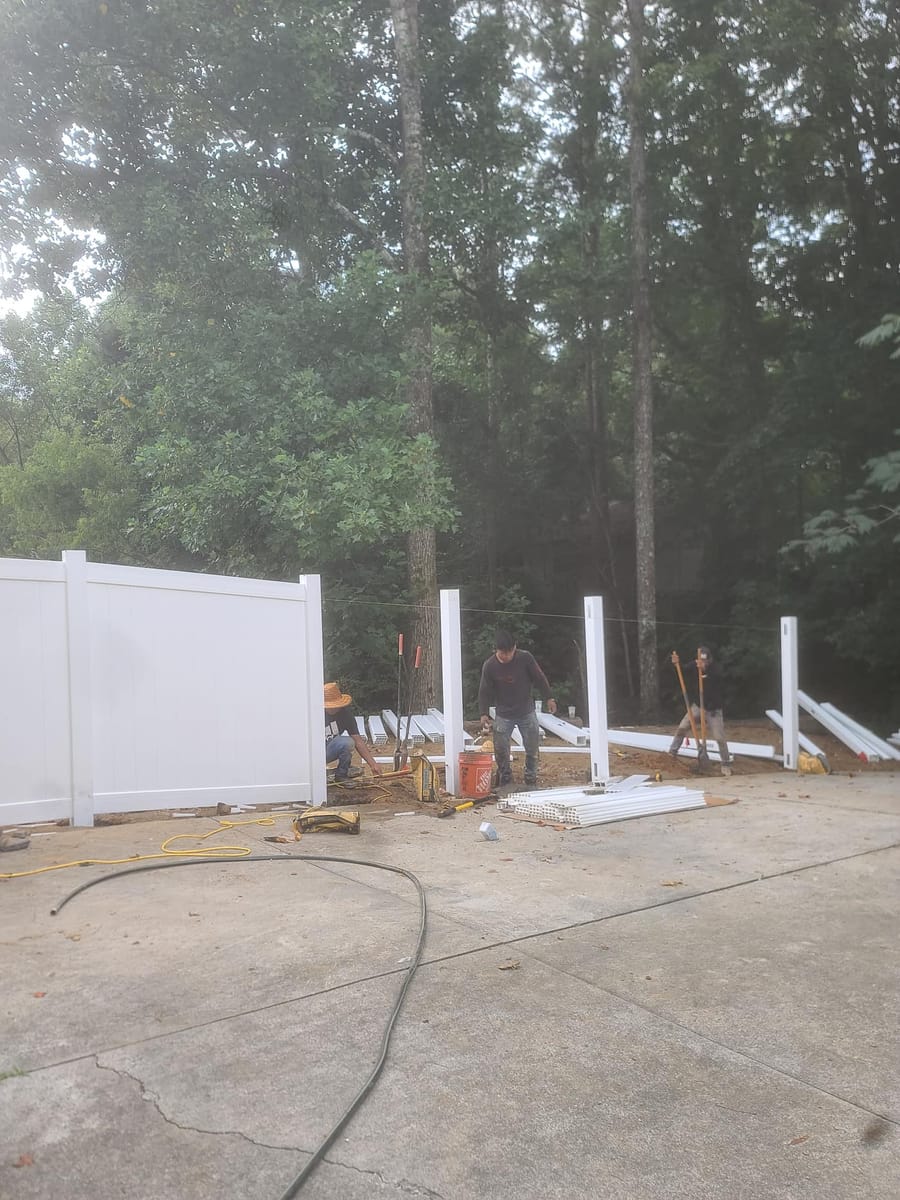
Both systems arrive as manufactured panels or rails cut to a fixed length. The posts have to land exactly where the parts expect them, so the whole run is measured and marked before the first hole opens.
A hollow vinyl post is fine along a line and not fine at a gate. Gate and corner posts take a steel or aluminum insert so the hinge screws have something solid to bite into.
Ornamental aluminum panels are built to skew, so the rails follow a slope while the pickets stay vertical. That's set as the panel goes on, not corrected afterward.
Vinyl rails grow and shrink with temperature along their length. They sit in routed post pockets with room to move, and a rail fixed rigidly at both ends is a rail that bows in August.
Cutting an aluminum picket or rail exposes bare metal under the powder coat. Those ends get capped or touched in, because that's where corrosion starts on a fence that's otherwise immune to it.
Questions we get asked
It never needs refinishing, which is the claim worth making. It still gets dirty, it still grows a green film on the shaded side, and it still wants washing once or twice a year. Nobody has to stand on a ladder with a brush, which is the actual benefit.
Older and thinner product did both. Panels with UV stabilizer mixed through the material instead of a surface coat hold their color far better. Impact is the real weakness: a mower stone or a reversing trailer cracks vinyl where wood would dent.
Usually yes, and it's one of the better arguments for the system. The rails slot into the posts, so a damaged section comes out without disturbing the run either side. Matching color on an older fence is the harder part.
Aluminum doesn't rust. Steel does, and once a coating is broken on steel the corrosion spreads under it. Aluminum is lighter, which makes long panels easier to hang square, and powder coat on aluminum is the finish that outlasts everything else on this page.
Aluminum, in almost every case. It's open, it doesn't corrode in a chlorinated splash zone, and self-closing self-latching gate hardware is standard for it. We fit the gate hardware you specify.
Where we work
Say what the fence has to do. Screening a patio and enclosing a pool point at different answers.