
Fencing
Privacy Fence Ideas and Styles
Fence styles look like a taste decision and are mostly a structural one. Every pattern below changes what the wind does to the fence, and therefore what the posts have to be.
Updated August 2026
The rule that runs through all of this
A solid fence is a wall the wind pushes on. The more solid it is, the harder it pushes, and every bit of that load ends up in the posts.
So the pretty decision and the structural decision are the same decision. Board on board is the most private style available and it is also the heaviest and the most exposed to wind. A shadowbox lets air through and asks less of the frame. A horizontal design changes what spans what, and moves the posts closer together.
Any style below can be built well. What cannot be done is picking a style and then building the frame that would have suited a different one.
The styles
Flat privacy, sometimes called stockade
Pickets butted edge to edge on the same side of the rails. The volume seller, and the cheapest way to a solid fence.
The known weakness is shrinkage. Pressure treated boards arrive wet and dry out, and as they dry they narrow. A fence that went up with no gaps has gaps a year later. Nothing is wrong. It is just what wood does.
Board on board
Every board overlaps the one beside it, so shrinkage has somewhere to go and the fence stays solid permanently. It is the answer when privacy is the actual reason for the fence.
The trade is material. Overlapping means more boards per running foot, and the finished fence is heavier and catches more wind.
Shadowbox
Boards alternate, one on the front of the rail, one on the back. Two things follow.
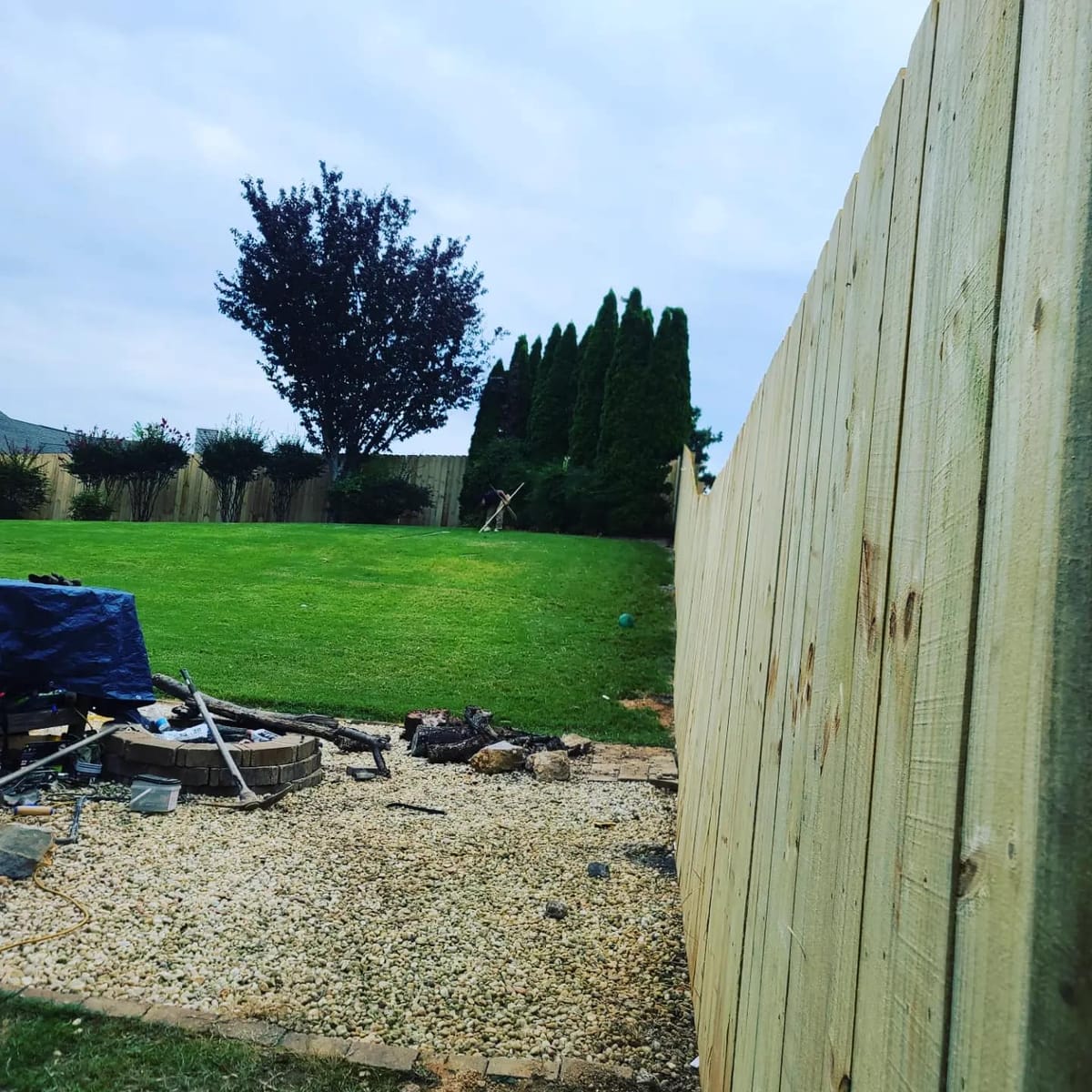
It looks identical from both sides, which matters more than people expect on a shared boundary. And wind passes through it, which takes load off the posts and is why it survives storms that flatten solid runs.
What you give up is privacy from directly square on. Walk along a shadowbox fence and it is solid. Stand still opposite a gap and you can see through it.
Horizontal
The style that has changed most fences in the last few years, and the one most often built badly.
In a vertical fence, pickets hang on rails and the rails do the spanning. In a horizontal fence there are no rails: the boards themselves span from post to post. A board that would happily sit as a picket will bow noticeably as a horizontal member over the same distance.
Done properly, that means closer posts, thicker boards, or both. Done improperly, it means a fence that looks superb for one summer and wavy after that. Ask what the post spacing will be before you sign anything for a horizontal fence.
Picket
Spaced boards, usually shorter. This is a boundary marker and a pet fence rather than a screen, and in front yards it is often the right answer. Spacing, picket width and top profile are the three levers, and a wider picket with a narrow gap reads considerably more substantial than the reverse.
Lattice top and framed panels
A lattice or slat section above a solid lower panel buys height and light without buying a taller solid wall. It is also a way to lift a fence line where a neighbor's ground sits higher.
Framed panels, with a top cap and a bottom kickboard, are the most finished-looking of the wood options. The cap protects the end grain, the kickboard keeps the pickets out of the wet ground, and both add life to the fence as well as looks.
Details that separate a good fence from an average one
- A top cap. Water sits on end grain and end grain drinks. Capping the top is the single most effective piece of trim on a wood fence.
- A kickboard. A rot board at the base takes the ground contact so the pickets do not. It is also replaceable, which the pickets are not, cheaply.
- Three rails rather than two. On a six foot fence, a middle rail is what keeps boards flat. Two-rail fences cup.
- Fasteners that suit the wood. The wrong metal against treated lumber leaves black streaks down every board within a year.
- A finished top line. Whether the run is racked or stepped, decide it deliberately. A run that wanders because nobody set a line is the thing you will see from the kitchen window every day.
Slopes: racked or stepped
Almost every yard around here has some fall in it, so this comes up constantly.
Racked means the fence follows the ground, with the rails running parallel to the slope and the pickets staying vertical. No gaps underneath, no triangles, and it suits site-built wood perfectly.
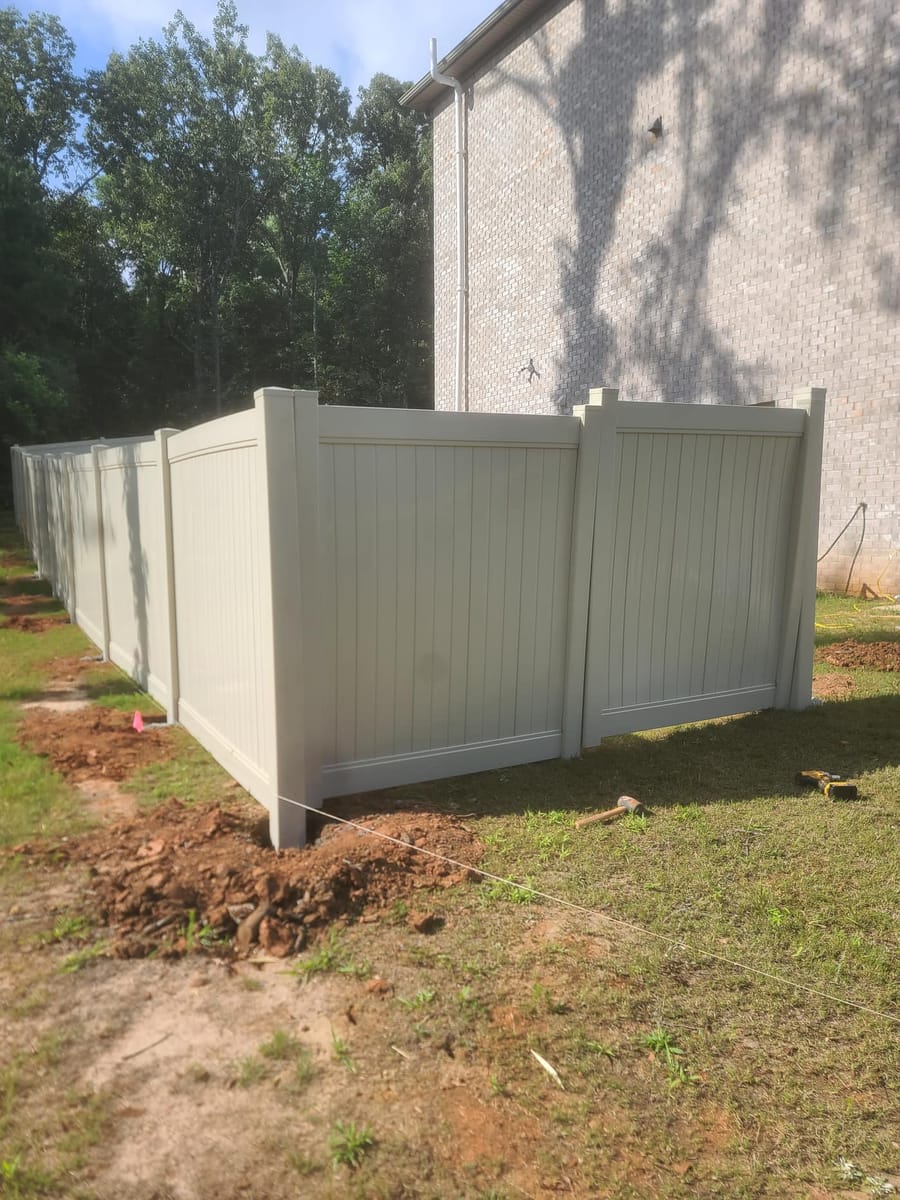
Stepped means each section stays level and drops at the posts. It looks more formal and it is what most panel systems require, because a manufactured panel cannot rack far. The cost is a triangular gap under each step, which then has to be filled with a kickboard, planting or a low wall.
On a steeply falling boundary, a short retaining wall with the fence set behind it is often cheaper and better looking than either. The posts want to go into undisturbed ground behind the wall rather than into the stone backfill.
Gates as a design element
Gates are the part of a fence people touch, and the part that fails first.
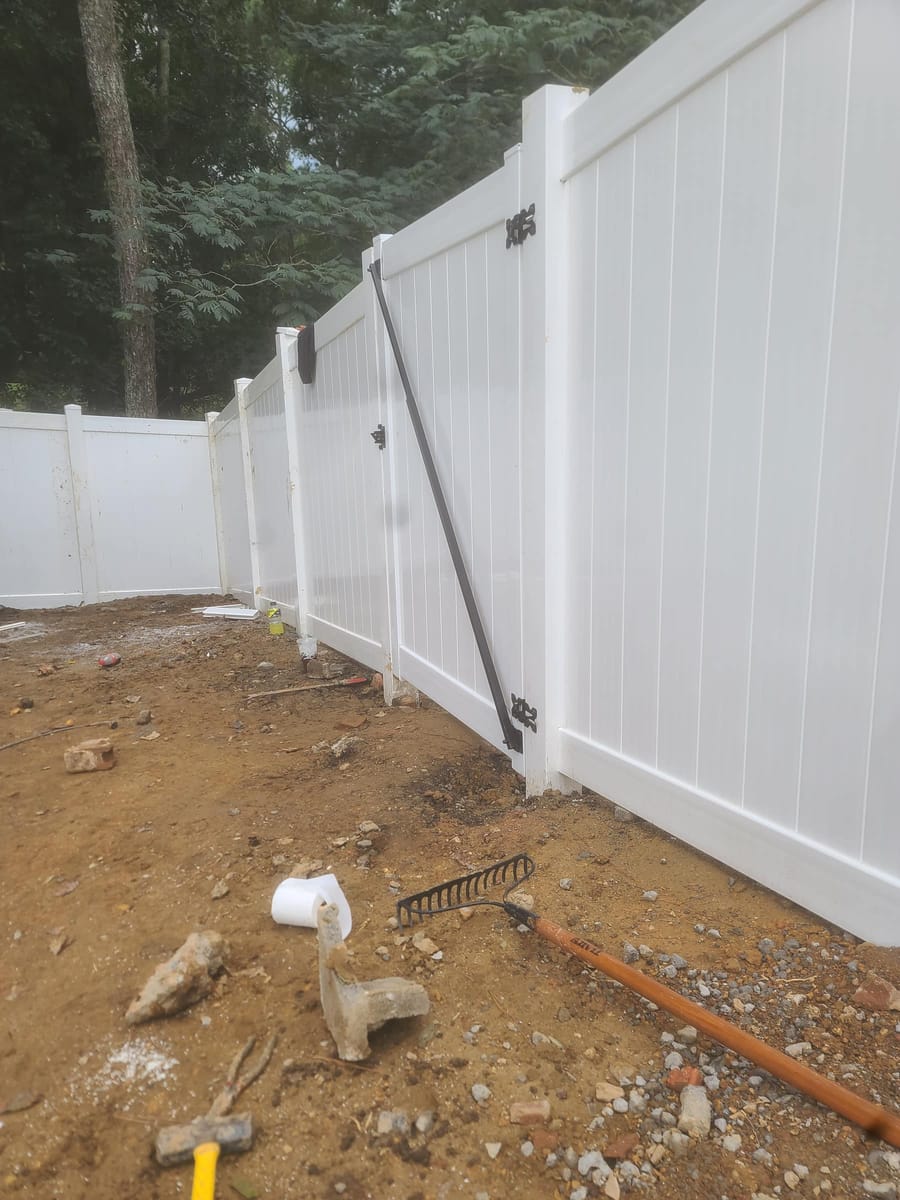
- Build it as a braced frame. A gate is a frame with a diagonal, clad to match the fence. A gate built as a slice of fence with hinges on it will drop.
- Heavier posts, set deeper. The hinge post carries the whole weight on a lever.
- Three hinges, not two. Cheap insurance on anything above waist height.
- Make it wider than you think. A three foot gate does not pass a wheelbarrow with a load in it, and it certainly does not pass a mower.
- Consider a second gate. One walk gate where people already walk, and one wider gate where equipment has to come in, saves a lot of fence being taken down later.
If a gate is the reason you are reading this, gate repair and replacement is a job on its own and is usually cheap relative to a fence.
Finish and color
Left alone, pressure treated pine goes silver gray. Plenty of people like that, and it is a legitimate choice as long as it is a choice.
If you want color, a semi-transparent stain keeps the grain and holds up well on vertical wood, which is a far easier surface than a deck floor. Solid stain reads like paint and hides the grain.
Dark colors make a small yard feel smaller from the inside and make planting in front of the fence look better. There is more on timing and product in the fence maintenance guide.
One practical note: finish the fence before the planting goes in, not after. Working a brush behind a shrub is a bad afternoon.
Fence ideas for small yards
Compact yards benefit from screening less than people assume. Three moves:
- Screen only the sightline that actually bothers you and leave the rest open.
- Use a horizontal design with a deliberate gap so light passes but eye-level views do not.
- Put the fence a little inside the boundary with planting in front of it, which gives the eye depth and makes the yard read larger than a fence hard on the line.
More on making a small yard work is in the small and sloped yards guide.
What is realistic to build yourself
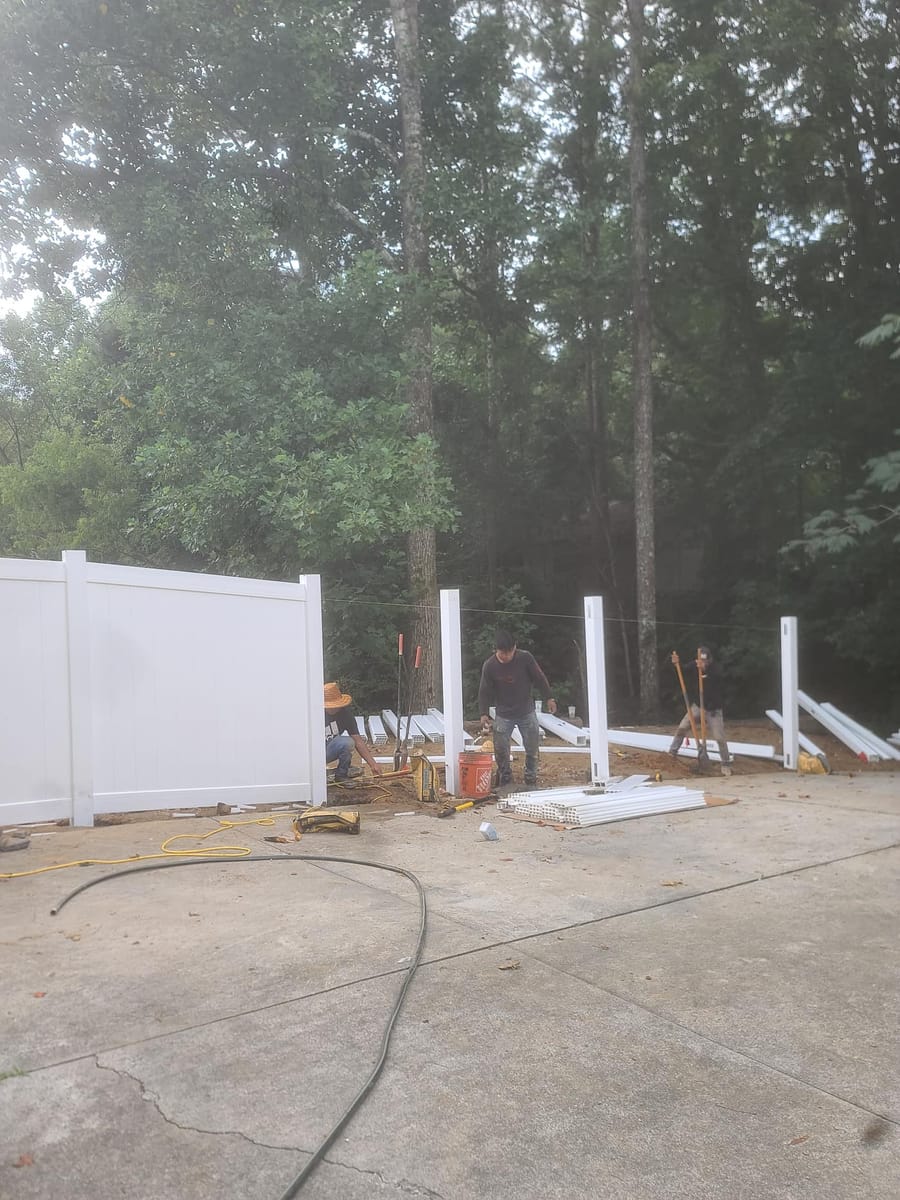
Honest answer: the boards are the easy part. Setting posts plumb, in line, at consistent depth, across ground that is not flat, in Georgia clay, is the part that takes the time and decides whether the fence is still straight in ten years.
A short run on flat ground is a reasonable weekend. A long boundary with corners, a slope and two gates is not, and the failure shows up as a wavy top line that cannot be corrected afterward.
Where we build fence
Fencing is the largest thing we do that most people in this area do not know we do. We cover Kennesaw, Acworth and Cartersville among many others, and the town pages for Kennesaw and Acworth cover what the lot pattern in each place usually means for run length and gate count.
Once you know the style, what drives the number is the next page. Or send a photo down the fence line and skip ahead to a real quote. Hervin answers his own phone, and the estimate request is here.
Want a straight answer for your own yard? Call (706) 879-8873 and talk it through with Hervin Ramirez, or send the details over and we will call you back.
Our work
Our completed work
Styles
The same run, built five different ways
- Board on board. Every board overlaps its neighbor, so when the wood shrinks the gaps never open. The most privacy per running foot, and the most board.
- Shadowbox. Boards alternate front and back. Identical from both sides, which ends a lot of neighbor conversations before they start.
- Horizontal slats on closer posts. The boards span post to post, so the post spacing has to come in from what a vertical fence would use.
- Framed panel with a top cap and a kickboard at the base. The cap keeps rain off the end grain and the kickboard keeps the pickets out of the dirt.
- Racked run following the fall of the ground, so the top line stays parallel to the yard instead of stepping down it.
- Gate built as a braced frame with a diagonal, hung on three heavy hinges. Gates fail more often than fences do.
Common questions
Questions people ask about this
What is the difference between board on board and shadowbox?
Board on board overlaps every board on the same side, so it is completely solid and stays that way. Shadowbox alternates boards front and back, so it looks the same from both sides and lets wind through, at the cost of a sightline when you stand square to it.
Why do horizontal fences need different posts?
In a vertical fence the boards hang from rails and the rails span between posts. In a horizontal fence the boards themselves span post to post, so the posts come closer together or the boards sag.
Should a privacy fence have a top cap?
It helps. A cap covers the end grain on top of the pickets, which is where water gets into a board fastest, and it gives the whole run a finished line that hides small height differences.
Stepped or racked on a slope?
Racked follows the ground and leaves no gaps, which suits wood. Stepped keeps each section level and leaves triangles underneath, which suits panel systems and looks more formal.
Which style is best for a small yard?
Something that lets light through. A solid six foot wall around a compact yard makes a box. A horizontal design with a deliberate gap, or a shorter fence, screens at eye level while keeping the space feeling open.