
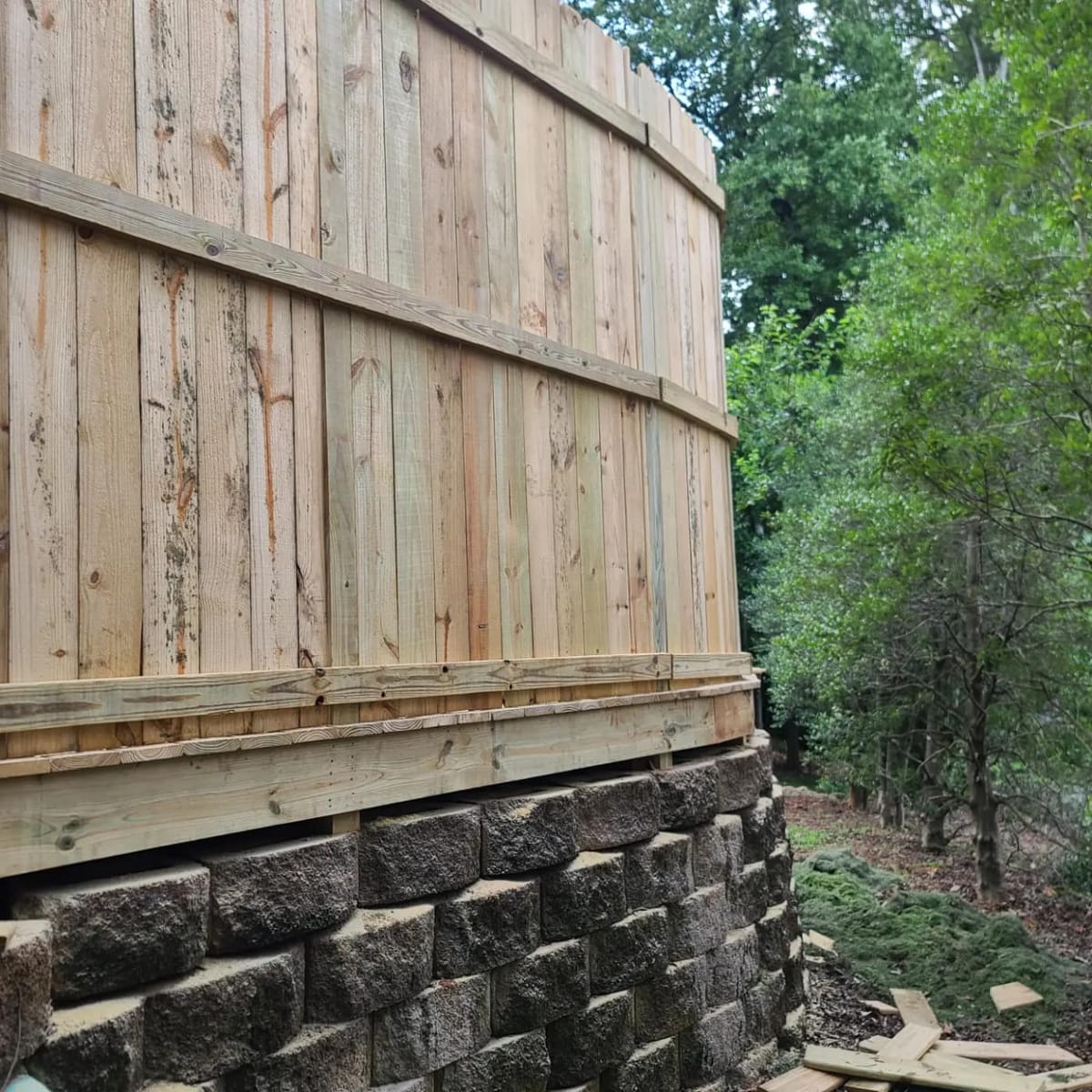
Wooden privacy fence sitting on top of the block wall, Atlanta, Georgia
Fulton County
Atlanta sits further out than we usually go, and we work there anyway. Decks, deck repair, pergolas and screened porches.
About 70 minutes and 58.3 road miles, with 52.9 of those on I-75 before Northside Drive Northwest. One of the longest runs we make.
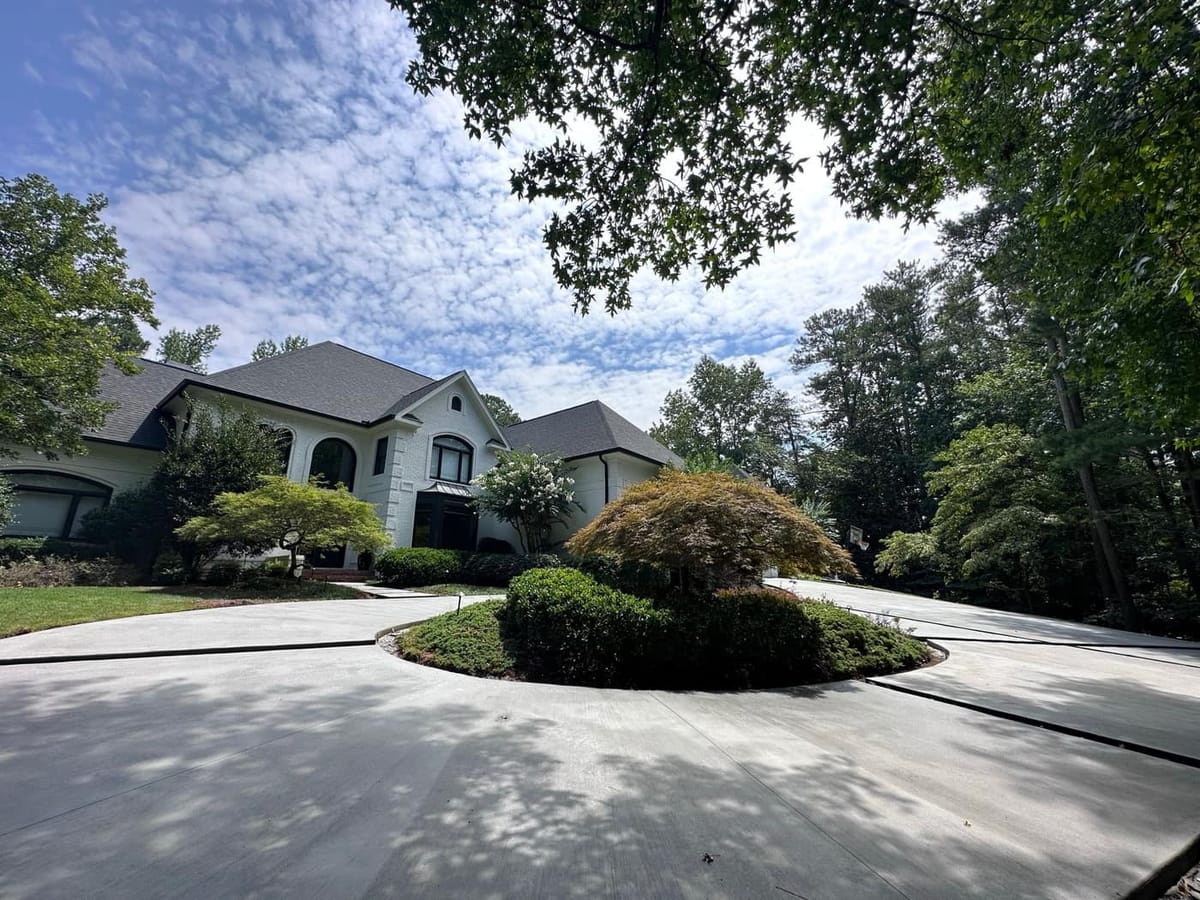
Atlanta is 505,268 people and 265,899 homes, and 109,792 of those homes are owned, not rented. That's more households owning their own home than any other town we cover. Most of the city sits in Fulton County, with a small eastern slice falling into DeKalb.
It's also one of the longest drives we make, at 58.3 road miles. We come down anyway, for decks, deck repair, pergolas and screened porches. Some of that work is on the gallery.
Send the measurements and what you have in mind and we'll take it from there.
Take every Atlanta house at once and the middle of them was finished in 1989. A deck framed alongside a house from then has taken more than thirty Georgia summers of wet and dry.
What usually surrenders first on that generation isn't the wood. It's the hardware. Hanger nails, lag bolts and the flashing tucked behind the ledger corrode while the boards still look presentable from the kitchen window.
We have worked both halves of that argument in Atlanta, new decks and repairs to old ones. Either way the first question is the same: what's worth keeping, and then what a fresh frame would take.
There are 265,899 homes inside the Atlanta city line. That's not a town's worth of fence work. It's a region's, held behind one boundary.
Bungalow streets on narrow frontage, postwar ranch blocks and new infill wedged between the two. Run length, corner count and gate placement change from one street to the next instead of from one town to the next, which is why nothing general is true here.
Which of wood, chain link, vinyl or aluminum wins depends on which of those streets you're standing on, and the fence company page lays out the trade between them.
46.4 percent of Atlanta households own the home they live in, so most of the city rents. On its own that share looks like thin ground for a structure nobody carries away with them.
It's still 109,792 households who own their own back yard, and that's a great many yards with somebody in them free to build.
We put up pergolas and patio covers in Atlanta. What decides whether one looks right is beam height and where the afternoon sun actually lands, and both of those get settled standing in the yard.
Seventeen named waters sit inside the Atlanta line. The Chattahoochee, then Cowart Lake, Niskey Lake, East Lake, Piedmont Lake and a dozen more.
Almost every one of them is small and standing. That's the kind of water that fills an evening with mosquitoes, and here it's scattered through the neighborhoods, not gathered at one edge of town.
We have closed in porches in Atlanta. The real choice on any of them is how much weather you want shut out against how much breeze you're willing to give up, which is what the screened porch page works through.
The lowest ground in Atlanta reads 754 feet and the highest 1,045, which is 291 feet apart.
Spread across a city this wide, that's gentle by the standards of Canton or Dalton. The fall shows up inside one lot instead of across a whole neighborhood.
So an Atlanta retaining wall is usually short and close to the house. Holding a side yard, squaring off a back corner, or making a level shelf where a stair has to land.
Twenty-nine named streams and branches sit inside the Atlanta boundary. Peachtree Creek, Proctor Creek, Utoy Creek and Intrenchment Creek touch the most housing among them.
The Flint and the South are named inside the boundary too, forks included, which puts a good share of Atlanta yards near the head of a drainage, not the foot of one.
Water leaving a yard at the top of a system moves fast and takes soil with it. A walkway, a patio or a run of steps here gets laid to slow that down and hand it somewhere deliberate.
A fire pit gets decided by the seating before anything else. Where people already sit in the evening, how much room is behind the chairs, and which way the smoke goes when the wind picks up.
On the narrower lots that run through most of this city, clearance is what sets the size, not taste. The fire pit guide puts the shapes side by side, and building one is hardscape.
Finished in Atlanta
Wooden privacy fence sitting on top of the block wall, Atlanta, Georgia
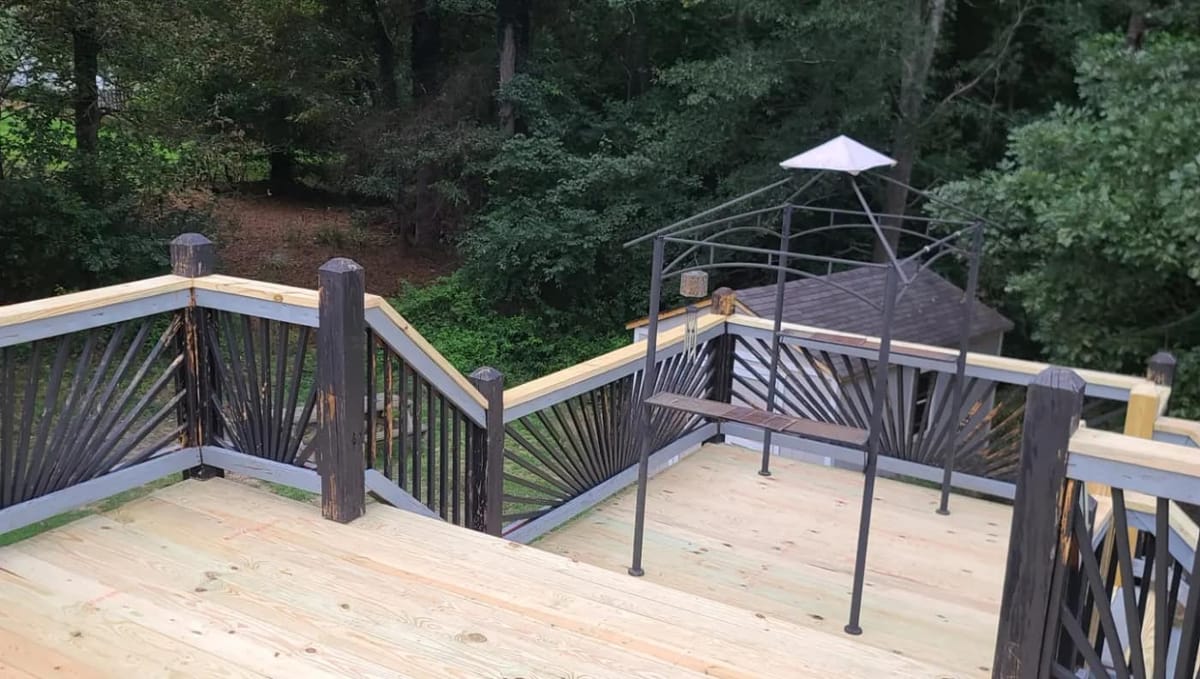
New decking boards laid over the existing frame of a large elevated deck; decorative black sunburst railing panels retained, Atlanta, Georgia
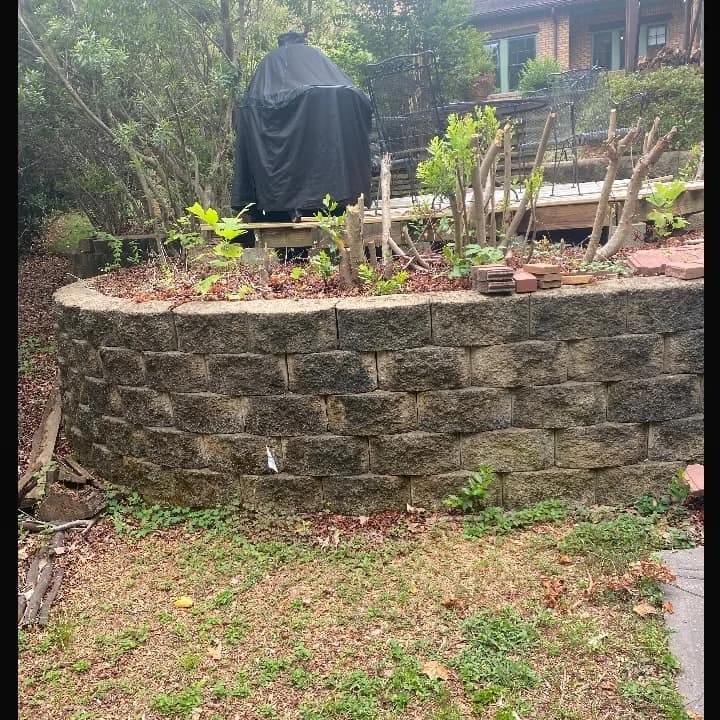
Existing block retaining wall and planting bed before work, Atlanta, Georgia
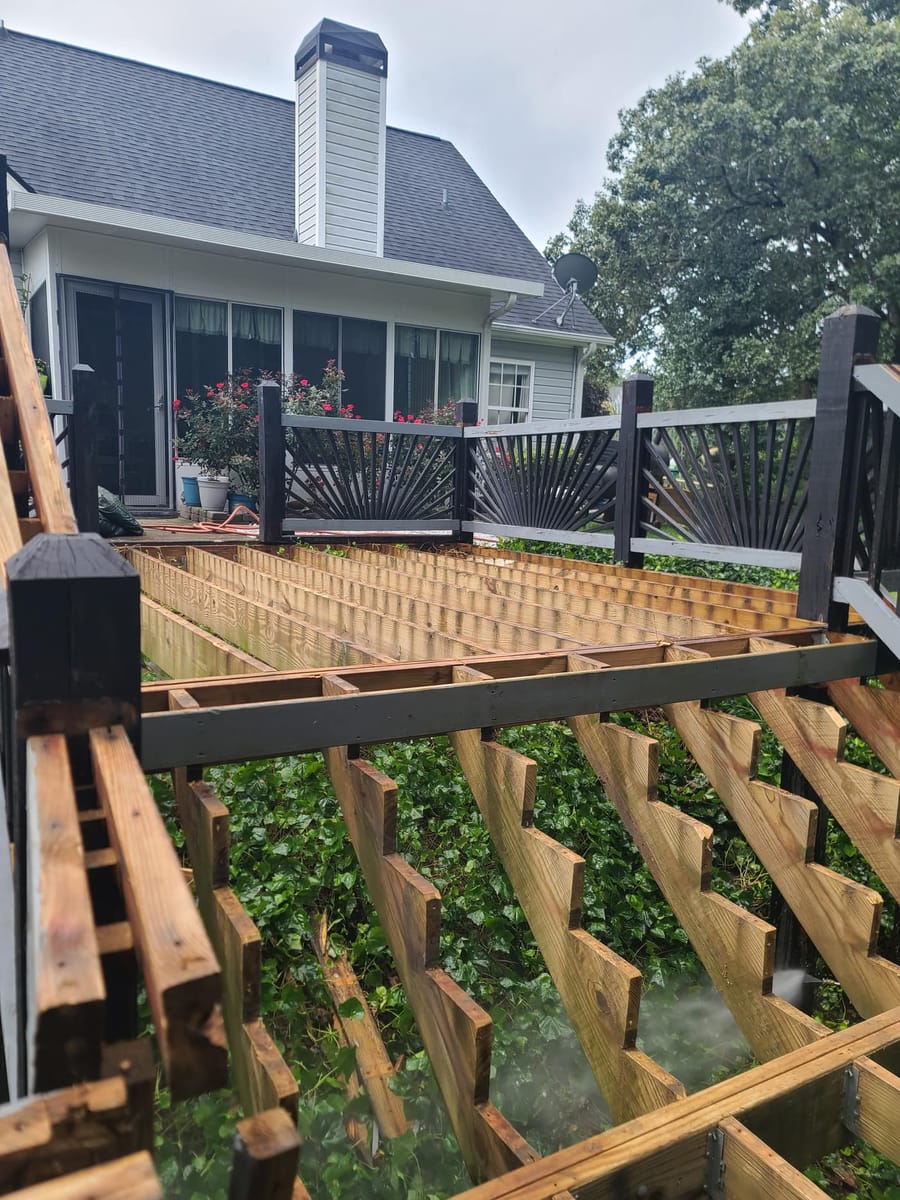
Underside showing the retained joist structure and railing posts, Atlanta, Georgia
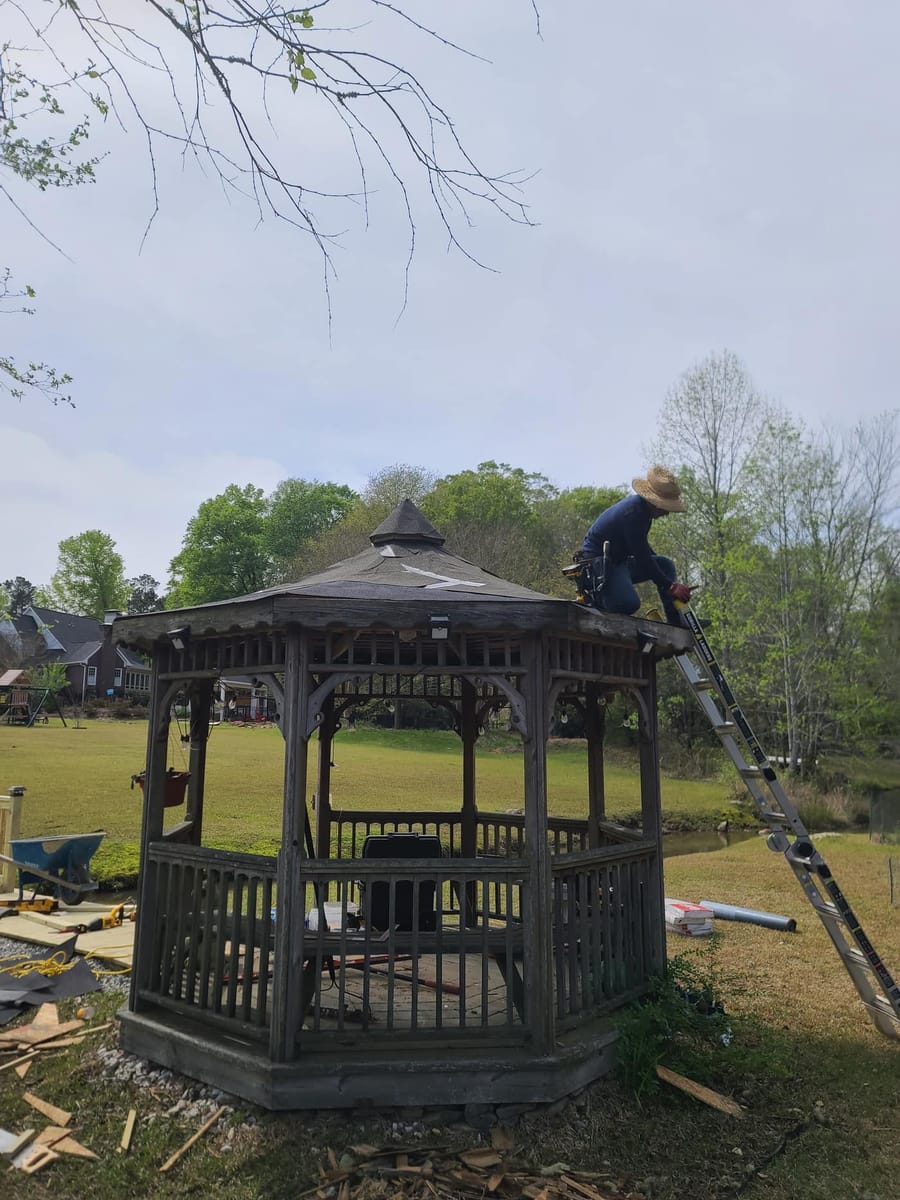
Gazebo with old roofing removed, Atlanta, Georgia
Yes. There are decks, pergolas and porches of ours in the city already. The run is 58.3 road miles with 52.9 of it on I-75, so we set the day around the drive and get a full one out of it.
Usually, yes. What decides it is what the posts can bear on and how much headroom is left once the beams are up. A cover hung too low reads as a lean-to whatever it's built from.
Usually the metal instead of the wood. On a house built around 1989 the fasteners and the hangers have had a harder life than the decking, and looseness starts where two pieces meet.
Nearby
It's a long drive and we still make it. Call and say what the yard needs.